
A coach I interviewed while building Grove had, on paper, everything the checklists prescribe: a website, a funnel, a scheduler, a CRM, an email platform, all assembled for her by an agency. What she did not have was the ability to change any of it without filing a request, or the client volume that would have made any of it pay. She had completed the checklist. The checklist had not started her business.
Search “starting a coaching business checklist” and you can watch the same thing being assembled for the next coach. The lists run thirty and forty items, and most entries have a tool attached, which tells you who writes them. They are procurement lists wearing a mentor’s clothes.
After interviewing coaches about how their practices actually started, here is the checklist I believe in. Much of it is permission to stop preparing and start coaching.
Before your first client
This is the whole real checklist. Seven items, plus three grown-up ones.
- A sentence that says who you serve
- Five real conversations
- Your training, underway
- One way to get booked
- One way to get paid
- An intake form
- Somewhere your notes live
Plus liability insurance, a coaching agreement, and one hour with an accountant. Here is why each one makes the cut.
1. A sentence that says who you serve. Not a brand, not a niche statement workshopped for a month. One true sentence: “I coach new parents who want their health back” or “I coach nurses leaving bedside work.” You will revise it after every one of your first ten clients, which is why it should cost you an afternoon, not a quarter. Treat it as a hypothesis, because that is what it is.
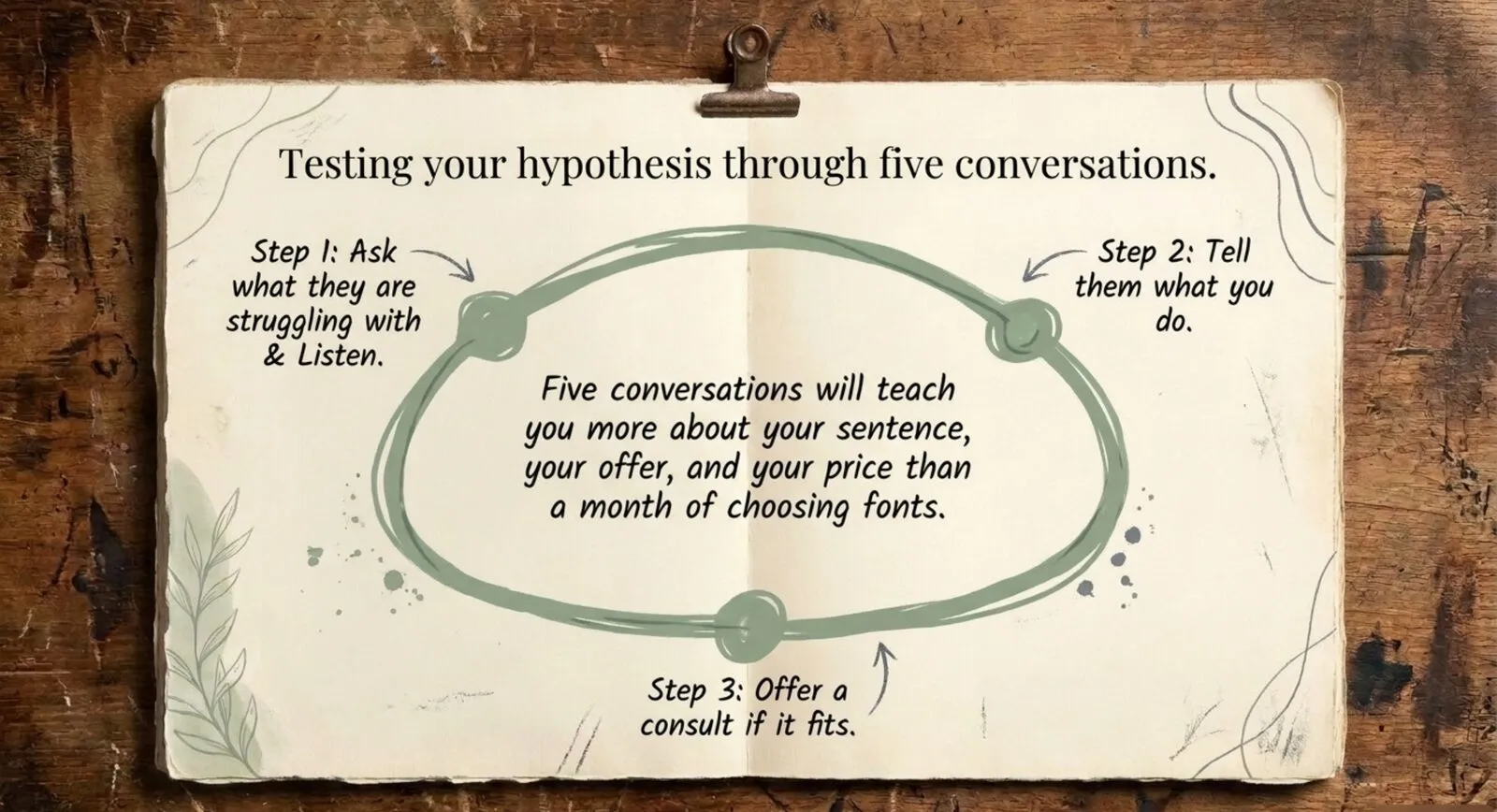
2. Five real conversations. This is how to get your first coaching client, and it is the item most long checklists bury under tools. Not a content calendar, not a launch. Five conversations with people who might want what you offer, or who know someone who would. Ask what they are struggling with, listen, tell them what you do, and offer a consult if it fits. Five conversations will teach you more about your sentence, your offer, and your price than a month of choosing fonts.
3. Your training, underway. Notice the tense. Most reputable training programs have you coaching practice clients long before the certificate prints, and those practice clients are real coaching. If you are pursuing board certification, NBHWC publishes exactly what the path requires, so you can plan around facts instead of forum posts. Those practice sessions count, too: NBHWC wants 50 logged coaching sessions before the board exam, so start your coaching session log with the very first one. Good training helps you become a better coach, and a credential gives clients a way to understand your qualifications. Neither has to be finished before you start practicing within your training, your competence, and whatever rules apply to your kind of coaching. And when the certificate does print, here is what comes next.
4. One way to get booked. A single link that shows your availability and books a session without four emails. One. A working booking link does more for a new client’s confidence than a beautiful website that makes them email you to find a time.
5. One way to get paid. A payment link or invoice that works on a phone. Done is the bar. You do not need insurance-shaped billing software either; a cash-pay practice needs four simpler things. Pricing strategy comes later; for your first clients the honest version is a simple session or package rate you can say out loud without flinching. For a reference point, here is what 2,328 certified coaches reported about their rates and income.
6. An intake form. The thing that lets you spend session one coaching instead of collecting basic information. Ask what you need to understand the person in front of you, and leave the rest out. I wrote up the intake form template separately, including the questions to leave out.
7. Somewhere your notes live. Not which tool. Just: when a client tells you in week one that sleep is the real issue, where will that sentence be in week five? If the answer is “my memory” you will lose it, and losing it is the thing clients can feel. What a client tells you is theirs, and from the first session you are its keeper. So you need one consistent, secure place for notes. It does not need to be complicated. It does need to be something you trust, and ideally something that carries notes forward into your next session prep.
Free tools are fine for booking, payment, and notes, and there is a starter set of free tools for new coaches that covers all three, plus a few free AI tools worth using. Just know that every separate tool is another place to look, another thing to keep current, and another chance to lose the thread. That is the problem Grove is built around: booking and payments, intake forms, notes, and session prep in one place, priced for a practice of one.
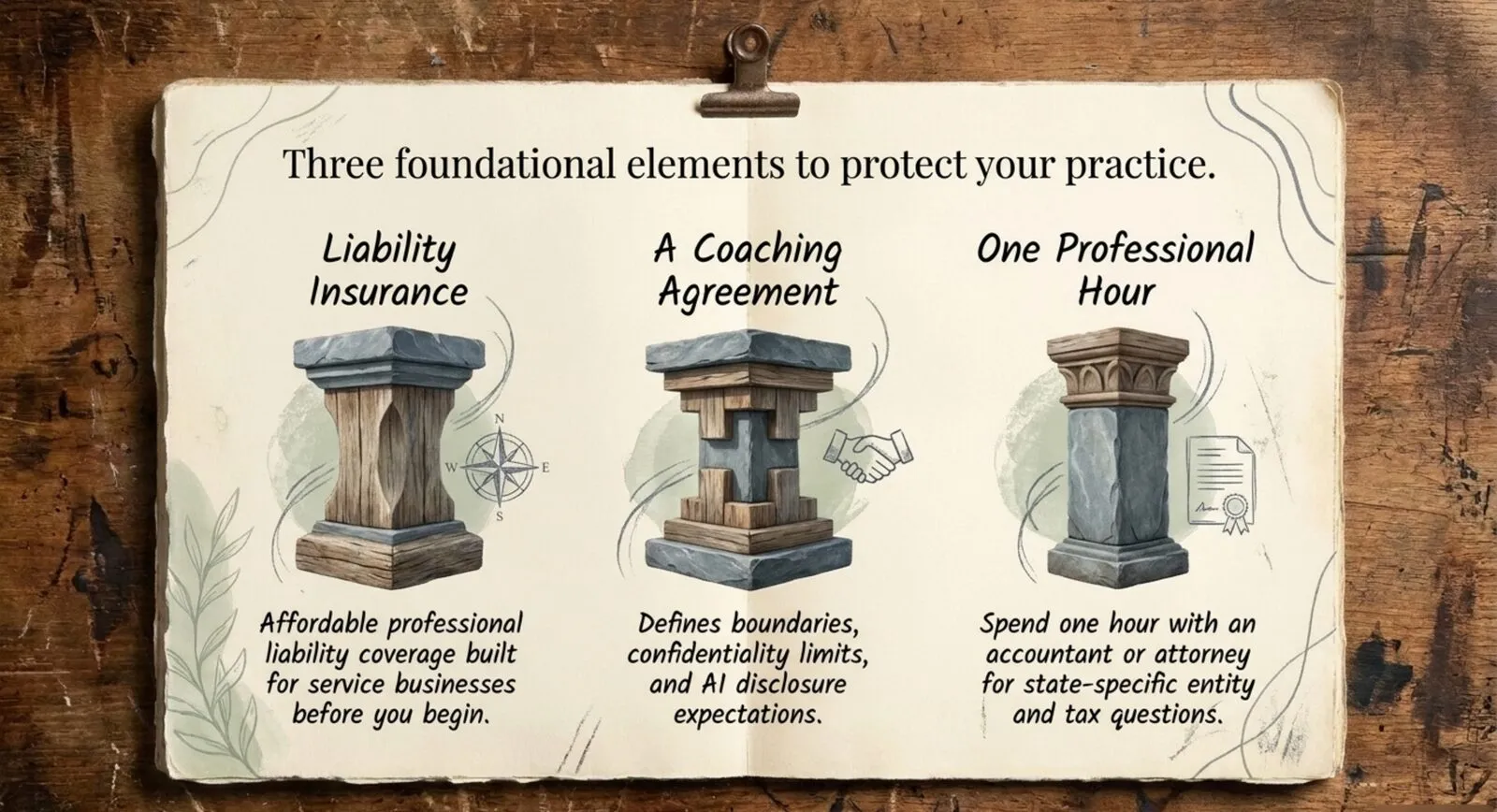
The three grown-up items:
- Liability insurance. Usually affordable, rarely exciting, and worth arranging before you begin. The SBA’s guide to business insurance explains professional liability, the coverage built for service businesses like yours.
- A coaching agreement. What you offer, how confidentiality works and where its limits are, your cancellation terms, and where coaching ends and clinical care begins. The NBHWC Code of Ethics and the ICF Code of Ethics both expect one before coaching starts and spell out what it should cover. NBHWC’s also asks you to disclose any AI tools you use in your coaching.
- One hour with a professional. An accountant for entity type and taxes in your state, or a small-business attorney for contract and entity questions. An hour with the right person beats three weeks of searching. Reading the SBA’s overview of business structures and the IRS self-employed tax center first will make that hour shorter, and SBA local assistance lists free and low-cost business counseling near you.
“Do I need an LLC” is their question to answer, not a checklist’s.
That is the list. A coach with those ten things and zero Instagram presence is ready the moment someone says yes. A coach with the forty-item version and no clients has a very organized waiting room.
After your first five clients
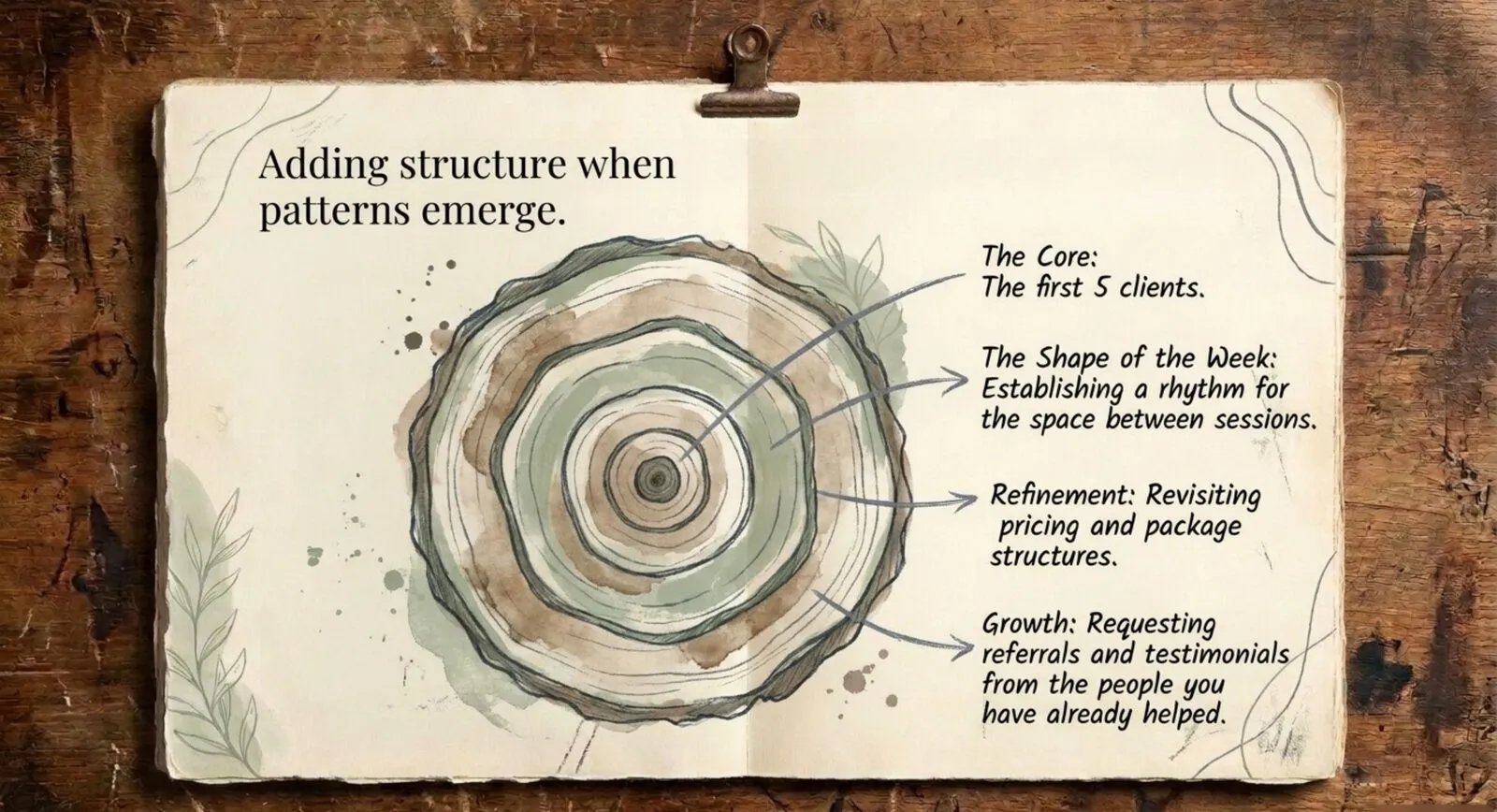
Somewhere around here, some of the classic items earn their place, because now they solve problems you can actually see. Five is not a magic number. It is roughly where the patterns start to show.
A rhythm between sessions. With one client you can be heroic and ad hoc. With five, the week needs a shape: when check-ins happen, when you review them, how fast you respond. This is where coaching stops being appointments and starts being a practice, because so much of the work happens in the space between sessions.
Revisit pricing and packages. You set a simple rate before client one. Your first few clients teach you what no pricing worksheet can: how much time the work actually takes, what they value, and where the offer needs adjusting. Use that to refine your rates and packages, and when you do, the packages piece walks through per-session rates, package structure, and payment plans with real numbers.
The ask. Ask for referrals and testimonials when the moment is right, and make it easy to say no. The best recommendations come from clients who want to share what working with you meant to them. Get their consent in writing before anything goes public, and keep it clear of anything they told you in confidence. Your first marketing channel is the people you have already helped, and asking costs nothing but the sentence.
Maybe never
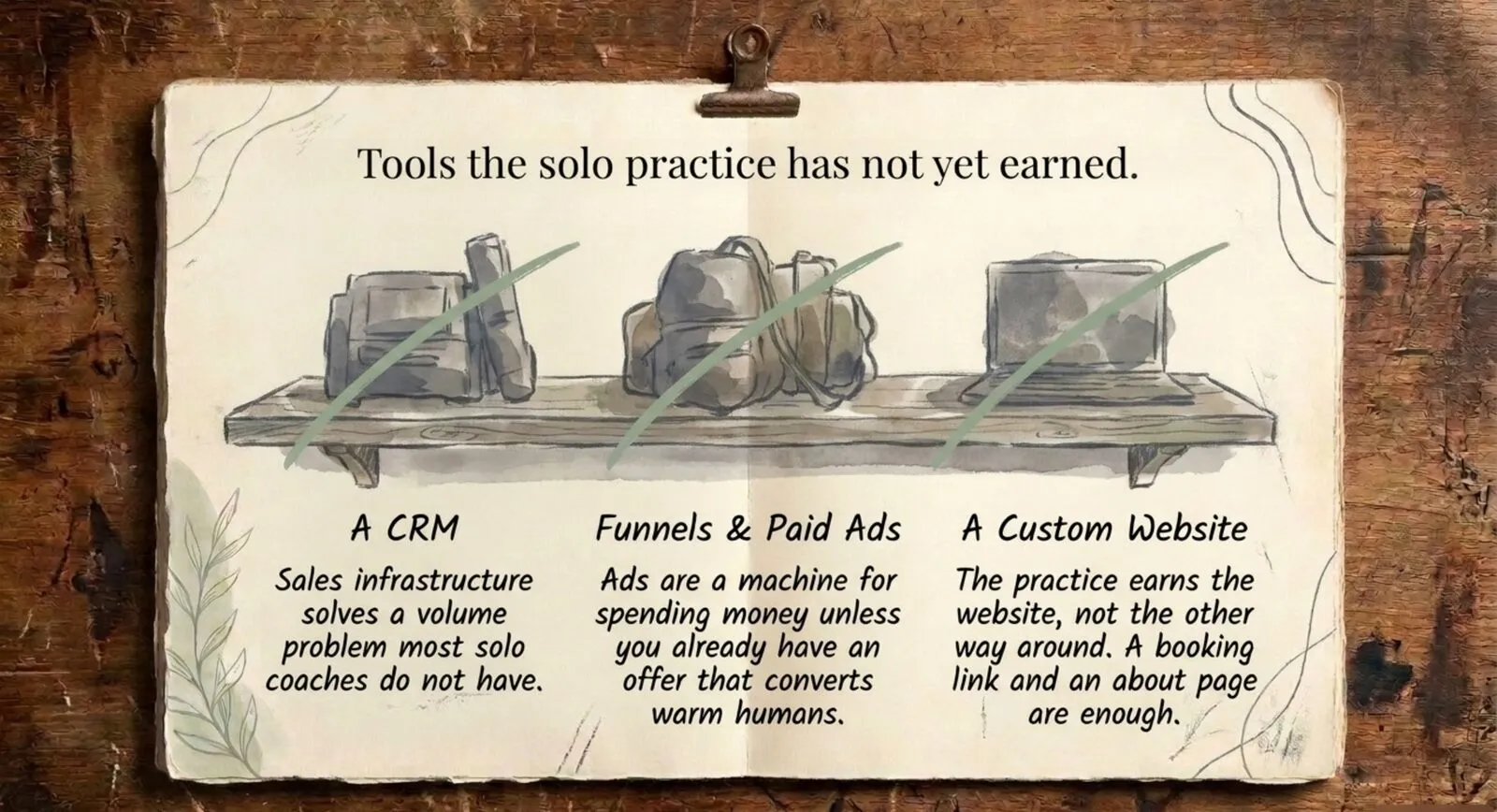
A CRM. I wrote a whole piece on this question; the short version is that sales infrastructure solves a volume problem most solo coaches do not have and should not buy against.
A funnel and paid ads. Ads amplify a thing that already converts. Before you have an offer that converts warm humans in conversation, ads are a machine for spending money to learn you are not ready for ads.
A custom website. A booking link, an about page, and proof you are real can be assembled for close to nothing. The practice earns the website. Not the other way around.
The test for every future addition
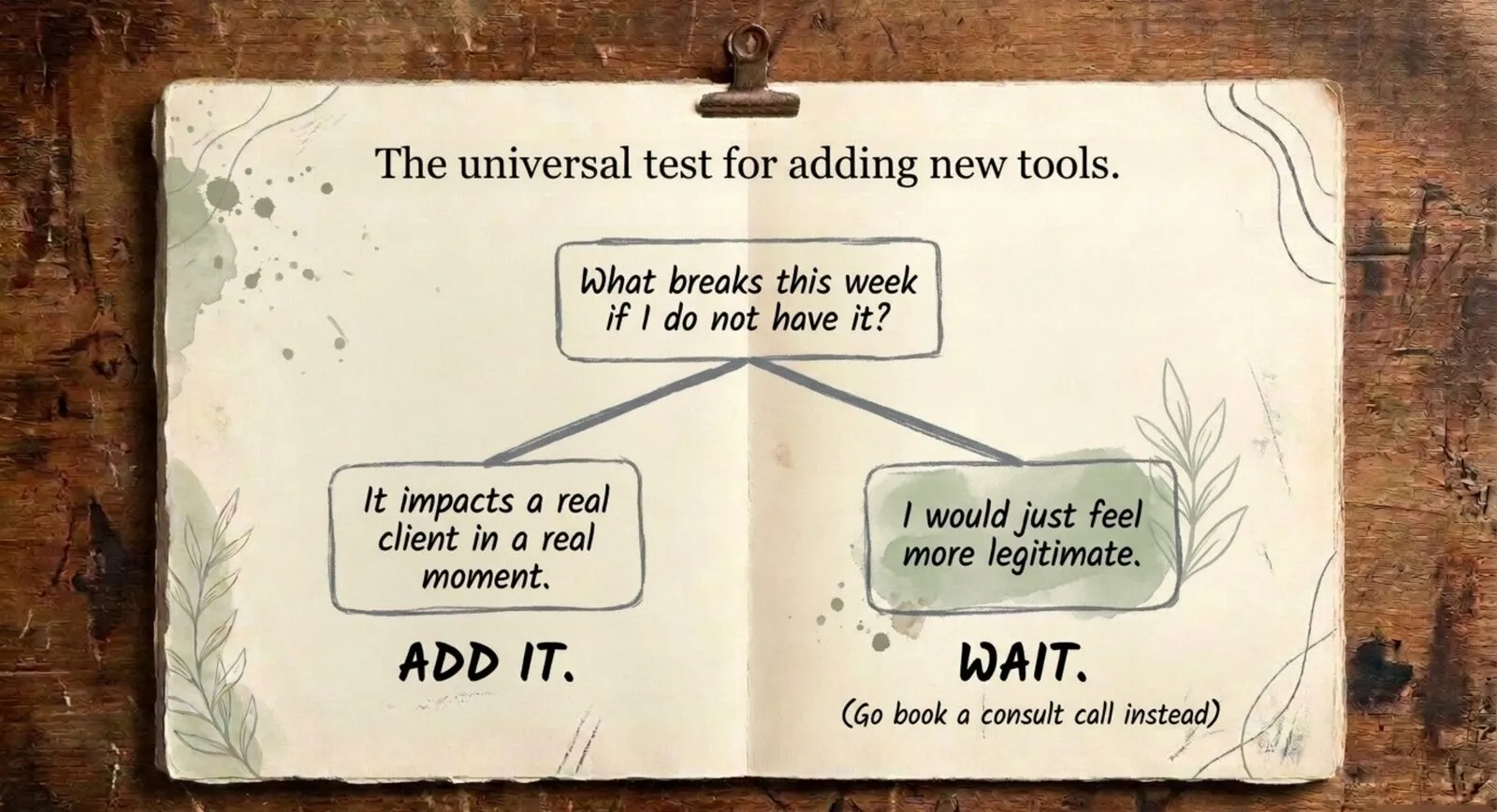
The forty-item lists are not malicious. They are just written backwards, describing the stack of a mature practice as if it were the entrance requirements for a new one.
So run every candidate through the same question the first seven items passed: what breaks this week if I do not have it? If the answer names a real client and a real moment, add it. If the answer is “I would feel more legitimate,” notice that feeling and go book a consult call instead.
The business does not start when the checklist is done. It starts when someone pays you to coach them, and everything on the list either serves that person or it is scenery.

Founder of Grove. Twenty years building software for skilled professionals. Currently writes mostly on Tuesdays from a small studio in Austin.
