
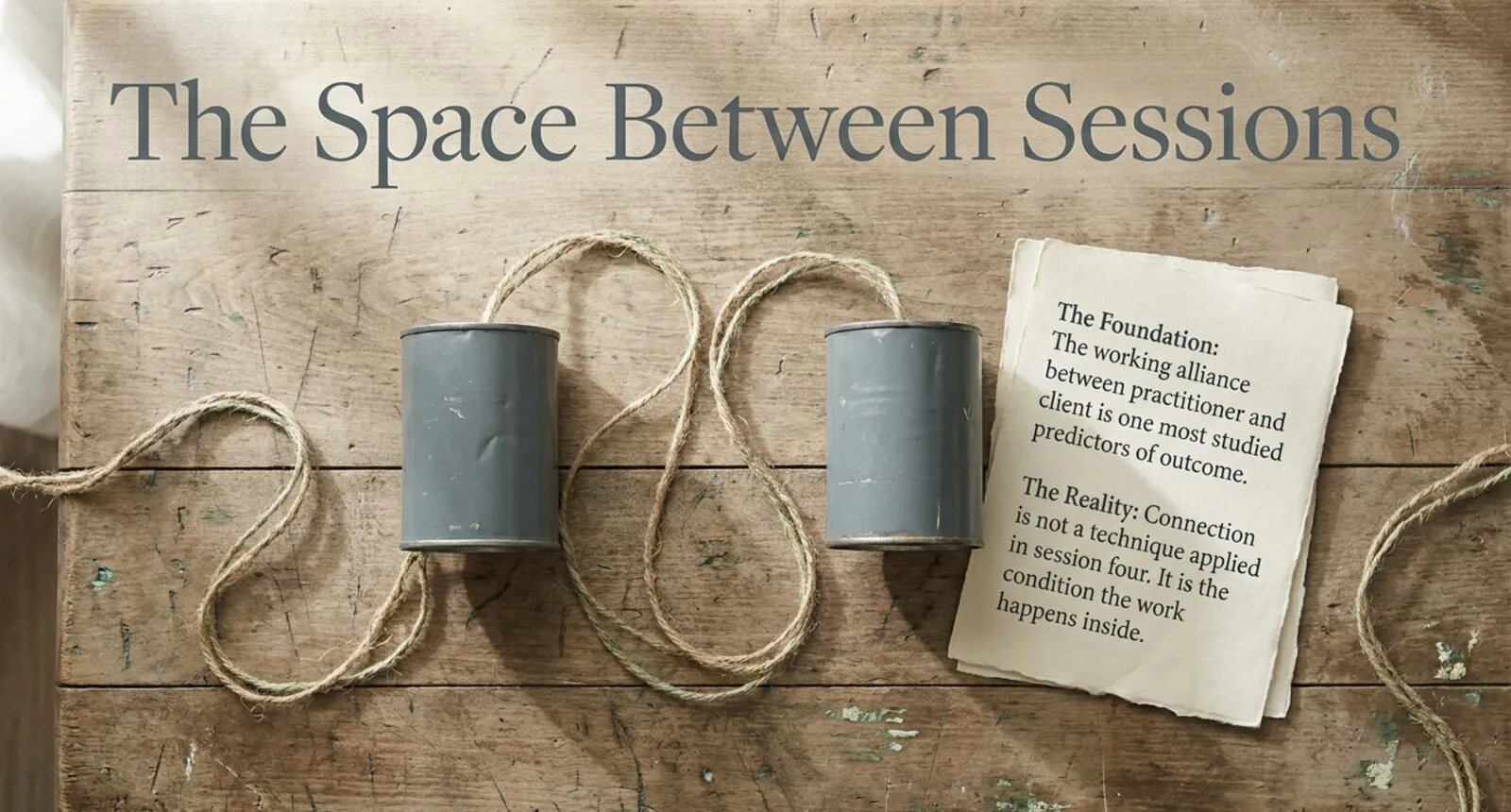
In June, a coach told me she wanted to send her clients “little voice memos to see how they’re doing.” Not a session. A thinking-of-you, how-is-the-week-going message a client could play whenever they had a minute.
In September she brought it up again, unprompted. Three days later, another coach described the same need from the client side. Her own coach sends her voice notes, and she loves getting them. But she didn’t want to bring clients into a personal app.
Two coaches, neither of them really asking for a feature. Both asking the same question: how do you stay close to a client without handing over your phone number?
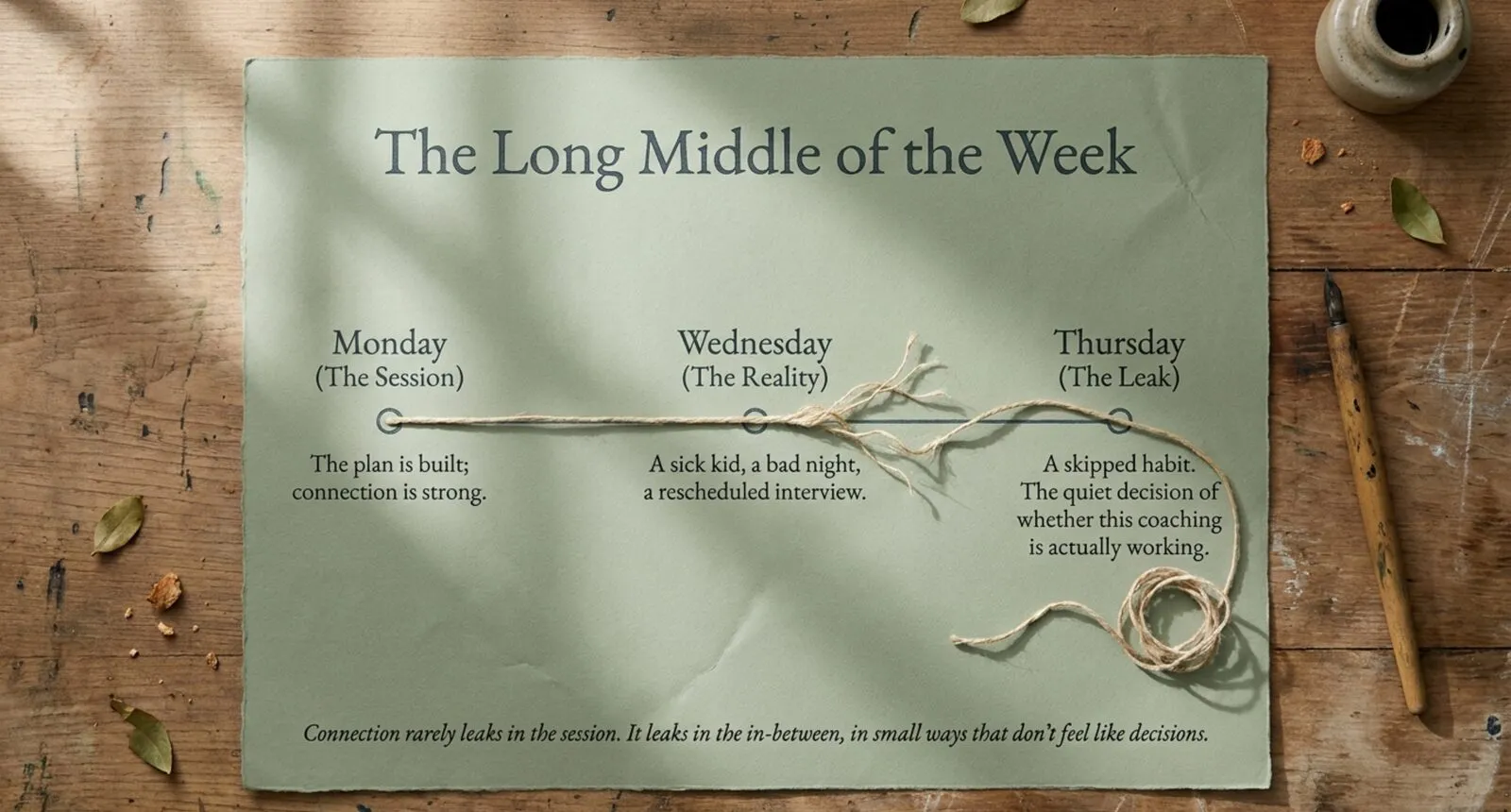
If you coach, you know the long middle of the week that question is about. It is where the plan you built together meets a sick kid, a bad night, a rescheduled interview. It is also where clients quietly decide whether this is working.
The relationship is part of the work
The textbook version of coaching puts the method in the middle: the goal, the habits, the accountability structure. But the relationship matters too.
In psychotherapy, the working alliance between therapist and client is one of the most studied predictors of outcome. Coaching research points in the same direction: a meta-analysis of 27 coaching samples found a moderate, consistent relationship between working alliance and client outcomes.
There is an important caveat. Erik de Haan, looking at two large randomized coaching trials, found that alliance seemed to predict where clients started more than how much they improved from conversation to conversation.
I don’t read that as “connection doesn’t matter.” I read it as a reminder that connection is not a technique you apply in session four. It is the condition the work happens inside.
Where connection leaks
It rarely leaks in the session. It leaks in the in-between, in small ways that don’t feel like decisions:
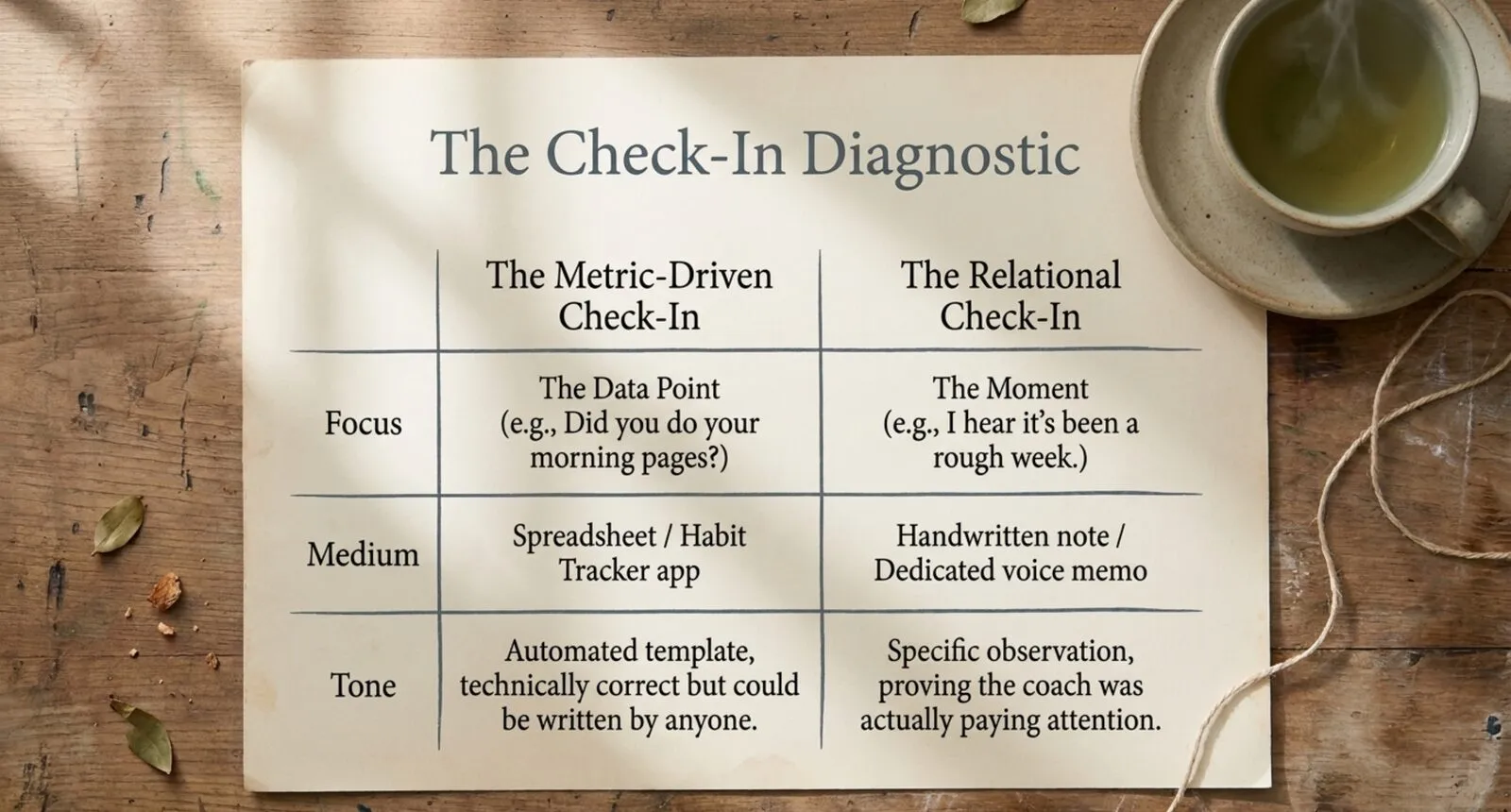
- The check-in that gets a thumbs-up because it is the fortieth one today. (I wrote about the posture underneath this in checking in is not checking up.)
- The message answered three days late because it arrived in the wrong app.
- The client who had a hard Thursday and decided not to mention it, because the last time they did, they got a reminder about their habit streak.
- The reply that is technically correct and could have been written by anyone.
None of these is a failure of care. They are what happens when the tools around a coaching relationship were built for something else. A personal text thread wasn’t built for a professional coaching relationship. Neither was a spreadsheet or a reminder app.
Small ways to bring the human back in
None of these needs software. Some of them can get easier with it.
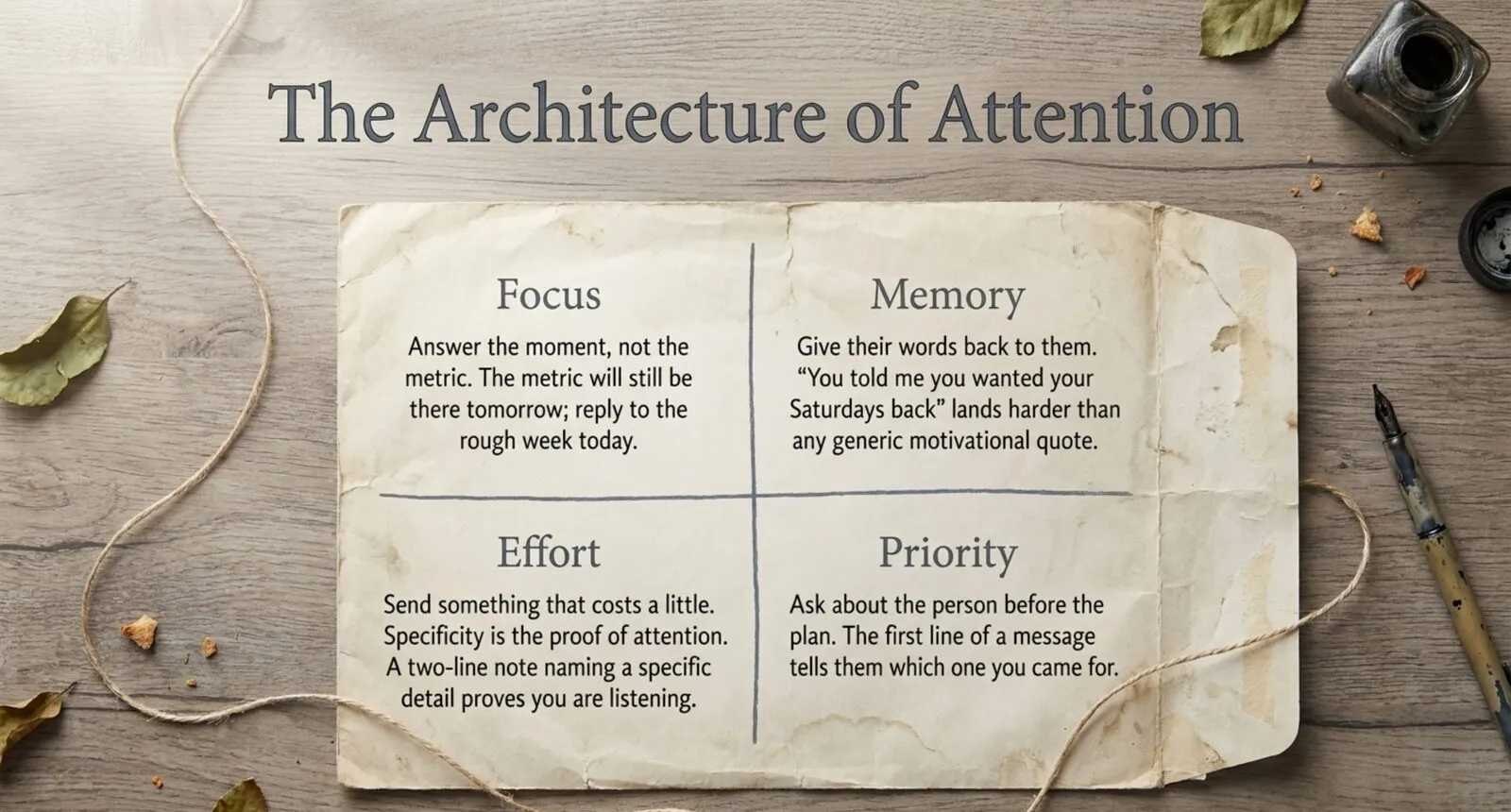
1. Answer the moment, not the metric. When a client writes “rough week, but I still did my morning pages,” the data point is the morning pages. The moment is the rough week. Reply to the moment first. The metric will still be there.
2. Give their words back to them. People rarely remember what they said three weeks ago about why this mattered. You can. “You told me in our first session that you wanted your Saturdays back” lands differently than any motivational line you could write, because it is theirs.
3. Send something that costs you a little. A two-line note naming one specific thing you noticed. A handwritten card after a milestone. A voice memo on the morning of the hard meeting. Specificity is the proof of attention, and clients can feel the difference between an automated template and a person who was paying attention.
4. Ask about the person before the plan. The first few minutes of a session, or the first line of a message, can be about how they are, not how the habits are going. It sounds small. It tells them which one you came for.
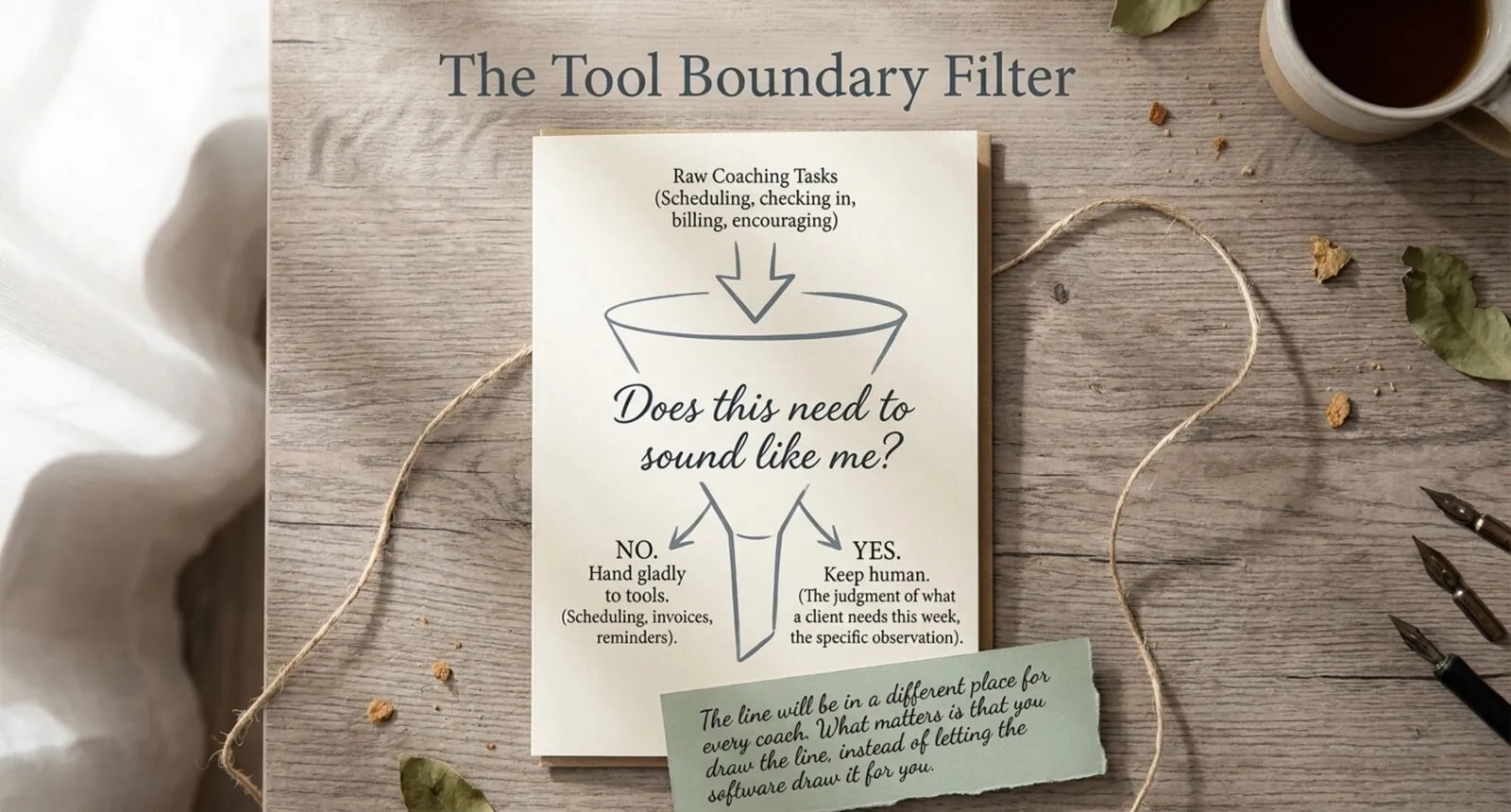
5. Decide what you hand to tools, on purpose. Scheduling, reminders, invoices, the note you would otherwise retype: give those away gladly. The words that need to sound like you, the judgment about what this client needs this week, keep those. The line will be in a different place for every coach. What matters is that you drew the line, instead of letting the software draw it for you.
Where voice memos fit
That last one is why we built voice memos in Grove the way we did. A coach can record a short memo right in a client’s message thread, the client can listen or read the transcript, and they can answer in their own voice, without either of them handing out a personal phone number.
When we took the design back to one of the coaches who asked for it, she said voice memos should stay between coach and client, and stay out of AI. So we kept them out of Sage: neither the audio nor its transcript is shared with it.
It is one tool, and the list above matters more than any tool. But it is a small example of the thing I keep relearning while building Grove: every design decision quietly says what the relationship is for.
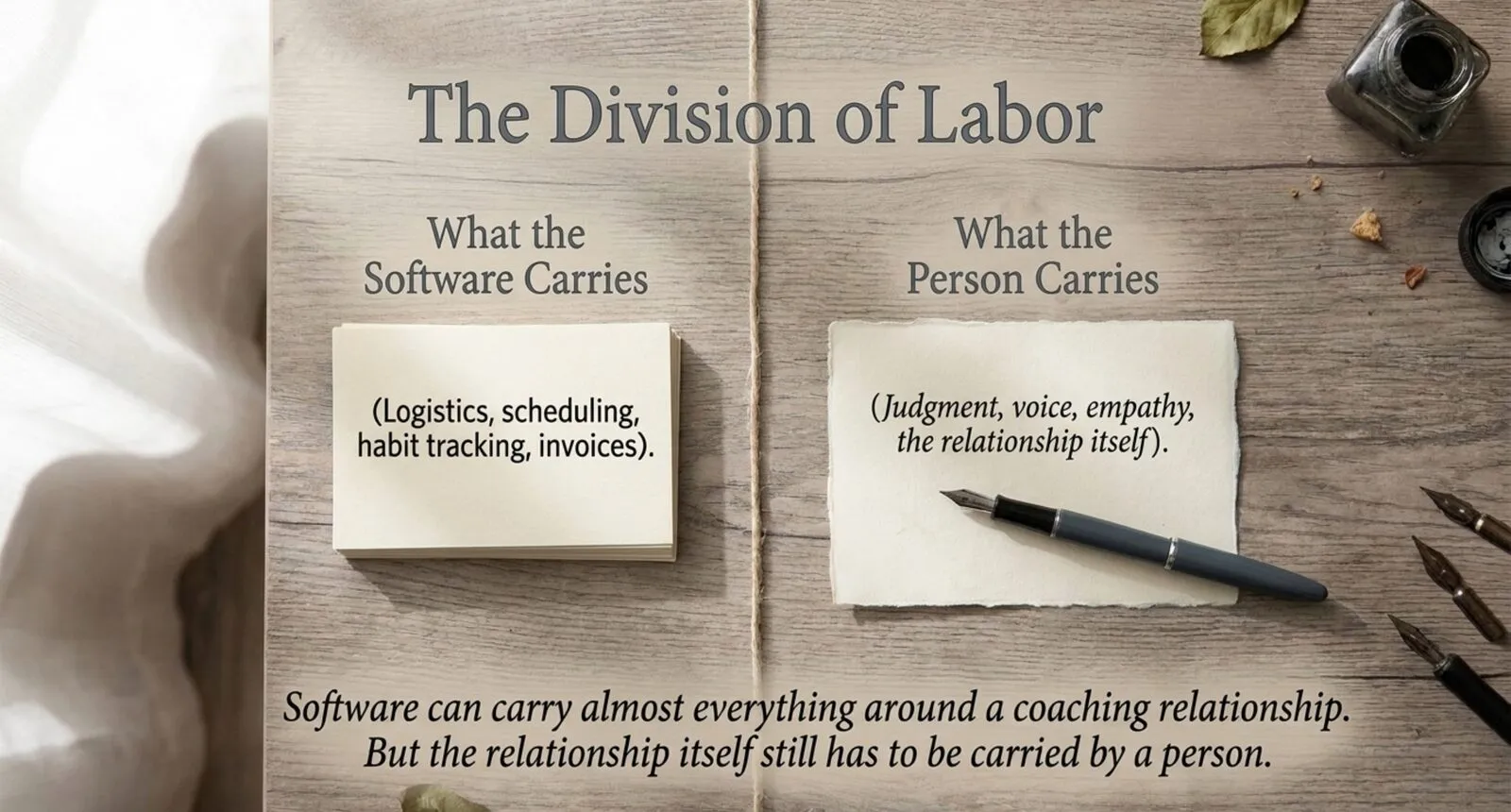
Software can carry almost everything around a coaching relationship. The relationship itself still has to be carried by a person.

Founder of Grove. Twenty years building software for skilled professionals. Currently writes mostly on Tuesdays from a small studio in Austin.