
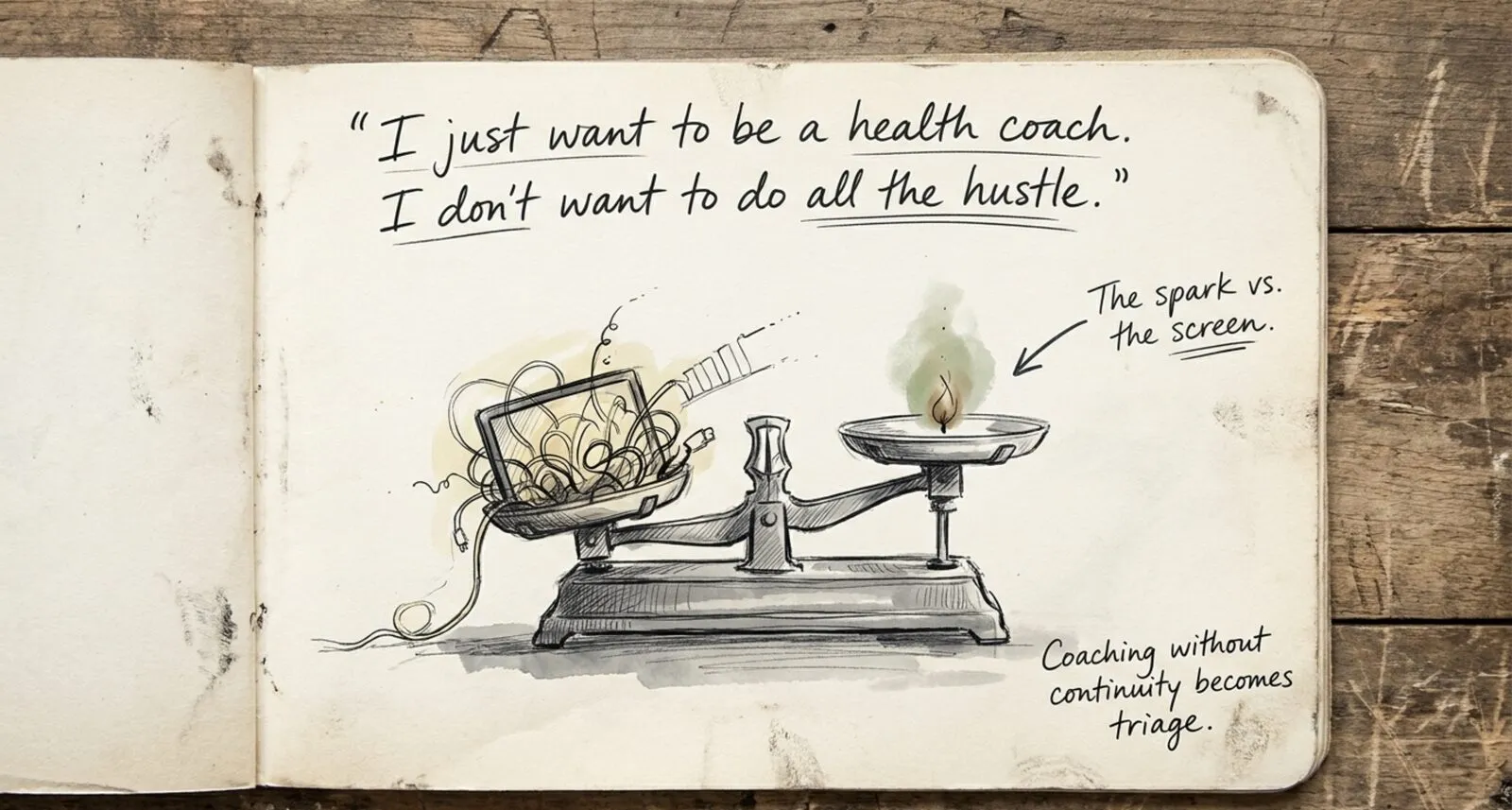
On the last afternoon of the conference, a coach on a panel about building a sustainable practice said the most honest sentence I heard all weekend:
I just want to be a health coach. I don’t want to do all the hustle.
I wrote it in the margin of my notebook, underlined it, and realized I had been writing versions of that sentence for three days.
I spent September 25 to 27 at The Health and Well-Being Coaching Conference in San Diego. I am not a coach. I build software for coaches, and I went to listen: to keynotes, panels, and the hallway conversations in the ten minutes between them. I shared when someone asked what I do. Mostly I asked questions and watched what people leaned into.
I came hoping to learn from coaches. I left with new friends, a notebook full of ideas for how Grove can better support coaches and the people they serve, and four questions I cannot put down: how purpose belongs in coaching, how creativity belongs in the work, who gets access to the profession, and how a new coach gets a practice off the ground before she has much money to invest.
What follows is grouped by theme, not by person. Where something was said from a stage, I have attributed it. Where a coach told me something over coffee, I have kept it general enough that nobody could pick them out of the room. That felt like the right trade for a profession whose craft is holding what people tell you.
1. The spark, the screen, and the space between clients
Nobody put this in the brochure, but it was the hallway conversation. Not pricing. Not marketing. The screen.
Coaches described sitting alone in front of it for most of the day. Holding what clients hand them with nobody to hand it to. Trying to keep the spark that brought them into the work while the work slowly turns into a queue. Underneath it all was the sense that there is never enough time to be present with the person in front of them.
A couple of coaches had come from high-volume programs, the kind where a metric decides how many minutes a client gets. They described logging in without knowing who would appear in their feed that day, then never learning what happened to them afterward. One had come to the conference specifically to get the spark back. Coaching without continuity is triage, and triage is exhausting in a way that has nothing to do with hours.
The Coaching in the Digital Age panel named the structure of the problem: tool and context switching all day, ten-hour shifts with no time for documentation, sessions stacked back to back.
One program does something small and specific about it. They build a “virtual commute” into the schedule: fifteen minutes before each session and fifteen at the start of the day. Sessions default to forty-five minutes, not sixty. Coaches can attempt to set their own caseload. Another panelist offered a question to ask before every session: where is my energy right now?
The same worry has a future tense. A lot of the energy at this conference was about getting health coaches into clinical settings: a coach in every primary-care office, standardized referrals, documentation that fits a medical record, learning to speak in metrics so clinicians will trust you with their patients.
The coaches pushing hardest for it also named the risk: the health-care system overworks its providers, and nobody has worked out how to attach coaches to it without inheriting its schedule. One coach described a hospital job that is, on paper, a short list of numbers to move. Physicians running a community-medicine program talked about how quickly “noncompliant” becomes a label for a person whose circumstances nobody asked about. Three coaches I met had been nurses. Each left the bedside with the same desire: more time present with the person in front of them.
Incentives shape the conversation whether anyone intends it or not. When billing and the payer become the center, the conversation stops being the center. I do not think the answer is to stay out of the clinical world; many people who could benefit from coaching are already there. But the terms matter: protected time for documentation, a caseload you choose, and at least one outcome you would track even if nobody paid you for it.
Nobody on stage had software for any of this. It is a schedule decision, a contract decision, and a community decision. The fix for the screen turned out to be other coaches, which is roughly what a conference is.
2. “It’s not an information problem”
Every book about running a coaching practice says the same things. Set your rates. Pick a niche. Follow up. Post consistently. Coaches at this conference had read those books. A couple had written them.
The From Passion to Profession panel put it in one line:
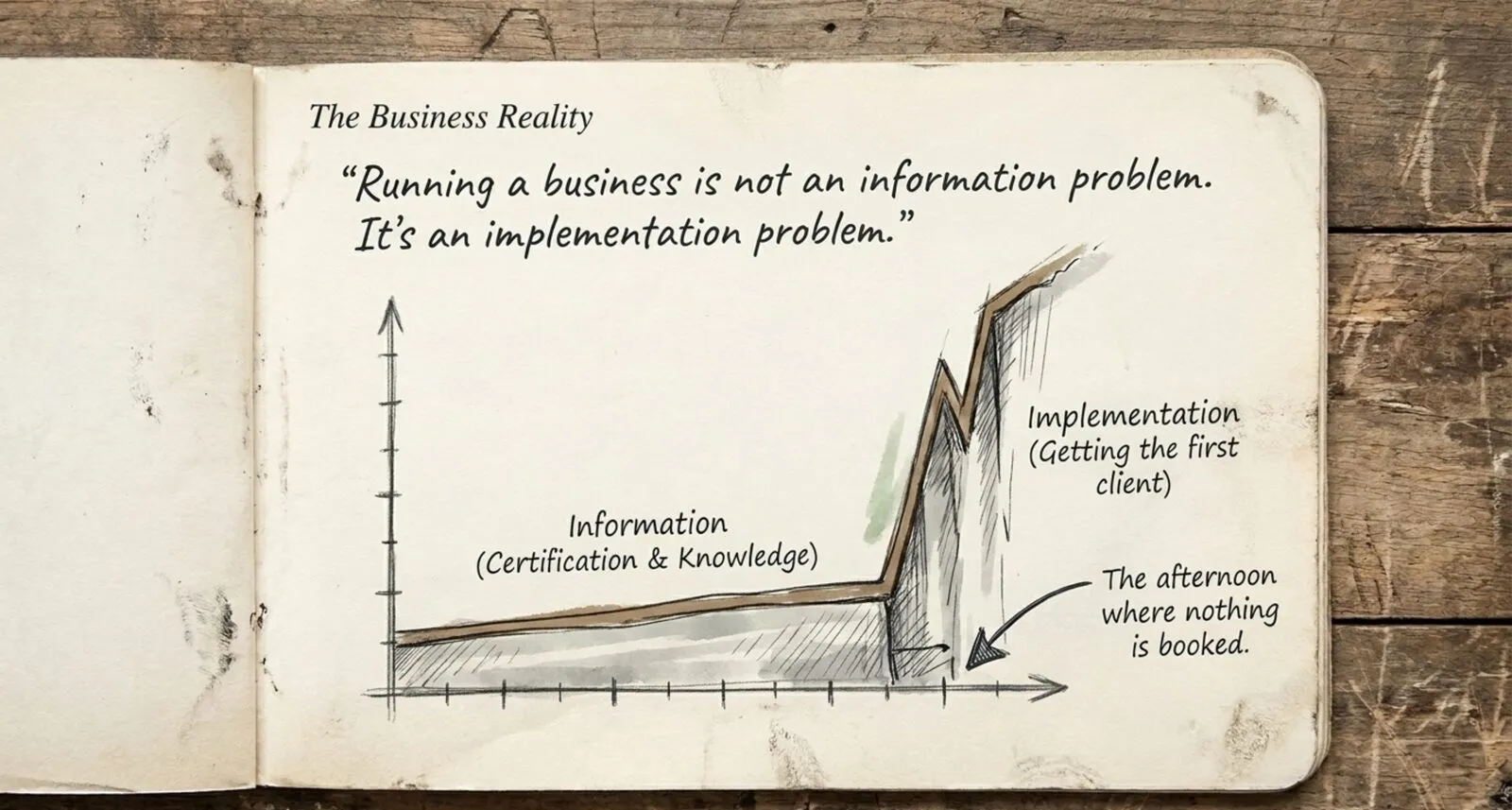
Running a business is not an information problem. It’s an implementation problem.
Low barrier to entry, steep slope after. The slope is not knowledge. It is the afternoon where nothing is booked and the follow-up list lives in three places. It is the certification that took two years and the business nobody taught you to start. One panelist’s whole practice is helping coaches answer “what next?” after the certificate arrives.
The most useful thing the panel offered was not a tactic. It was three questions to ask before choosing one:
- What does a sustainable coaching practice mean to you? Not to your program director or the coach on Instagram with the retreat business. To you. One panelist described treating low energy around the business side as data about the design, not the coach.
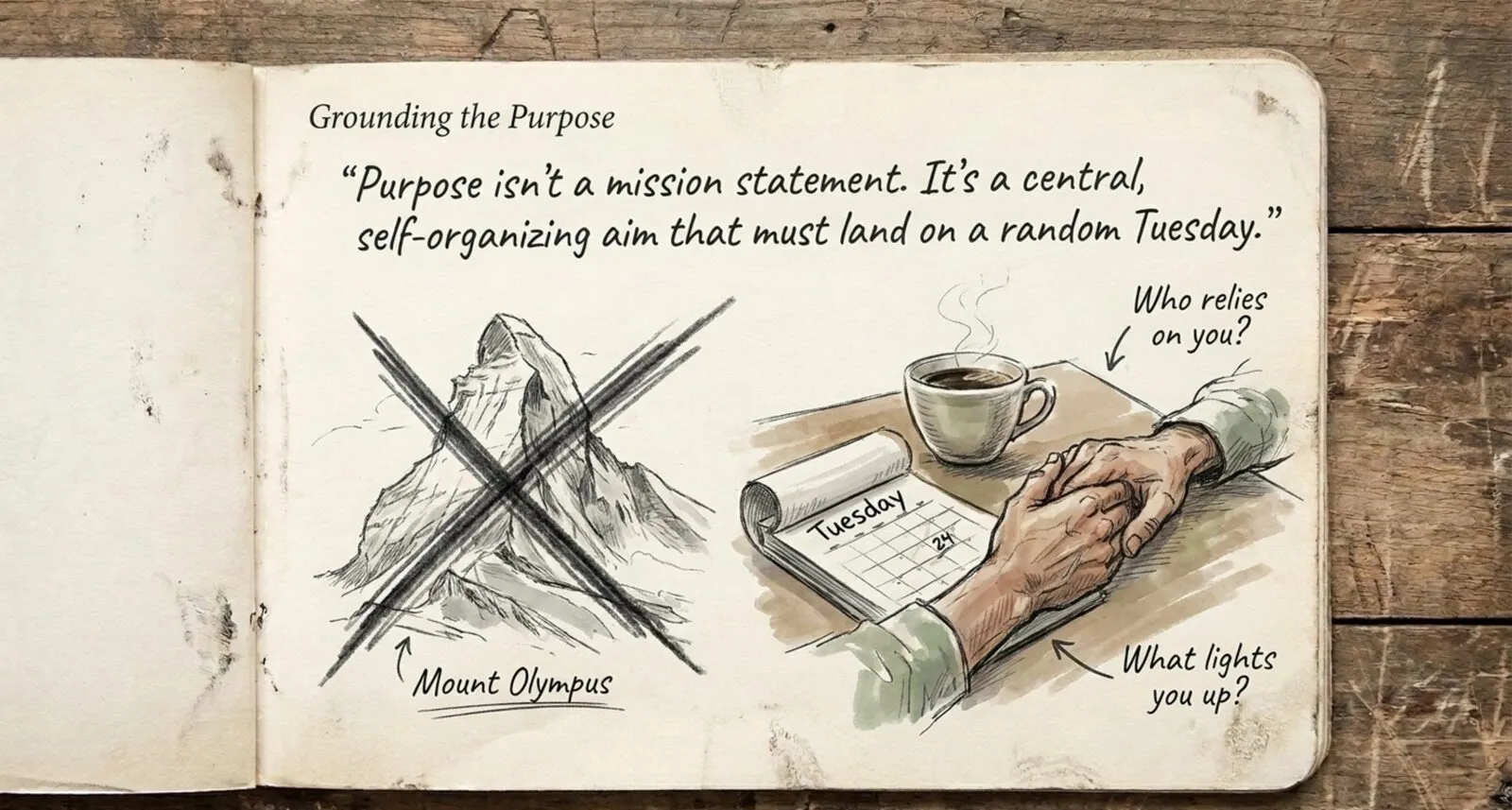
- What lights you up? Which parts of the work do you want more of?
- What do you want to do less of? This one gets skipped. It is the one that decides which tools you need.
Then this line: “Don’t chase the dollar. Chase the vision.” From people who have been doing this for a decade, it did not sound like a poster. It sounded like the reason they were still doing it.
A few practical notes followed. Take jobs that give you reps, even imperfect ones. Put your board certification and measured outcomes somewhere clinicians can verify it. Mentor coaches a step behind you, because that is how many of the panelists found their own mentors.
At one point a coach in the audience said health coaching has an awareness problem, and every coach in the room owns a piece of solving it. Most people still do not know what a health coach is, or what a board-certified one does differently. So say it. Show the outcomes and the process: motivational interviewing, behavior change, measurable results, not a meal plan and a lecture. Tell people what to expect before they have to guess.
Tasha Edwards, who moderated the panel and did a remarkable job holding it to the burning questions in the profession without losing compassion for anyone, added the counterweight. Everyone in this profession is at a different point in the journey. Some coaches do not have credentials yet. Some never will, and they are still trying, in their own way, to help people. The answer to “how do I stand out from uncertified coaches” is not to talk them down. It is to have compassion for where they are and be unmistakably clear about who you are. Curiosity toward them, clarity about yourself.
Starting out, before you can afford to
The question underneath all of this, especially for newer coaches, was simpler and harder: how do I get started? Not “how do I scale.” How do I get my first paying clients while I still have a day job, no roster, and no budget for a business?
The certification was the investment. There is not another pile of money waiting for software, a website, a scheduler, a payment processor, and a course on funnels.
The answers in the room were mostly about people, not tools. Find a mentor. Lean on your certification cohort instead of letting it dissolve into a group chat. Show up to the communities that meet regularly. Offer mentorship yourself as soon as you are one step ahead of someone, which is sooner than it feels. One coach I met mentors new coaches for free because someone did it for her. She described it not as generosity but as how the profession is supposed to work.
That has me looking hard at my own part in it. Grove has a free tier, and the coaches who most need it are the ones with no clients yet and no money to invest, and also the group least likely to hear about it.
So I am rethinking the pricing model with one question in front of me: how does it help an early-stage coach start getting paid before she can pay for software?
I do not have the answer yet. I have a notebook page of ideas about free support and practical guidance, and a strong sense that if the cost of starting keeps people out, the profession stays narrower than it needs to be.
If you are in that “what next” stretch yourself, I wrote about it earlier this year: what to do after NBHWC certification.
3. Purpose on a random Tuesday
Todd Kashdan, a psychologist who studies purpose and curiosity, gave the keynote, and it was the session I took the most notes on.
His definition of purpose is worth copying down exactly: a central, self-organizing life aim. Not a goal. Goals sit inside it. Purpose organizes them, and it makes a hard week survivable because you know what the hard week is for.
The part coaches were talking about afterward was his insistence that purpose does not need to live on Mount Olympus.
“You need to have a purpose that lands on a random Tuesday,” he said.
Then he paused. “Which I think is ChatGPT’s favorite phrase for me right now.”
The room laughed because, yes. But the joke also made his point. Purpose does not have to sound grand enough for a keynote. It has to be usable on an ordinary day. “I’m going to make them laugh” counts. “I protect my kids” counts. Even purposes that look selfish from the outside can still be purposes; the question is what they organize for the person who holds them.
He described purpose as having three dials a coach can work with:
- Awareness. Can the person describe their purpose precisely, in their own language?
- Strength. How often do they act on it?
- Scope. How many parts of their life does it touch?
The simplest intervention he described was almost embarrassingly small: have someone write down what they are living for, then check in later and ask whether they worked toward it. Write it down. Get asked about it. If that sounds like a check-in, it is one.
The five questions he uses to find it:
- Who or what inspires you, and why?
- Who relies on you?
- What causes do you care about?
- What gets you out of bed in the morning?
- What remains unfinished business?
He also ran an exercise at my table. List three things that once lit you up. Draw a thread from each to what you do now. Mine were video games, books, and Legos; the thread ran to strategy, building, and learning, which is a fairly accurate description of how I spend my days. Someone at my table landed on “love for people.”
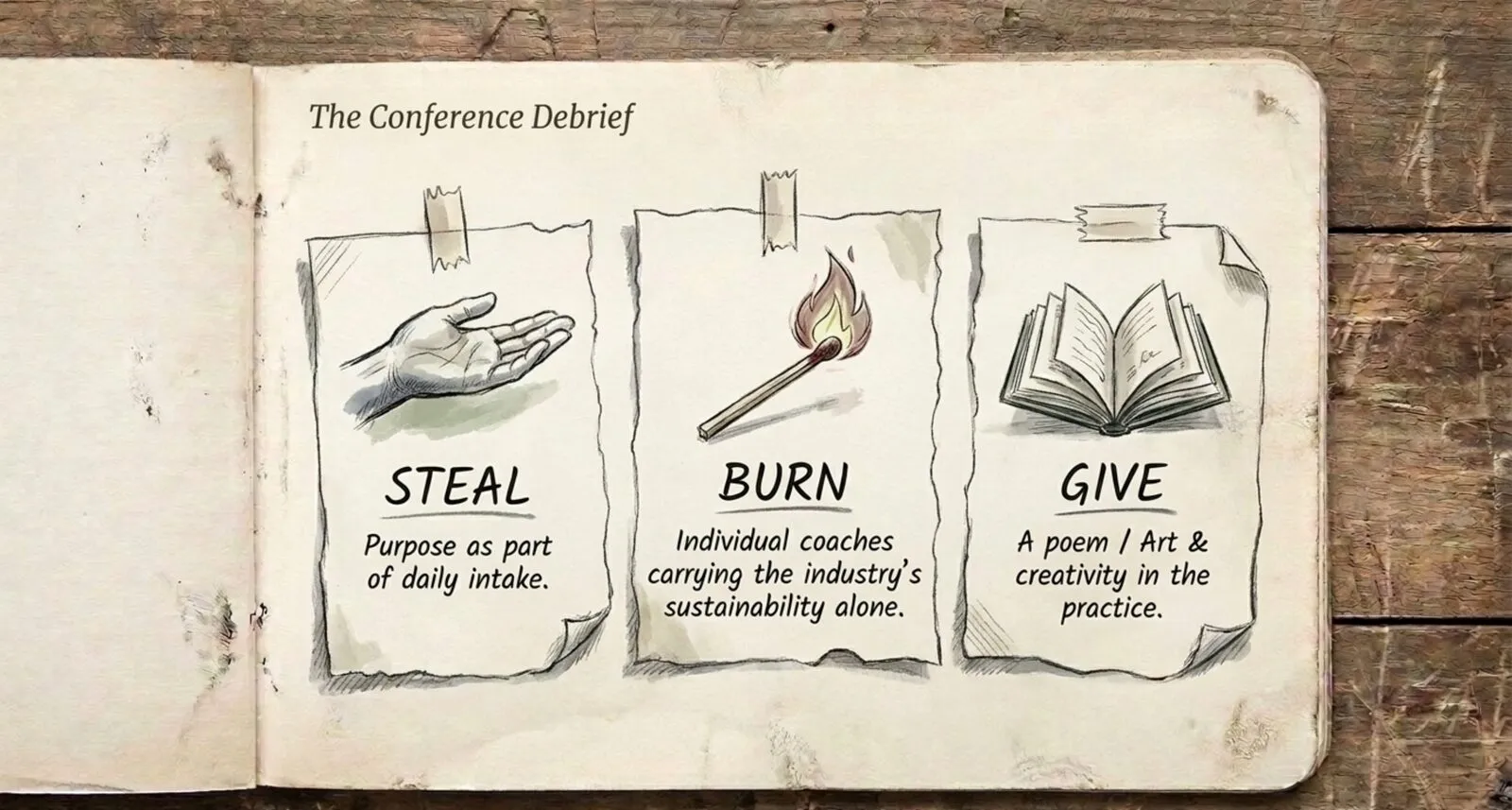
One more thing from his second session, on how groups get smarter. He gave the room three prompts to take into any museum: one thing you want to steal, one thing you want to burn, and one thing you would give to someone you love. I have since used it on the conference itself. It is a better debrief tool than any form I have filled out.
Here are mine.
- Steal: purpose as part of intake, and revisited over time. Not as a mission statement, but as something that should show up on a random Tuesday.
- Burn: the idea that the sustainability of the profession should rest on the shoulders of individual coaches trying to make a mortgage payment. Credentialing bodies, training programs, employers, mentors, communities, and the companies serving coaches, mine included, all have a responsibility to make the path into practice more viable.
- Give: Dawna Markova’s poem “I Will Not Die an Unlived Life”, which Erika Jackson performed as spoken word to open the arts panel and which literally gave me chills. It is the one I would hand to anyone I love.
4. Where the room put AI
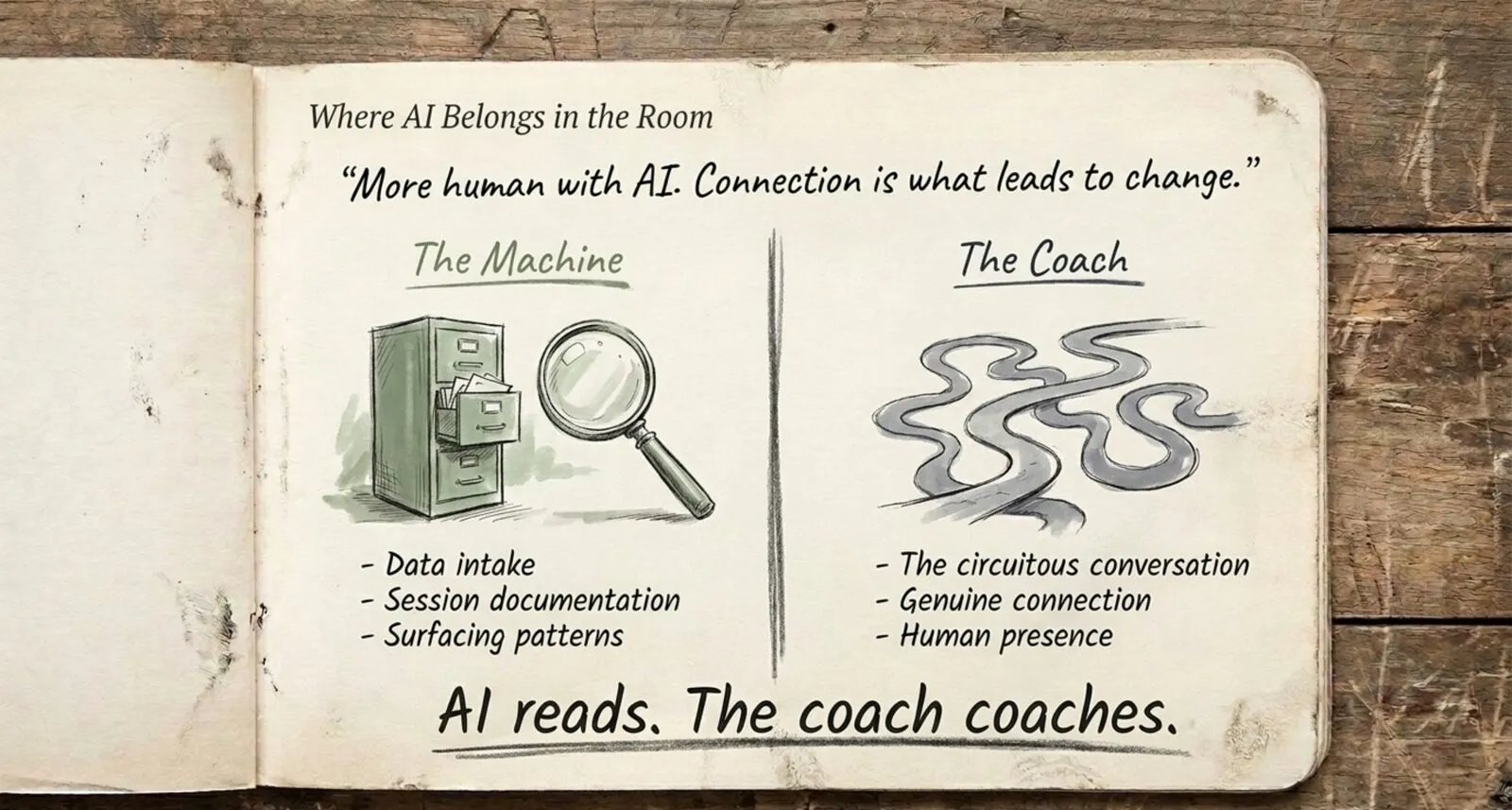
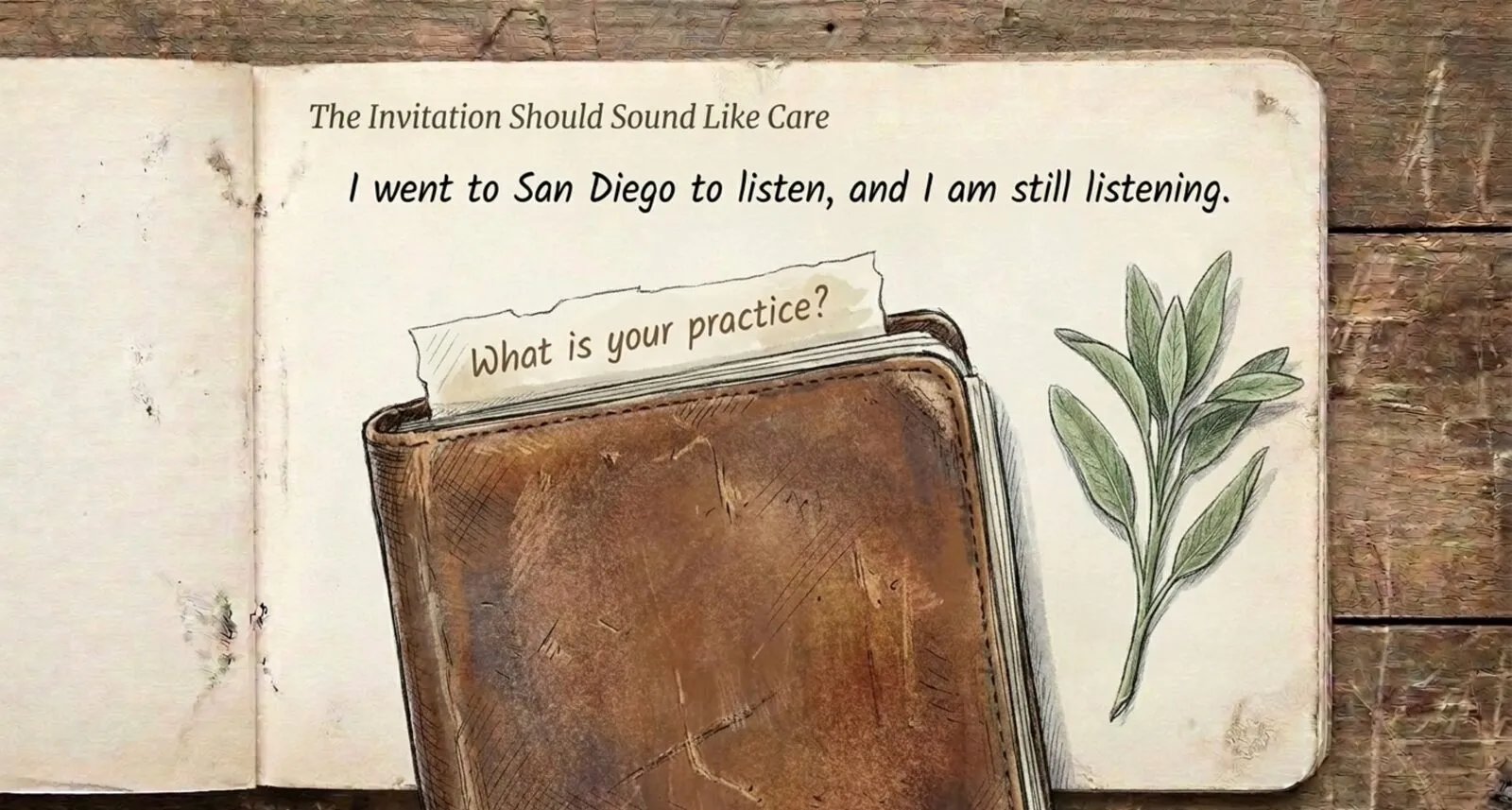
I build an AI assistant for coaches, so I listened hard to the Coaching in the Digital Age panel when people who run coaching programs at scale were asked where AI belongs in the work.
Nobody said “the coaching.”
Their list was short: data intake and personalized output, session documentation, and searching for information. On AI coaches, the line was “just because we can doesn’t mean we should.” Connection is what leads to real change, and an AI cannot follow the circuitous path a coaching conversation takes; it is better at specific prompts than at the meandering hour where the actual work happens.
One panelist relayed a phrase from a recent lifestyle-medicine conference that the room repeated all weekend: “more human with AI.” AI surfacing the data so the coach can be more present, not the other way around.
That matched what coaches responded to when I described what I have been building. Three things landed again and again: client privacy and consent, transcription and notes handled for the coach, and an assistant that never talks to their clients. What did not land was anything that sounded like a bot in the client’s pocket.
Honest label: this is the one paragraph about what I built, and mostly it is about how strange it was to hear it described back to me. For a year I have been drawing one line, mostly on instinct. Sage, your AI assistant in Grove, does the reading: the session transcript, the notes, the pattern across six weeks of check-ins. The coach does the coaching, and the client never talks to Sage. I drew that line alone and defended it as an opinion. Then a panel of people who run coaching teams for a living drew the same one, and for the first time it felt like consensus. I wrote the longer version as Coaching should be a centaur, not a robot.
For everyone else, here is the giveaway. Three questions to ask any AI tool before it touches a client, including mine:
- Who can see my clients’ data?
- Does it ever talk to the client as me?
- Can I turn it off, per client?
If a vendor cannot answer all three in one sentence each, the tool is not ready for your practice.
5. “The invitation should sound like care”
One of the more inspiring sessions was From Clinic to Community, about a program called Community as Medicine that runs twelve-week groups through community clinics and the YMCA. Against expectations, it served up some useful marketing advice for solo coaches.
They train clinicians to refer patients into the group with words like these:
I’m recommending this because I believe it can help you feel better and make these changes easier. You’ll have support, movement options, and a community. Would you be open to learning more?
The anti-pattern on the slide was “here’s a flyer if you’re interested.” Four moves make the difference: connect the program to the person’s goal, recommend it with confidence, normalize needing support, and ask permission. Steal the script. It works just as well for inviting a client into your own program.
Two other lines from the physician who runs it. “Design the smallest reliable version first, then add complexity when the pathway works.” And, on the eternal question of who pays for prevention: stop worrying about who pays for it, do what is right, and make the right care available somehow. A room full of coaches who have been told to prove their ROI seemed to breathe out a little.
The group arc itself is useful even for a coach who will never run one: arrive, practice, connect, continue. Every session turns advice into something people can try, discuss, and repeat. At the end of each week, participants write themselves a prescription: what are you committing to?
They report the usual clinical numbers. They also talk about purpose and social connection as outcomes, and the UCLA Loneliness Scale came up as a measure that matters even though nobody pays for it. Those are the outcomes the profession is proudest of, and the ones still waiting for a line on the invoice.
6. Drawing how you feel
The premise was simple: creative expression is a coaching tool with evidence behind it, and most coaches already have more of it in their toolbox than they use. Drawing how you feel. A vision board for how you want to feel in your practice. Grounding before a session with something like qigong, the way an athlete warms up. And a line borrowed from the choreographer Twyla Tharp: people ask how you make a dance, and the answer is that you put yourself in motion.
The exercise that made the round of the room was a magazine cover. Write the dream article about you, ten years from now. What is the title? What is the pull quote?
One coach at my table observed that intellectual creativity counts too: building something or solving a problem is as much a creative act as painting. I want to remember that the next time I tell myself engineering and writing are different kinds of work.
Who was in the room
One presentation deserves its own note. Dr. Crystal Cené walked the room through who health coaches are today and who they serve, and the honest answer is that the profession is mostly white, college-educated women, while communities that could benefit from coaching are among those least likely to get it.
It was not a scolding. It was a map, and the room studied it. Some coaches I met afterward are building their practices specifically in underserved communities, and they talked about it as their purpose, not a niche.
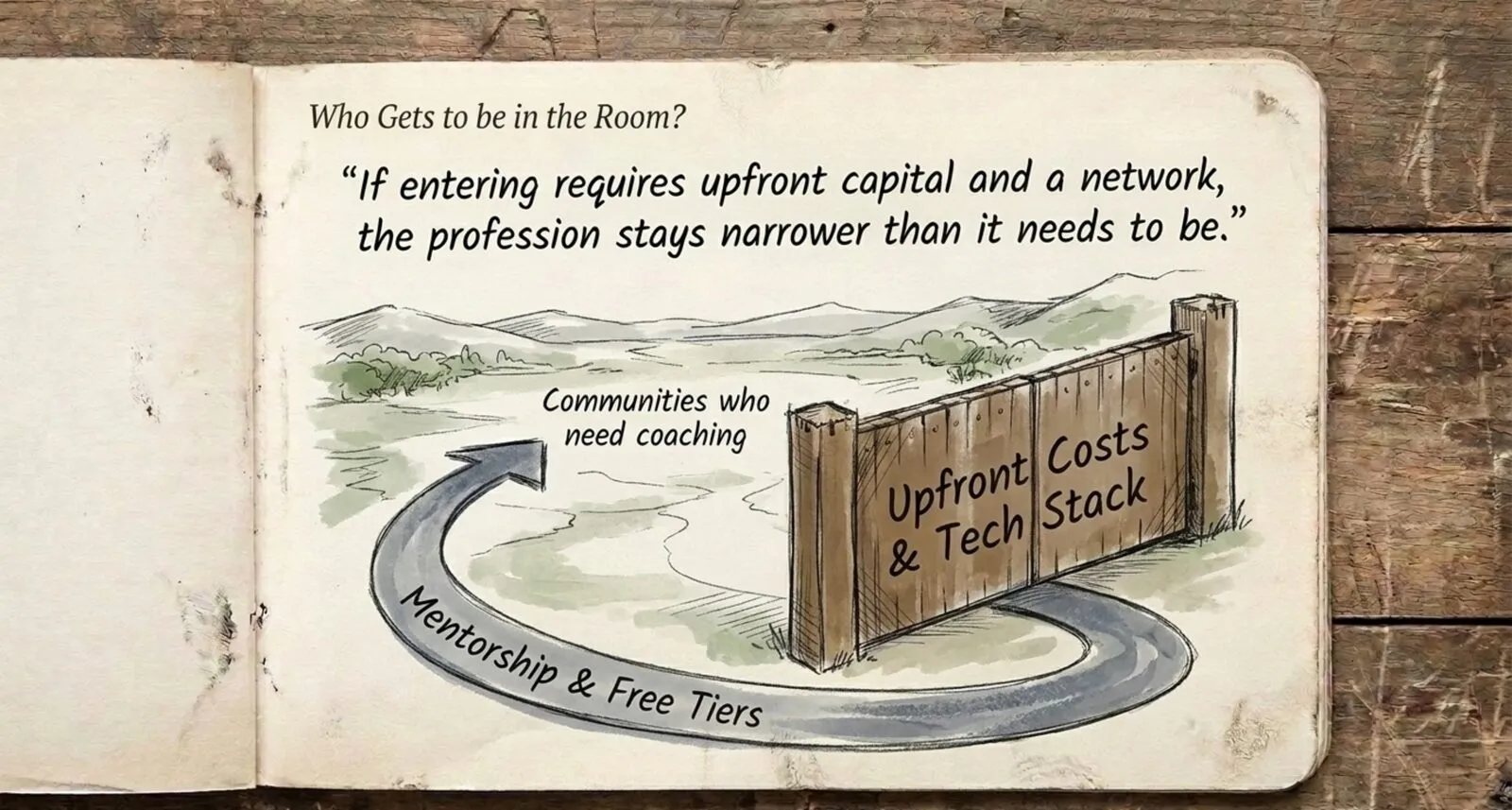
The map connects to the starting-out problem more directly than I first saw. If entering the profession requires upfront capital and an existing professional network, those requirements shape who can enter, and the map does not change. If it requires a mentor, a community, and tools that cost nothing until there is something to pay with, it might.
What I took home
I went to San Diego with a notebook and a listen-first rule, and the notebook filled up with the same few things captured from different voices. Keep the spark. Hold what clients hand you without carrying it alone. Define what sustainable means before you buy the tactic. Purpose is ordinary and specific. Let the machine read so you can be more present. Invite people in like you mean it. Put yourself in motion.
The four questions I left with are the ones I opened with, and I am going to be working on them in the open. Purpose, for coaches and their clients. Creative expression and more room for play. Representation and who gets to be in this profession. And starting out: more free support and practical guidance for coaches building a business from nothing, and getting Grove’s free tier into the hands of new coaches while they are still finding their footing.
That last one is the piece I am most excited to explore, because it is where the room told me most clearly what it needed.
Nobody in San Diego was asking for more information. They were asking, in one form or another, for support and company: between sessions, between clients, and in the long stretch between the certificate and the practice.
Further reading
- Does AI coaching create client dependency? The post where I first laid out “the coach gets first pass,” the rule that Sage reads and the coach decides.
- What to do after NBHWC certification (nobody tells you) For the “what next” stretch between the certificate and the practice.

Founder of Grove. Twenty years building software for skilled professionals. Currently writes mostly on Tuesdays from a small studio in Austin.