
The first time a coach made me feel truly seen, she didn’t do anything dramatic. She just remembered.
I had mentioned something small three weeks earlier, a worry I’d half-said at the end of a session and then let go of. She opened our next call by picking up that exact thread. Not the big goal we’d been circling for months. The small thing. The thing I had already forgotten I’d said.
That is what being coached well feels like from the client’s chair. Not advice. Not a plan. The quiet sense that someone is holding the thread of your life when you can’t.
What I didn’t see from my side of the screen
Here is what I missed at the time. That memory was not effortless.
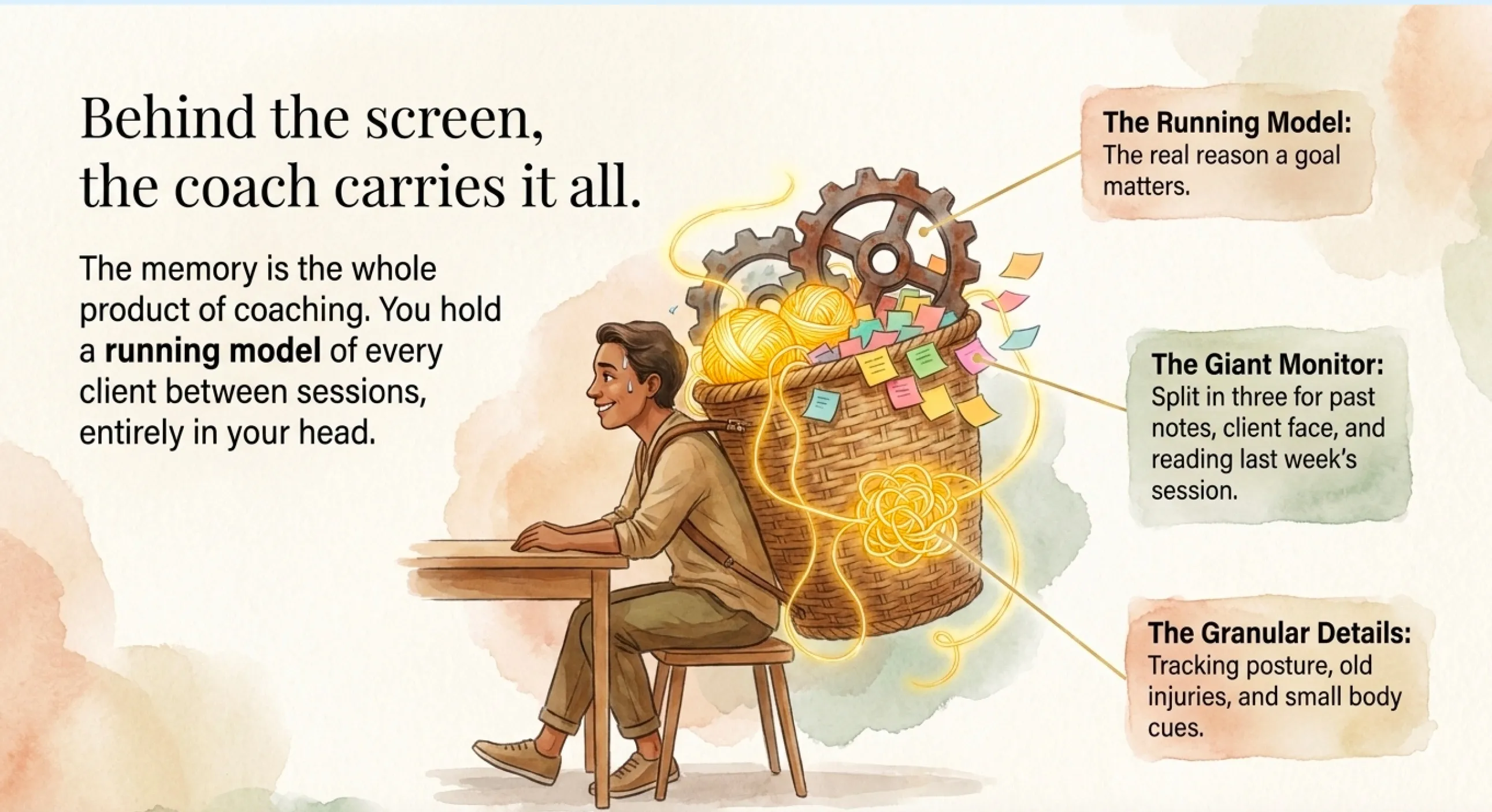
On her side of the screen, my coach was carrying a running model of me. What I’d tried. What I’d dropped. The reason a goal mattered in the first place, which is almost never the reason a client says out loud. She was holding all of it, for me and for every other client, between sessions, in her head.
When I started talking to coaches about how they actually work, I found out how literal that is. One coach told me her home setup is a giant monitor split in three. One third is the previous session’s notes. The middle is the client’s face. She reads last session back to herself before every call, just to remember where they left off.
Another described herself as a very granular coach. She tracks posture, old injuries, the small cues that make a movement safe for one specific body. There is no way, she said, to put all of that on paper. So she keeps it in her head instead, every client and every detail, and carries it from one session to the next.
The best coaches I talked to don’t even call this accountability. One of them put it a way I keep coming back to:
I used to struggle with accountability, because I’m just a person on the other side of a screen and you don’t owe me anything. Now I think of it differently. My job is to help you remember what you said was important.
That is a health coach describing her own work, in her own words.
The problem with holding it all in your head
That kind of memory is the whole product of coaching. It is also fragile and expensive.
Clients forget their own context constantly. I do it every session. The emotional weight of one topic makes you completely lose two others, and then the note comes back later and you think, oh, right, we talked about doing that too.
So the coach becomes the memory. Being the memory is a quiet kind of weight. It means carrying a low background worry into every session, the fear of walking in and realizing she has lost the one detail that mattered most to this client since they last spoke, or that she cannot quite recall what happened for them last week, or that she has missed a pattern quietly building across their check-ins that she should have caught. And the moment her memory does slip, because she has fifteen clients and a full week and a life, the thread drops. When the thread drops, the client stalls. I wrote a while ago about why your most informed clients still stall. A lot of the time, it isn’t the client. It’s that nobody is holding the continuity between one session and the next.
Introducing Sage
Sage is your assistant coach in Grove that does the remembering, so a coach doesn’t have to hold it all in her head.
A head coach with an assistant has someone who knows the roster cold, watches the film, and shows up in the morning with notes. That is the job Sage does inside a coaching practice, and the Daily Pulse is the first of those notes.
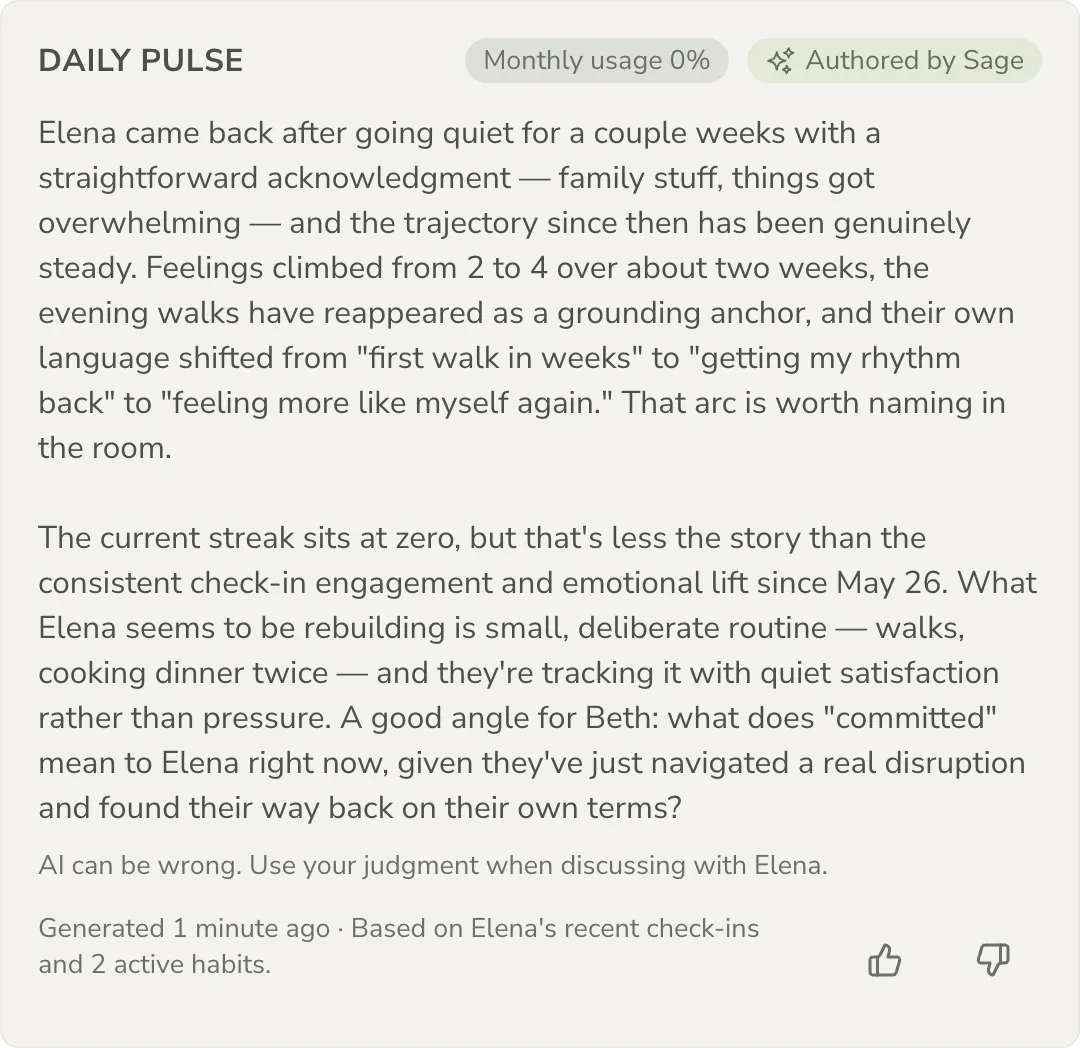
Each morning, for every client who has opted in, Sage reads the recent check-ins and surfaces a Daily Pulse: a short read of what changed and what matters today. Not a transcript. Not a wall of data. A few sentences a coach can take in before a session, the way she would have read last session off the side of her monitor, except it’s already pulled together and waiting on the dashboard.
The point of the Daily Pulse is not the summary. It is what the summary frees a coach to do. Almost no one gets into coaching for the notes. They get into it for the part that happens in the room: the connection with a client, and the slow work of helping someone actually change. One coach told me that letting something else hold the record was the thing that finally let her stay present, because she could stop scrambling to capture every word and just be with the person in front of her. That is the trade Sage is built to make. Sage carries the remembering, and with it the quiet anxiety of forgetting a detail or missing a pattern, so a coach can spend her attention where it always mattered, on the client and on the change they came for.
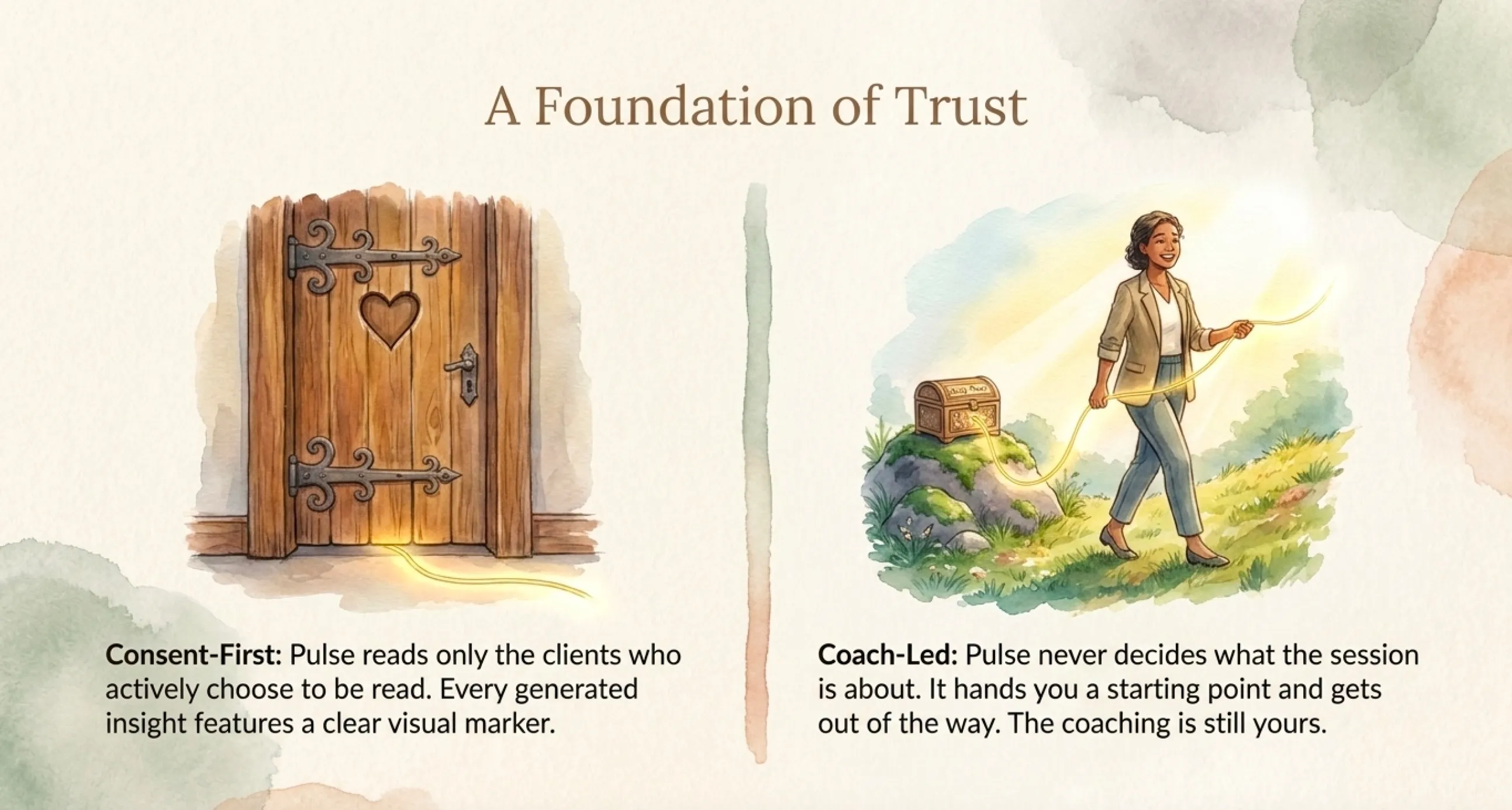
It is consent-first by design. A client opts in before anything about them is read this way, and the coach sees a clear marker on anything Sage authored.
And it stays honest about what it is. Right on the card, Sage says what we believe: AI can be wrong, so trust your own judgment. Sage never decides what the session is about. It offers a read, not a script. The coach is free to lean on it, set it aside, or read right past it, and nothing about the session is locked in by the dashboard. There is always a person in the loop, and that person is the coach. The coaching is still hers.
Why this is the feature we shipped first
Grove could have started somewhere flashier. We started here because this is the moment that makes coaching feel like coaching.
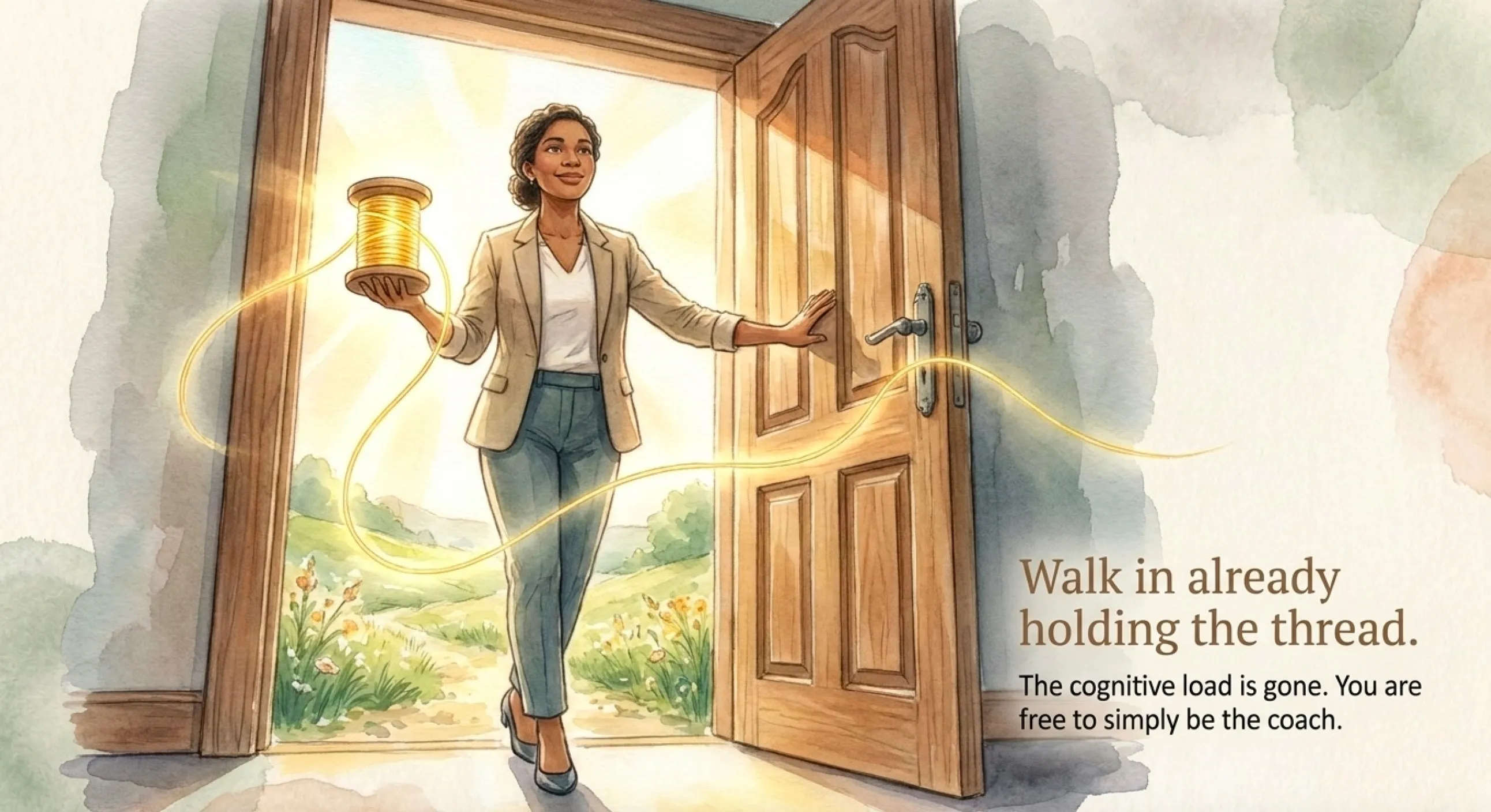
Sage is remembering for her, not me. And when my coach walks in already holding the thread, I am the one who feels seen.
Daily Pulse is live now for coaches on Grove. Sage reads only the clients who choose to be read, and it always leaves the judgment where it belongs.


Founder of Grove. Twenty years building software for skilled professionals. Currently writes mostly on Tuesdays from a small studio in Austin.