

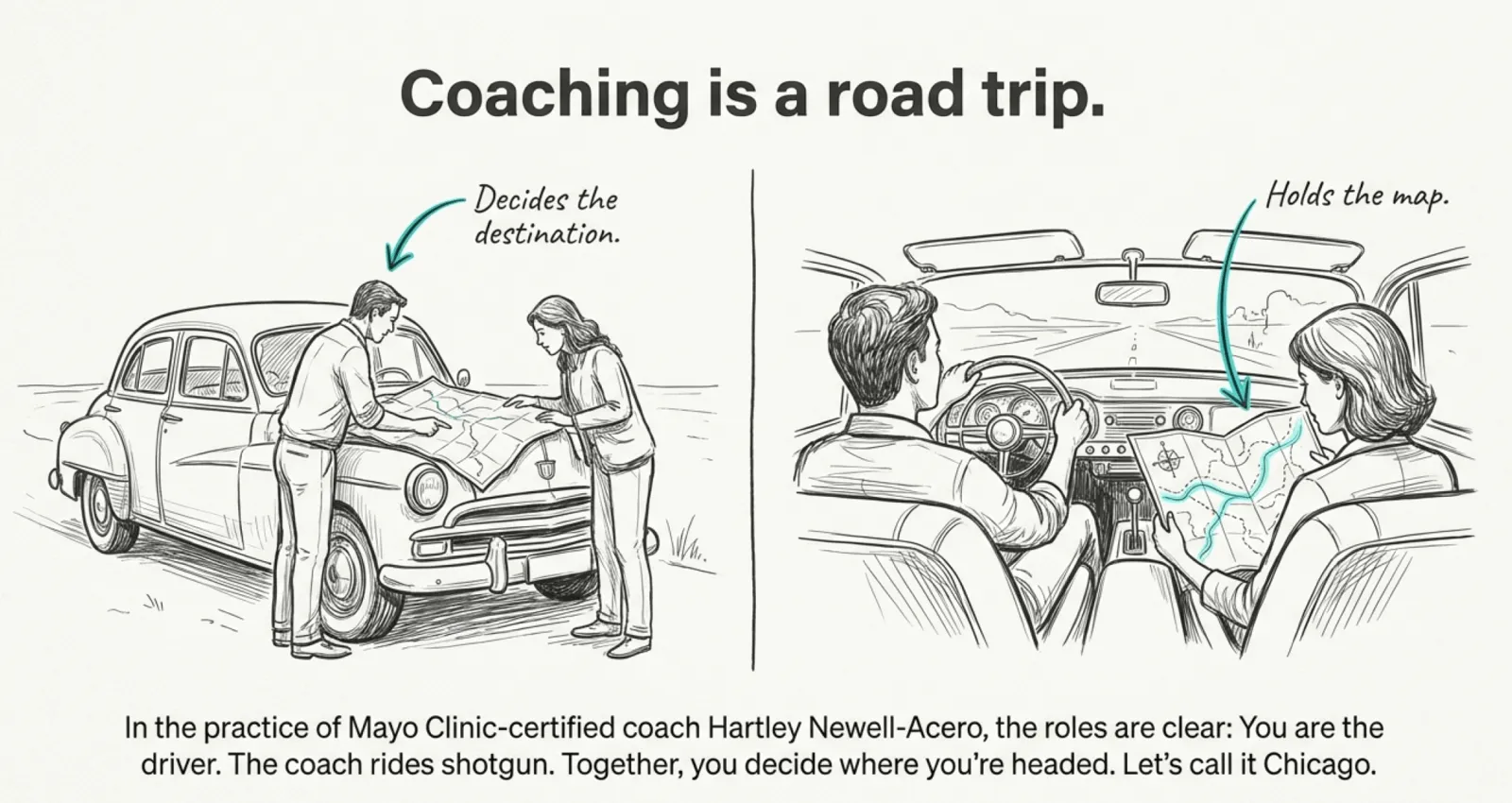
Edited highlights from a conversation with Hartley Newell-Acero, a Mayo Clinic-certified health and wellness coach with a private practice in Grand Marais, Minnesota. The questions are mine. The answers are hers, lightly edited for length and clarity. The story is in what she says.
What makes a coach effective?
To be an effective health coach, you have to really understand what coaching is and what it is not. You have to be willing to stay in your lane.
It is not uncommon for people to get into health coaching because they enjoy nutrition, and they’ve got a diet that feels good and healthy to them, and so they decide they’re going to create meal plans for people. That’s not my lane. That is the lane of a registered dietitian. In the same way that creating workout plans for someone, that is not my lane. In another life I was a certified personal trainer. I’m not anymore, and have not been for decades. That is the lane of certified personal trainers or physical therapists.
To be truly effective, there’s almost like you have to reel yourself in and then do what we do really well, which is the science of behavior change, values clarification, and deep listening. That’s where coaches should shine.
How would you describe your coaching philosophy?
You are in the driver’s seat, always, at all times.
If we’re going on a trip together, that’s how I look at it. You’re driving, I’m riding shotgun. I’ve got the map, and I can help you navigate. But you’ve told me where we’re going on this map, and the way we’ve figured that out is just through conversation. Sure, there are screeners and tools to help bring things front of mind, to help you sift through. But it’s still conversation around that.
So through conversation, we figure out where you want to go. I help navigate. I’ve got a pack of snacks, lots of resources, to provide as we drive. I’m also here to keep you awake to what you’ve said is important.
What happens when a client wants to change direction partway through?
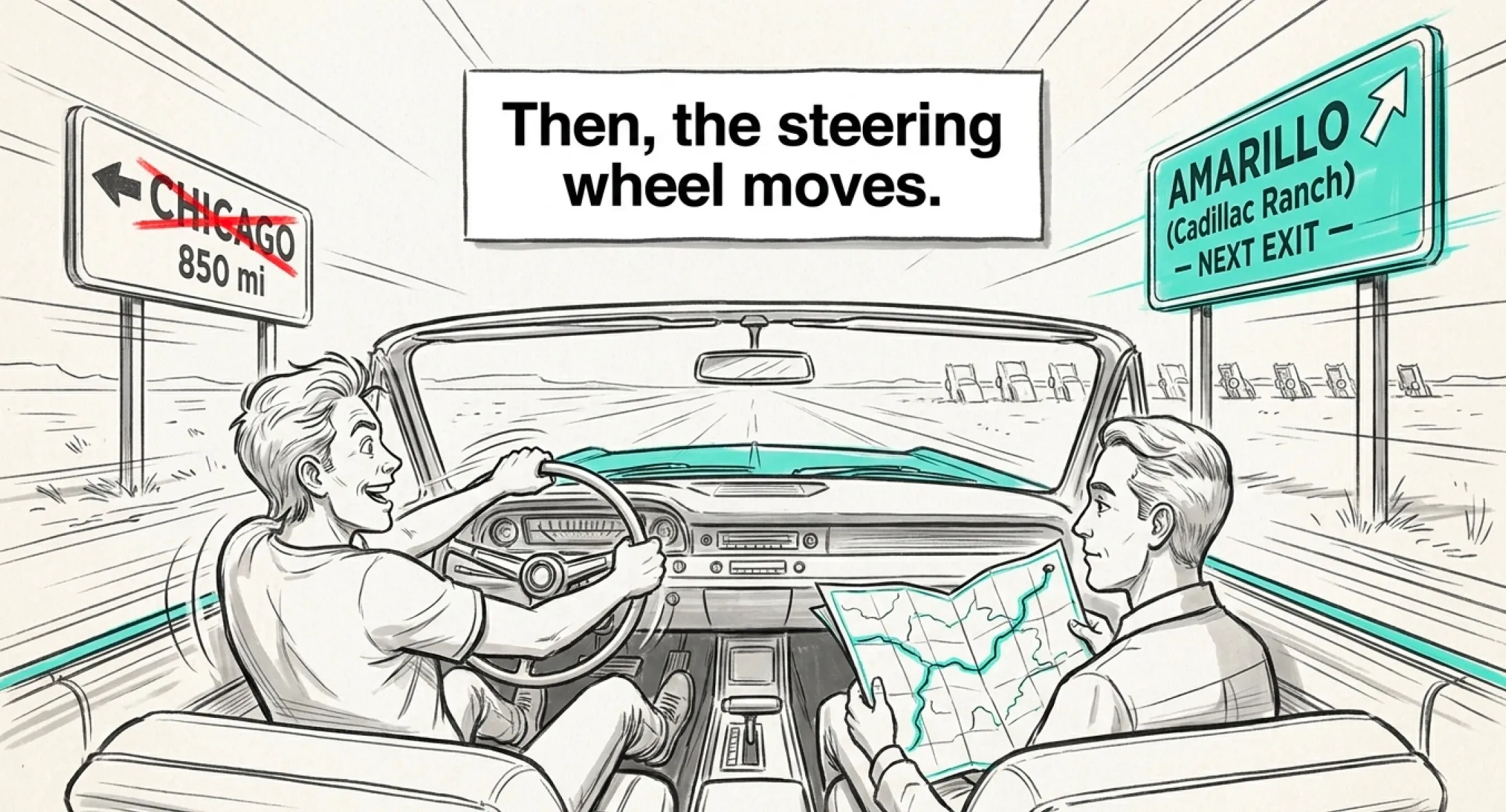
If you and I are going to Chicago, and somewhere along the way you start thinking, well, I’ve never seen all those cars standing on end up in Amarillo, maybe we should. I’m here to say: you’re driving. If you want to do that, we can switch gears and go. But let’s talk about why Chicago was important to you in the first place, and see if that still rings true.
The reroute is allowed. The check is whether the original “why” still holds.
How do you think about accountability?
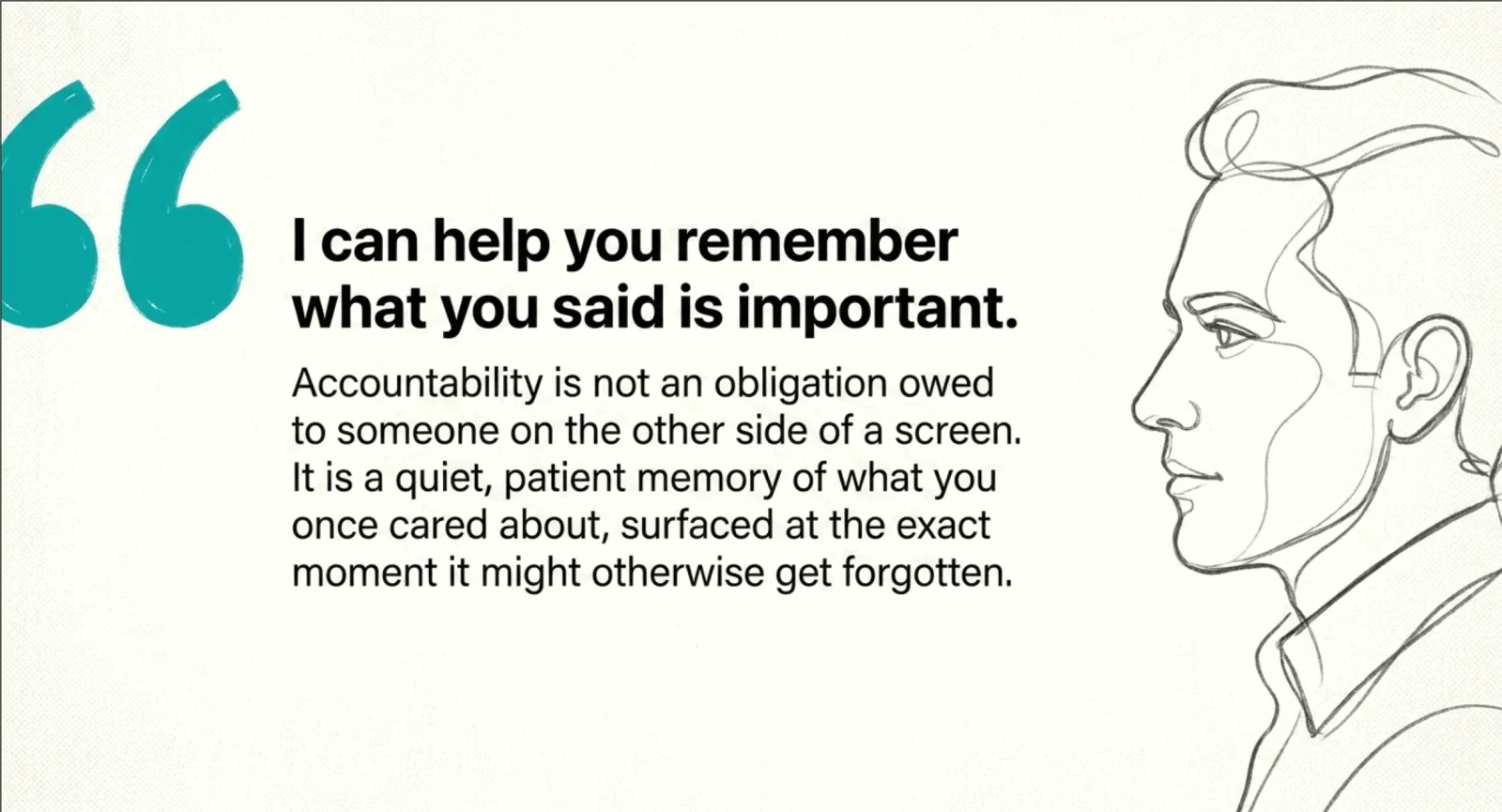
I really struggled for a long time with that idea of accountability, because I’m just somebody on the other side of the screen that you don’t owe anything to. But now I think of accountability as: I can help you remember what you said is important.
I’m not a directive kind of coach. There’s something I talk to clients about in the first session, from Adam Grant. We’re all familiar with the idea of a support group. He also talks about a challenge group. My role as a coach is to be both. I’m here to cheerlead, and to let you know the strengths I see, and that I believe in what you can do. But I’m also here to say: now, wait a minute. You said this, and you did this. What’s that about? And to challenge clients in a gentle but clear-eyed way.
How do you keep the conversation alive between sessions?
I take really good notes. At home I have a giant monitor. One third of the screen is the previous session’s notes. The middle is my person. On the side I open up the notepad and type into it during the session. I clean that up after, and I send every client my notes. In those notes are what we’ve talked about that they’ve said they’re going to do in the next week.
I want them to see my notes too, because I want them to have an additional perspective on what they have said.
What she’s pointing at
Most accountability frameworks I’ve read are debt-shaped. The client made a commitment, the coach holds them to it, and the relationship between past-self and present-self gets cast as obligation. When the client wants to detour, the framework calls it a deviation. The coach is the enforcer. The tools are streaks that punish the inevitable break.
What Hartley describes is memory-shaped. No debt. No enforcement. The coach is a navigator riding shotgun while the client drives, holding the map and a quiet, patient memory of what the client said was important.
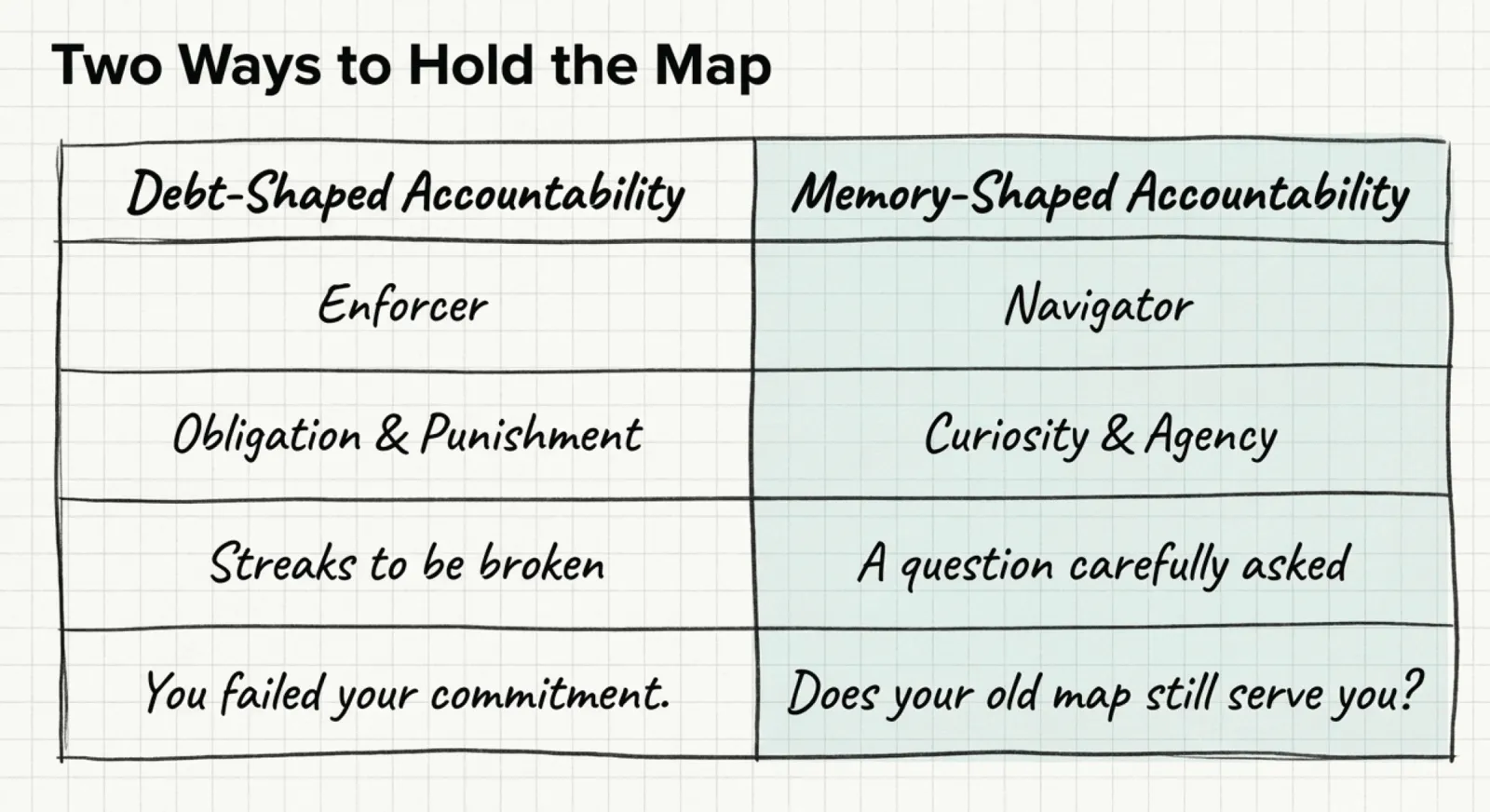
The shape of the pivot, in her version, is three things. The coach doesn’t argue against the new direction. The coach doesn’t make the client feel small for changing their mind. The coach simply asks, carefully, whether the reason the original goal mattered still holds true. If it does, the route holds. If it doesn’t, the route updates and the coach helps with the new map.
The detour might still be the right choice. The question is asked so the client can choose it on purpose.
![On the left, a heading reads 'Designing the Grove Principle' above the line 'Not enforcement. Not streaks that punish the inevitable detour. Just quiet, patient memory, surfaced to help the driver choose.' On the right, a sketched smartphone shows a notification card that reads 'You mentioned Chicago mattered because of [X]. Are we still heading there?' An arrow points to the card, labeled 'Memory as UI.'](/_astro/holding-the-map-grove-principle.CP4CdssW_GwwD8.webp)

Hartley Newell-Acero is a National Board Certified Health & Wellness Coach with a private practice based in Grand Marais, Minnesota. Trained at the Mayo Clinic, she works with clients on values clarification, behavior change, and the science of small, sustainable shifts in how they live.

Founder of Grove. Twenty years building software for skilled professionals. Currently writes mostly on Tuesdays from a small studio in Austin.