
A 23,509-like Instagram post on May 18 took over Mary Claire Haver’s account that day. The post was a guest takeover by Dr. Sheila Deliz pointing readers at evidence-based menopause conversations in Europe. The same week, an exercise physiologist with a PhD turned comments off on her metabolic-health post at 8,385 likes because she did not have time to keep refereeing. A different week, the average American adult was still eating 17 grams of fiber a day against a recommended 25 to 38, and a third PhD-credentialed coach was quietly writing about why sedentary time matters more than the workout that closes it.
What I was doing
For two weeks in May (May 9 to May 23), I tracked what credentialed health voices were saying online. Board-certified health coaches, PhD exercise physiologists, NAMS-certified menopause clinicians, registered dietitians with research credentials, and the org accounts of NIH, CDC, and NCI. About 180 posts from 23 sources, across Instagram, LinkedIn, and the few RSS feeds that carry the substance the social platforms don’t.
The question: when you strip the loud takes away, what is the field actually converging on? Not what is going viral. Not what is picking a fight. What is being said consistently, by people with the credentials to know better, in a single window.
The rule I used: a theme had to show up across at least two different credentialed voices in the window to count. Six themes cleared that bar. Five of them landed in the same place.
What the credentialed voices were converging on
A note on what’s coming. Below each theme, I’ve matched a Tier 1 source: a position statement from a professional society, a large meta-analysis, or a major prospective study. These are not necessarily the specific papers any individual creator cited. They are the well-documented evidence base that backs the position credentialed voices were converging on. Some of those sources are years old. That is the point. The science on most of these has been stable for a while. What was new in May was that credentialed voices kept restating it, sometimes pointedly, into a feed that was rewarding the opposite framing.
1. Combine lifting and cardio, dose to recoverability. The American College of Sports Medicine released its 2026 resistance training position stand this spring, synthesizing 137 systematic reviews across 30,000-plus participants. The headline practical finding: the largest health gain is moving from no resistance training to any consistent resistance training, and the specific programming variables matter less than regular participation. That sits on top of the still-current 2018 Physical Activity Guidelines for Americans, 150 to 300 minutes of moderate aerobic activity per week plus muscle-strengthening on at least two days. The field has been saying this for seven years. The discourse in May kept trying to make it a fight.
2. Sedentary time is its own variable. A 2020 Sports Medicine meta-analysis by Loh and colleagues, pooling 37 randomized crossover trials, established that interrupting prolonged sitting with short bouts of light or moderate activity lowers postprandial glucose and insulin responses meaningfully. One workout at the end of the day does not fully offset eight hours of uninterrupted sitting before it. May was a month where this finding kept being re-discovered by people who appeared to think it was new.
3. Strength training is a skeletal-health and longevity practice. The PURE study (Leong et al., 2015) followed 139,691 adults across 17 countries; each 5-kilogram decrease in grip strength was associated with a 16 percent higher risk of all-cause mortality. The 2022 Mohebbi et al. meta-analysis on progressive resistance training in older adults found improvements in hip and spine bone mineral density at 12 to 52 weeks of training, two to three sessions per week. May was the month Dr. Mark Hyman posted, at 66, about starting strength training at 59 and feeling stronger than ever. The post earned 6,469 likes. The underlying point is not about him.
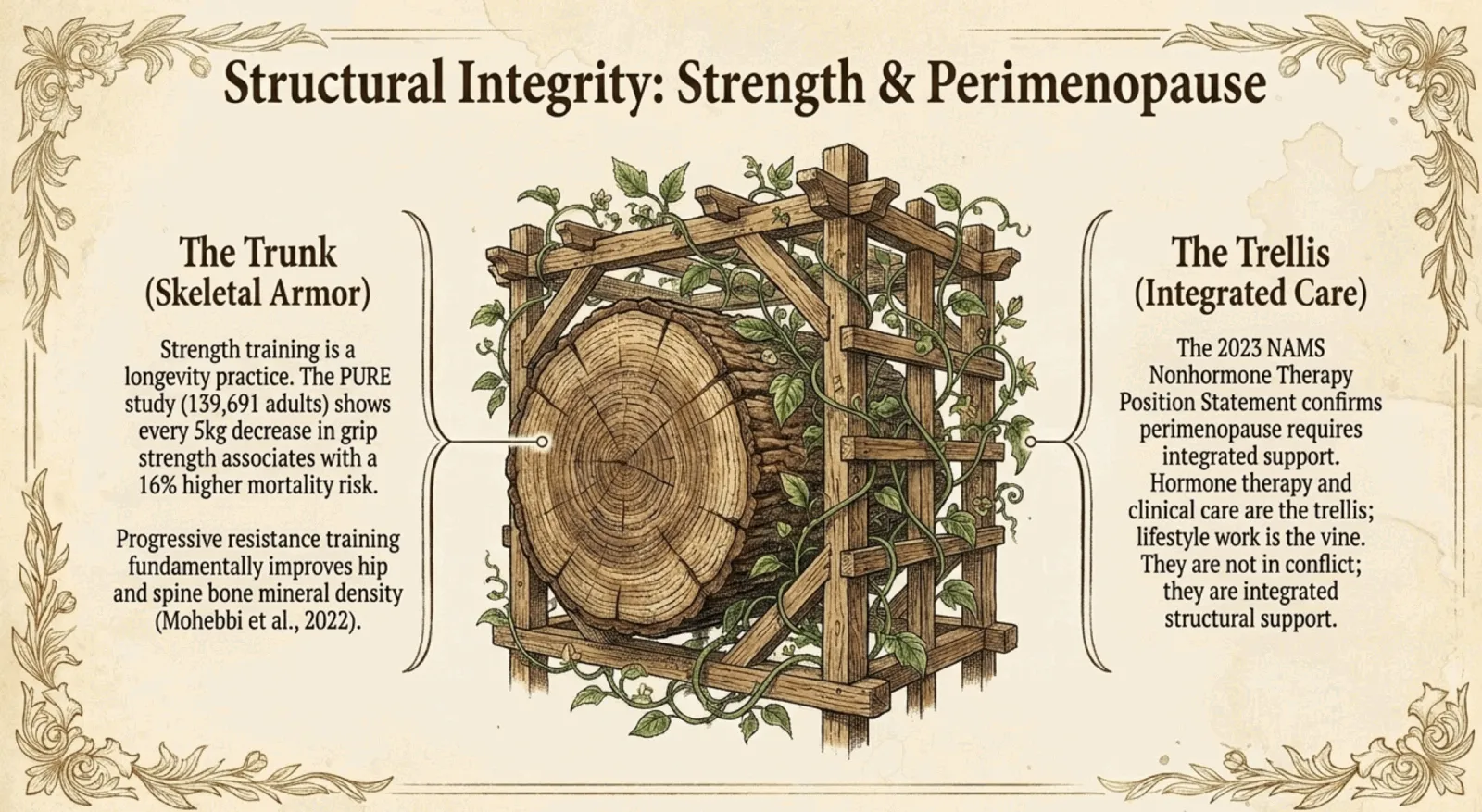
4. Perimenopause is a lifestyle plus clinical conversation, not lifestyle versus clinical. The 2023 NAMS Nonhormone Therapy Position Statement has been the cleanest source for two years on integrating the six pillars of lifestyle medicine with appropriate clinical care. May had multiple high-engagement posts surfacing the same idea: hormone therapy is not in conflict with the lifestyle work, and the lifestyle work is not a substitute for the clinical conversation. The framing kept being the integration.
5. Fiber is the cleanest evidence-to-practice gap in adult nutrition. The Reynolds et al. (2019) Lancet series pooled 185 prospective studies and 58 randomized trials; greatest risk reductions for cardiovascular disease, type 2 diabetes, and colorectal cancer mortality were observed at fiber intakes of 25 to 29 grams per day. The mean U.S. adult intake from NHANES is about 17 grams. Roughly 94 percent of adults fall short. May had multiple credentialed voices making this point, often in the same week.
6. Multi-domain lifestyle is still the answer for metabolic health. The Diabetes Prevention Program (Knowler et al., 2002, NEJM) reduced incidence of type 2 diabetes by 58 percent over 2.8 years with a lifestyle arm of 7 percent body weight loss and 150 minutes per week of moderate activity. Twenty-two years later, no non-pharmaceutical intervention in the literature has beaten that number. May had several posts framing this as “the boring multi-domain version, sustained” against newer single-lever protocols.
Five out of six themes land at the same place: many small, integrated interventions, dosed and sustained. The sixth (perimenopause) is structurally the same: integration, not a single switch.
What Instagram was amplifying instead
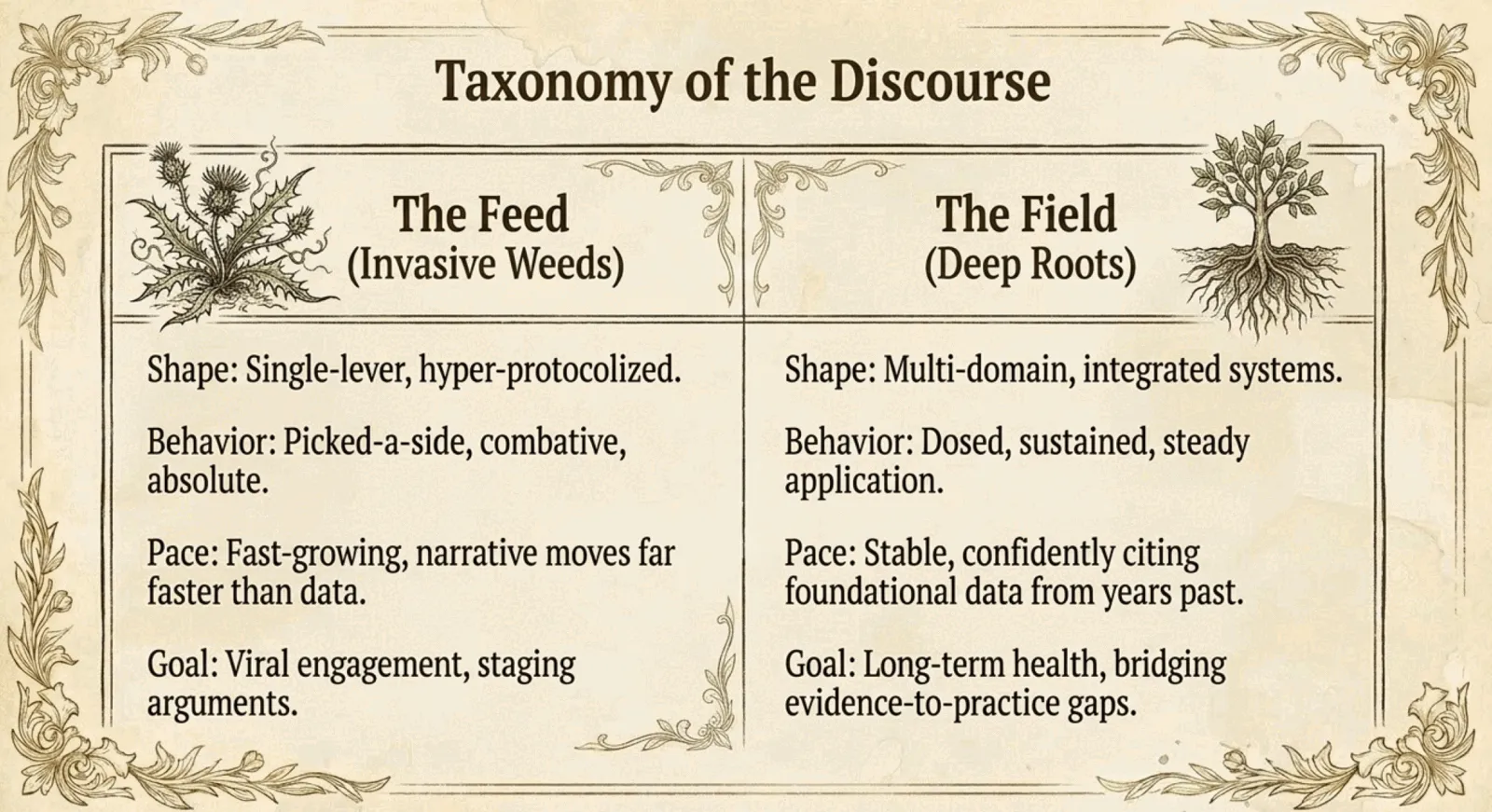
Most of the credentialed voices I tracked were posting on Instagram (156 of the 180 posts in my window). The platform rewards engagement: posts that trigger comments, shares, and saves get pushed beyond the followers of the account that posted them. So when I say “what Instagram was amplifying,” I mean what was getting pushed to their audiences — often the contrary framing the credentialed voice then felt the need to correct.
You can see the shape of that by watching what the credentialed voices kept needing to push back on. The most common correction in the window:
Women, intermittent fasting, and morning cortisol. The narrative said skipping breakfast dysregulates women’s hormones because of a stronger AM cortisol response. Recent systematic reviews on intermittent fasting in premenopausal women call the evidence “very limited.” The specific mechanism does not have strong primary backing. The narrative is moving faster than the data.
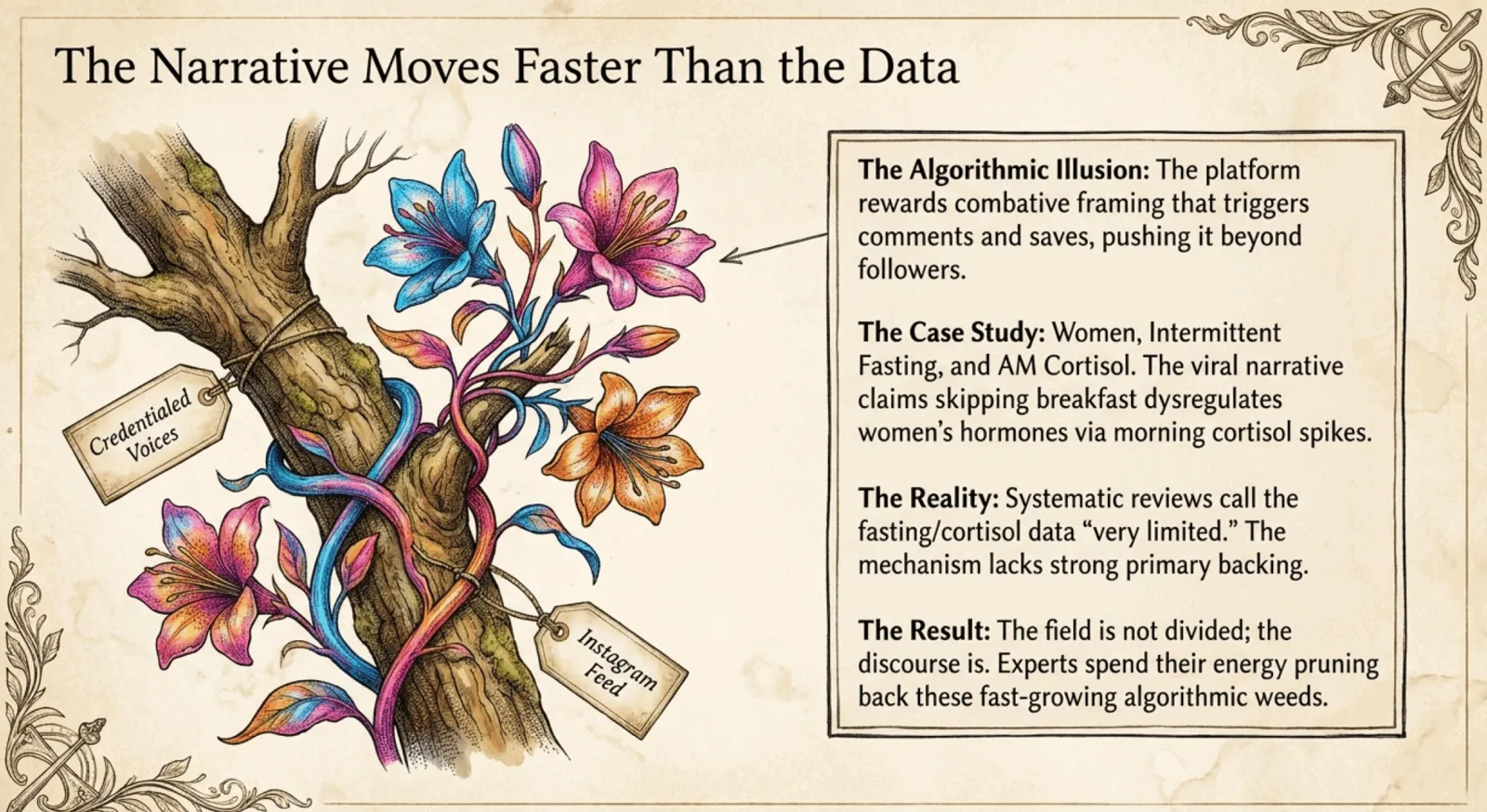
A pattern across the six themes: the credentialed voices are converging on multi-domain, dosed, sustained. The Instagram feed is rewarding single-lever, protocolized, picked-a-side. The clients who keep arriving in coaching frustrated have usually been listening to the platform.
What this means for the work
The temptation, when scrolling, is to think the field is divided. The field is not divided. The discourse is.
The coaches I have talked to while building Grove who land their work in this season are not the ones running the cleverest protocol. They are the ones who can hold the integration with their client across months. The Haver-account post that earned 23,509 likes was not selling a protocol. It was someone else taking over her account to point at the actual research.
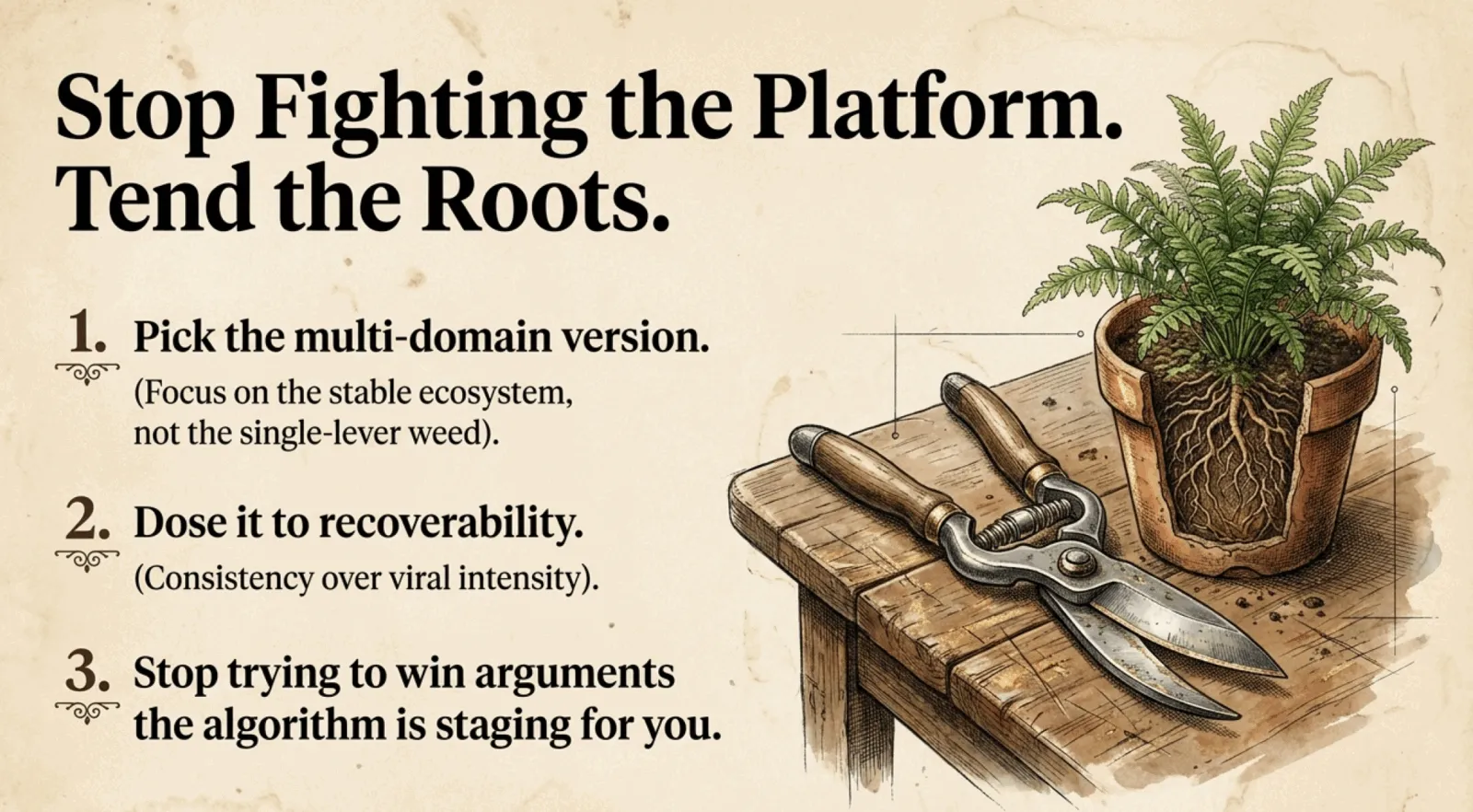
The 167 hours between sessions are still where the work lives. The credentialed voices in May added one more frame to that: pick the multi-domain version, dose it to recoverability, and stop trying to win the argument the platform is staging for you.

Founder of Grove. Twenty years building software for skilled professionals. Currently writes mostly on Tuesdays from a small studio in Austin.