
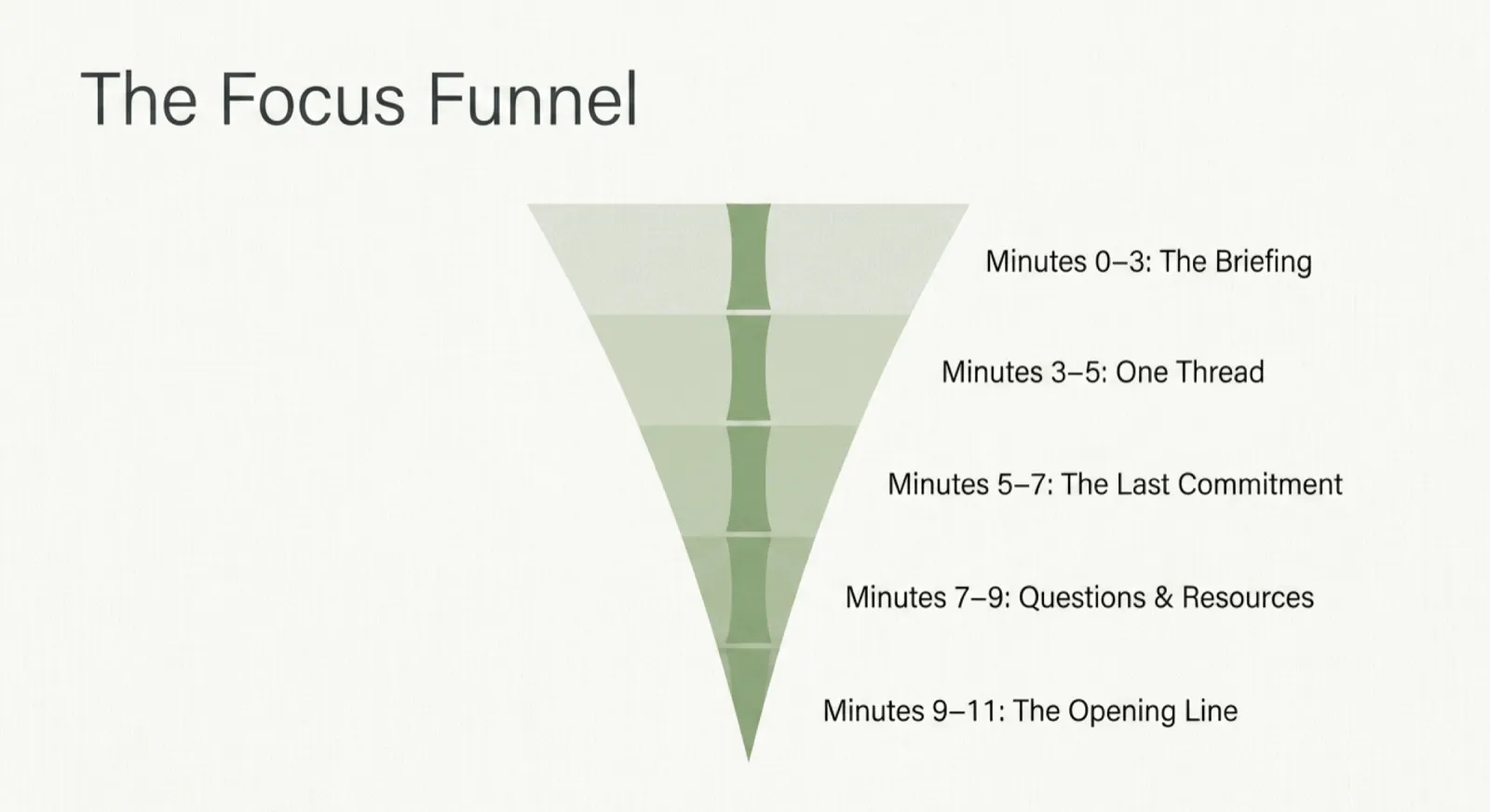
The shortest version of session prep that still earns a great session is about eleven minutes. Shorter than that and you walk in vague. Longer and you overprepare and stop listening.
Here’s how the eleven minutes break down. Steal whichever pieces fit your practice.
Minutes 0 to 3: surveying the soil.
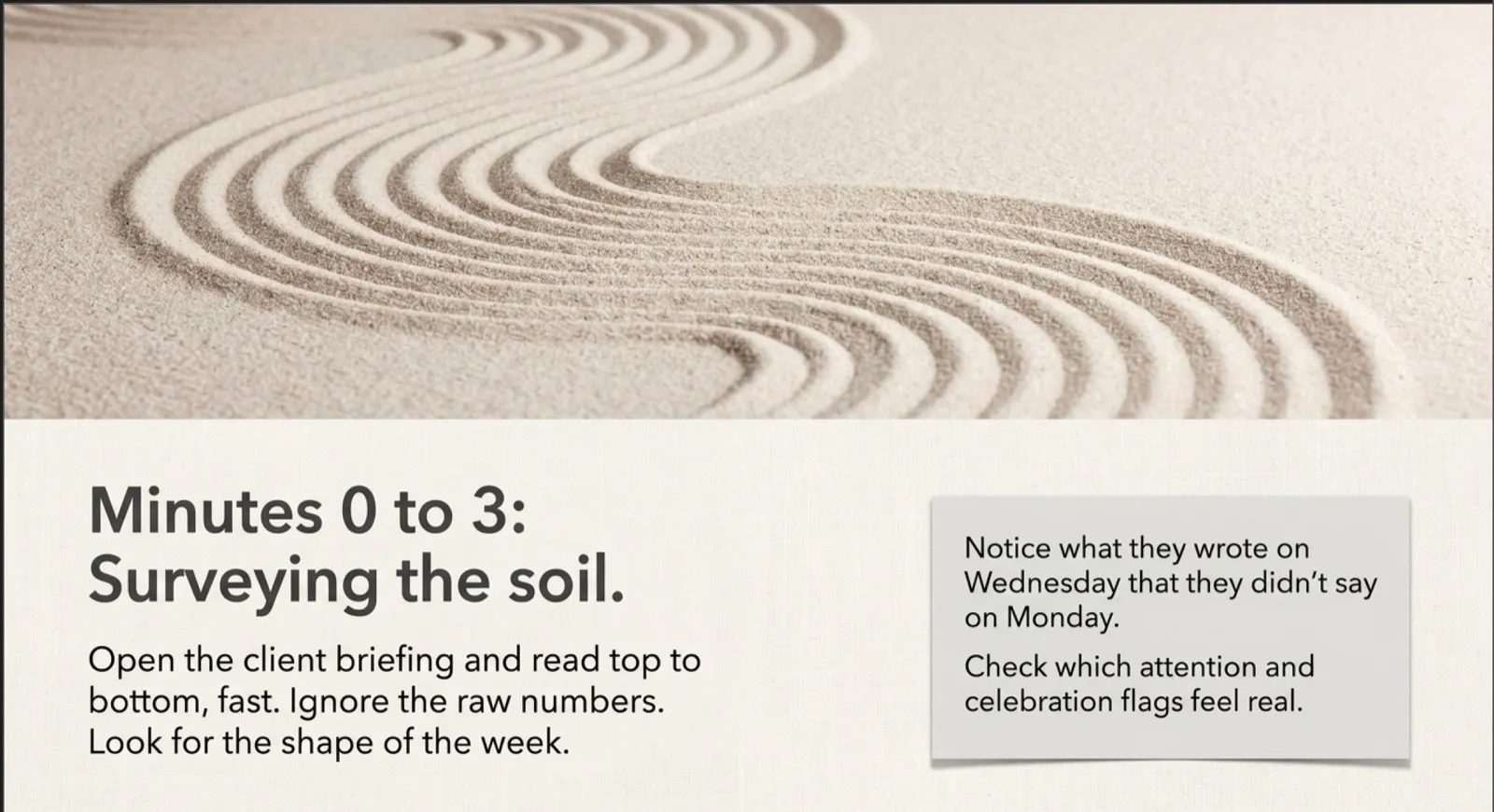
Open the client and read Grove’s session briefing top to bottom, fast: recent check-ins, habits hit or missed, the response to this week’s reflection, and what has changed since the last session. Don’t dwell on numbers. Look for the shape of the week. Where the energy was. What they wrote on Wednesday that they didn’t say on Monday. Notice which of Grove’s attention and celebration flags feel real once you’ve read the underlying entries, and which you’d skip past.
Minutes 3 to 5: pruning the branch.
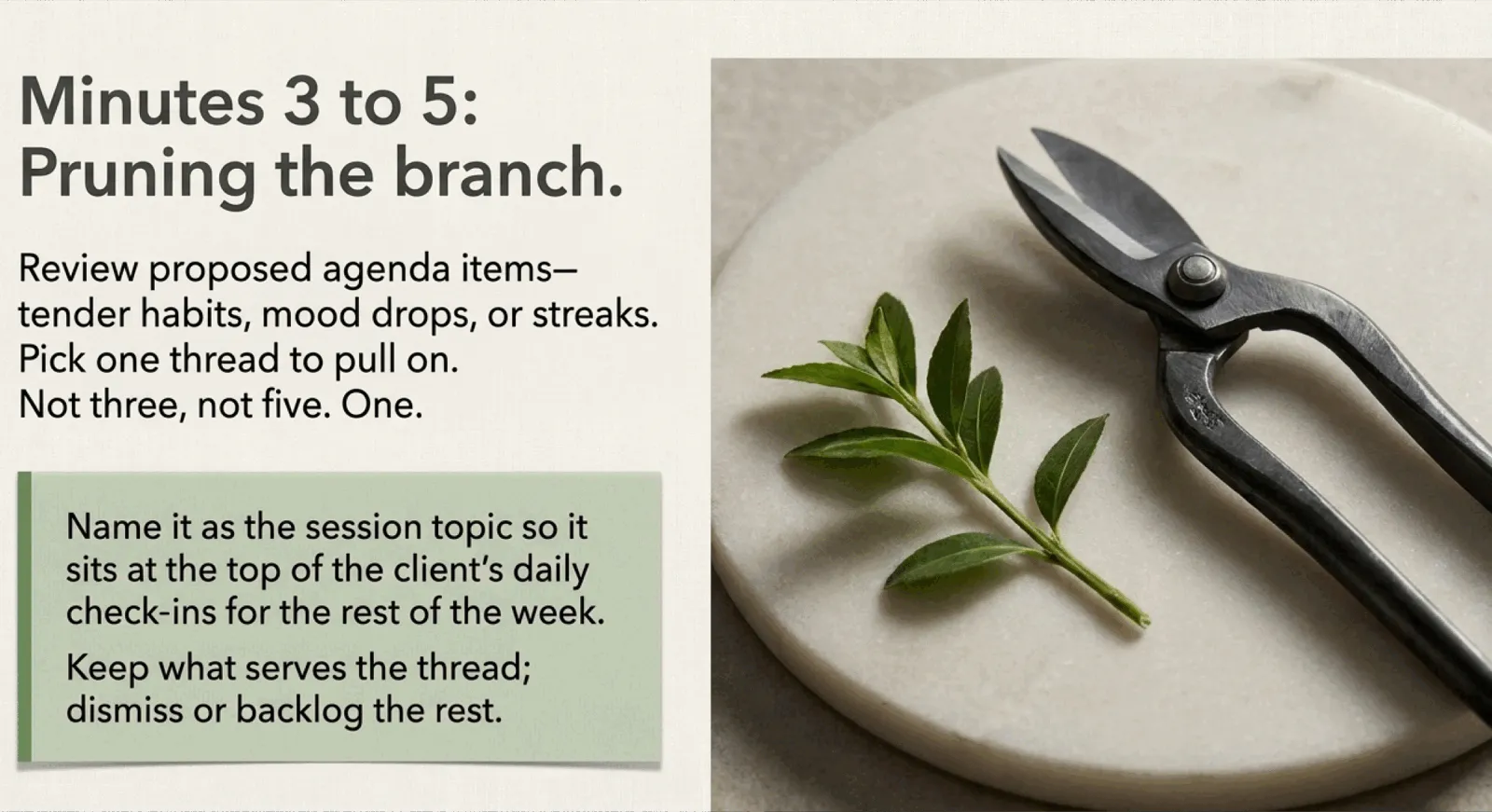
Grove proposes agenda items off the briefing, some flagged for attention (tender habits, mood drops, stalled goals) and some flagged for celebration (streaks, completed goals, positive reflection themes). Pick one thread to pull on in the session. Not three, not five. One. Name it as the session topic so it sits at the top of the client’s daily check-ins for the rest of the week with the reflection question pinned underneath, which turns the conversation from a one-hour call into something they’re carrying between sessions. Keep the proposed agenda items that serve the thread, dismiss or backlog the rest.
Minutes 5 to 7: checking the roots.
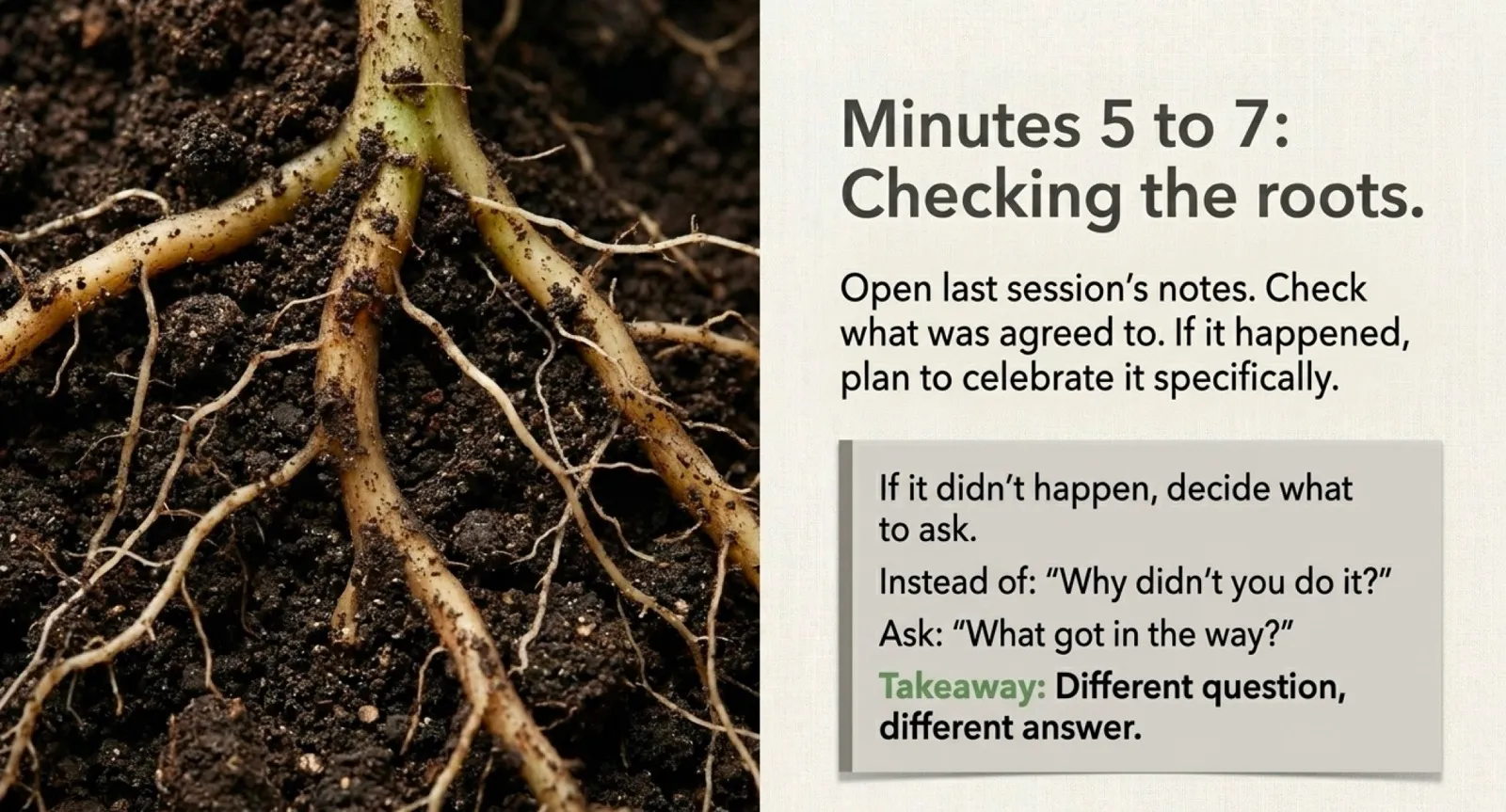
Open last session’s notes from the client timeline and check what was agreed to. If it happened, plan to celebrate it specifically; add a celebration agenda item if Grove didn’t already surface one. If it didn’t, add an attention item and decide what to ask: “what got in the way,” not “why didn’t you do it.” Different question, different answer.
Minutes 7 to 9: preparing the water.
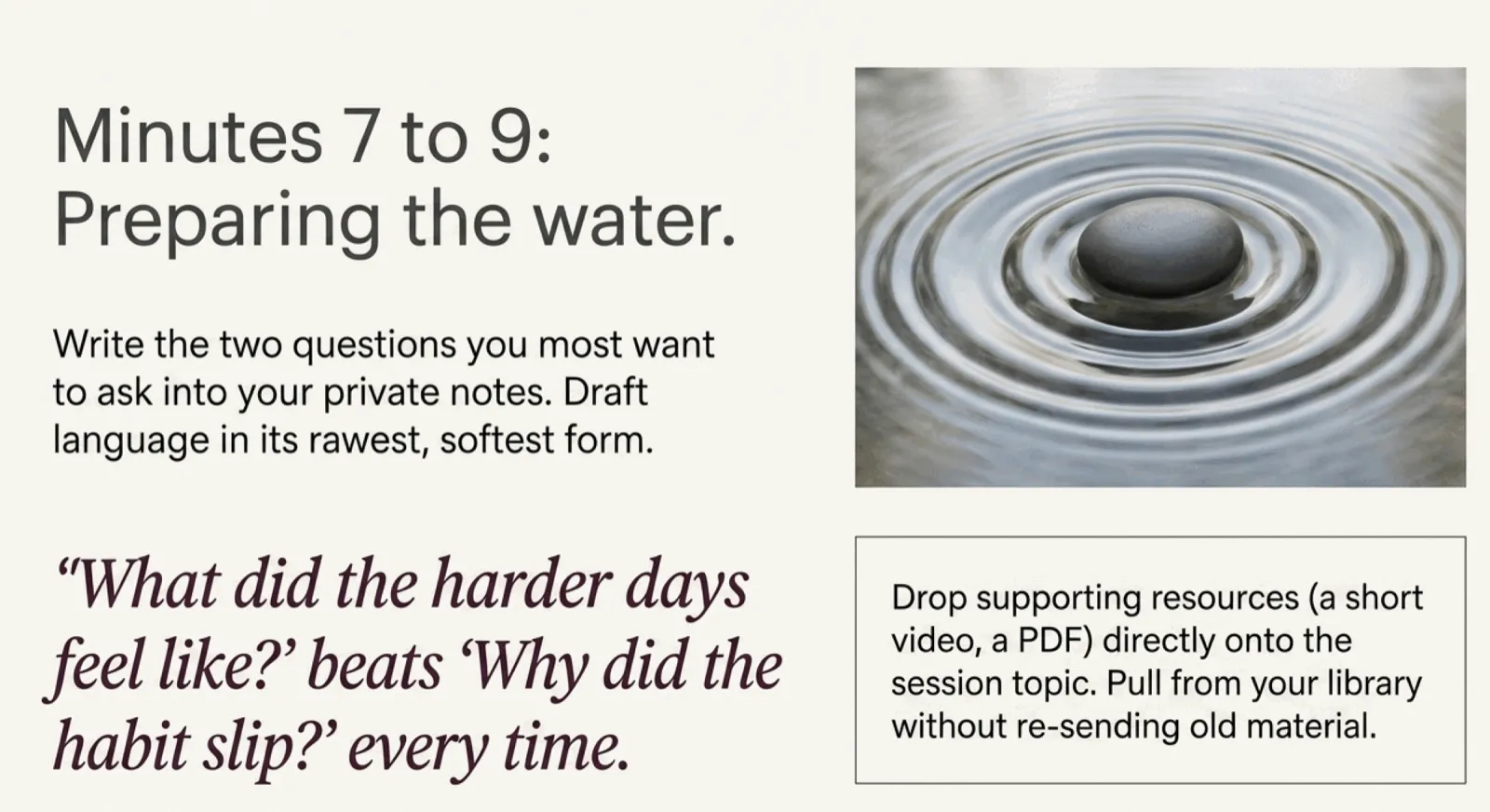
Write the two questions you most want to ask into the private notes on the agenda items you kept. Private notes never reach the client’s copy of the session notes, so this is the place to draft language in its rawest form. The questions are usually softer than what you’d ask in a colder state. “What did the harder days feel like?” beats “Why did the habit slip?” every time. While you’re in there, drop any supporting resources, a short video, a PDF, a worksheet, onto the session topic. Grove tracks what each client has already received, so you can pull from your library without re-sending something from three months ago.
Minutes 9 to 11: planting the seed.
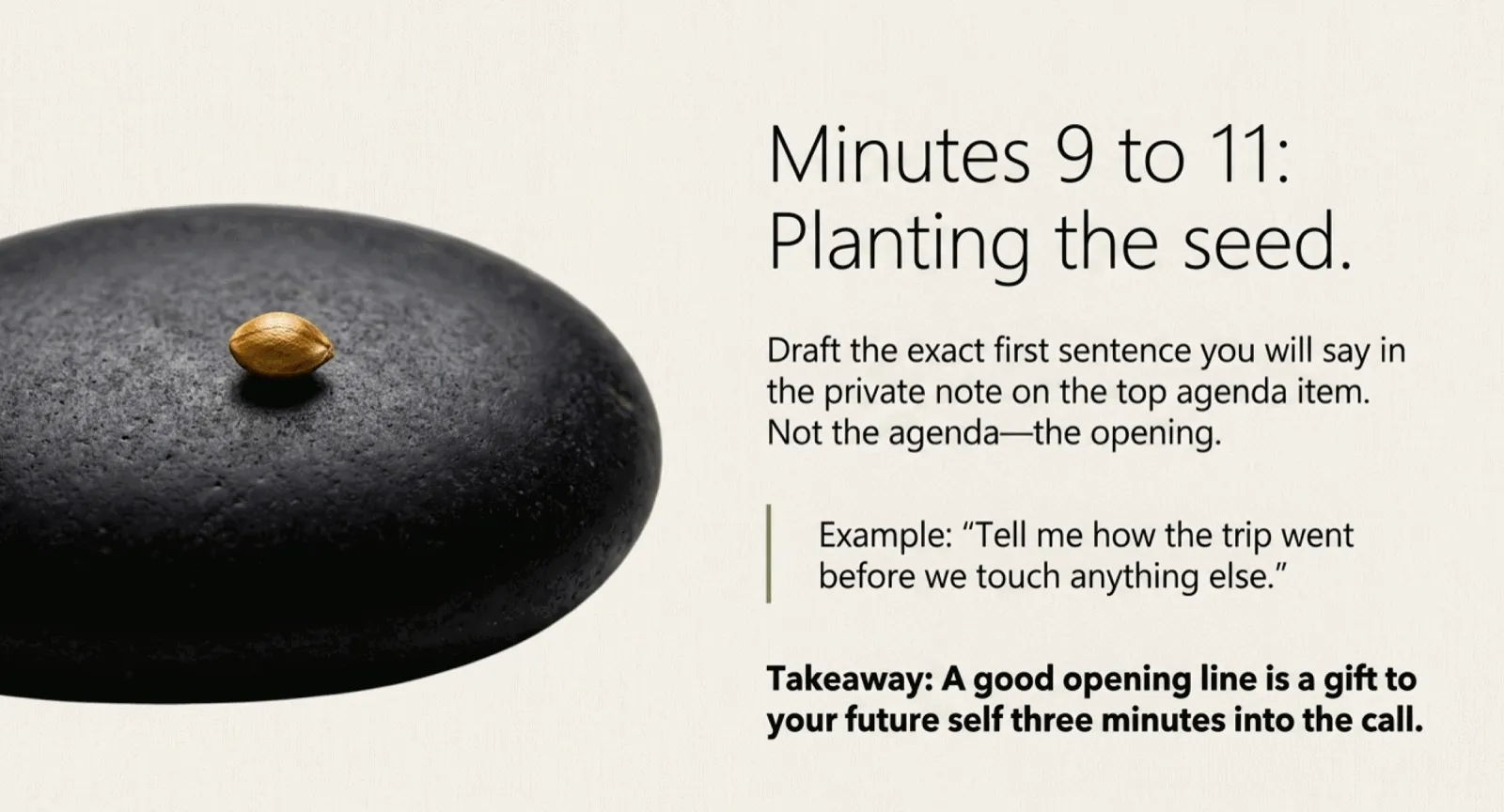
Draft the first sentence you’ll say in the private note on the top agenda item. Not the agenda, the opening. “I’ve been thinking about Wednesday.” Or, “Tell me how the trip went before we touch anything else.” A good opening line is a gift to your future self three minutes into the call.
The trap is treating prep as a data exercise. The briefing tells you what happened; prep is for noticing what mattered. Eleven minutes is enough for the second one if you stop trying to do the first.
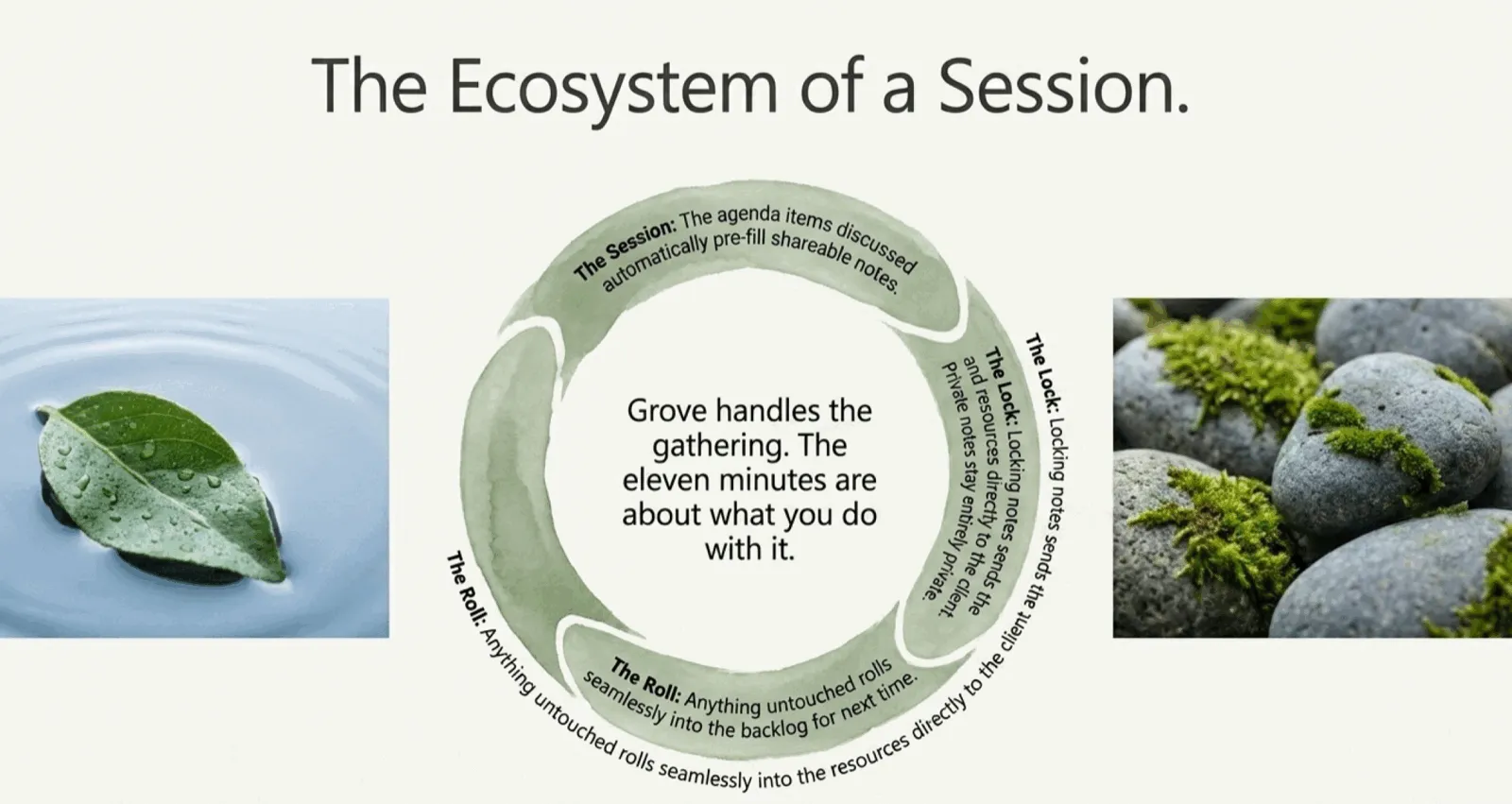
After the call, the agenda items you actually discussed pre-fill the shareable session notes. When you lock in and send those notes, the session topic and any resources you attached go out with them, anything you didn’t get to rolls into the backlog for next time, and your private notes stay private. Grove handles the gathering: the briefing, the proposed agenda, the link back to last session’s notes, the resource library. The eleven minutes are about what you do with it.

Founder of Grove. Twenty years building software for skilled professionals. Currently writes mostly on Tuesdays from a small studio in Austin.