
“Adulting Week” is on television this week. Live with Kelly and Mark is giving it five straight mornings: life skills, expert guests, and the gentle national admission that nobody feels fully qualified to be a grown-up.
I have a soft spot for this genre. Back in January, Good Morning America covered friends who hold “admin nights,” where everyone brings their unfiled paperwork and unanswered forms to the same table and gets through it together. It is a lovely idea, and it went around for a reason.
Here is the pattern, though. The segment ends. You feel seen, and briefly motivated. And the passport still does not get renewed.
That is not a character flaw. It is the most predictable thing about how these lists meet real life, and it is worth taking apart, because the fix is not a better checklist. It is a different shape of checklist.
Why adulting checklists stall
Search “adulting checklist” and you will find inventories of 23 things, 67 things, everything a grown-up supposedly handles. The lists are fine. The lists were never the problem.
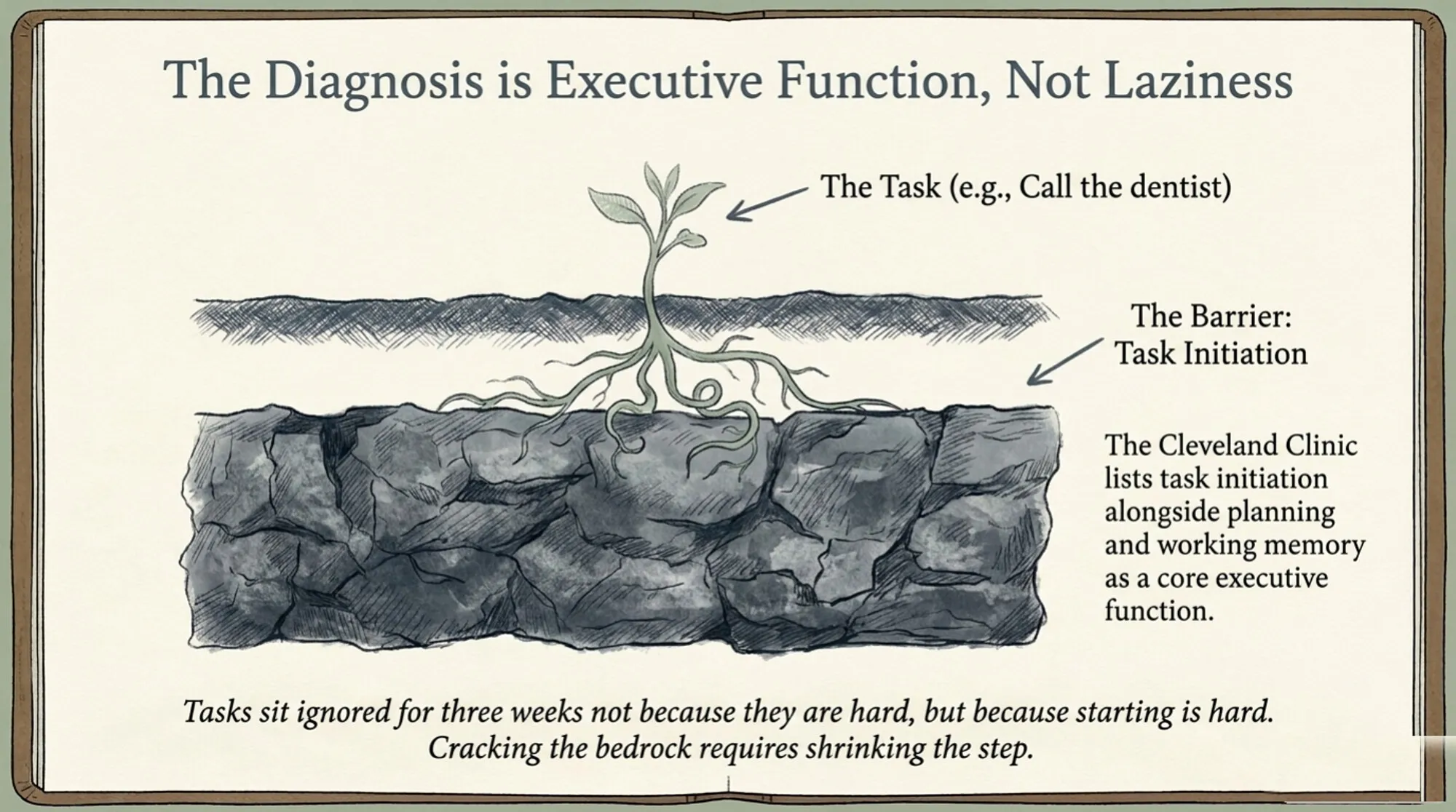
The problem is what psychologists call task initiation: starting a task when no deadline is breathing on you. The Cleveland Clinic lists it among the core executive functions, alongside planning, working memory, and time management. “Call the dentist” sits on a list for three weeks not because it is hard, but because it has no scheduled moment, no obvious first move, and nobody nearby while you do it.
Knowing what to do was never the hard part. Starting is the hard part.
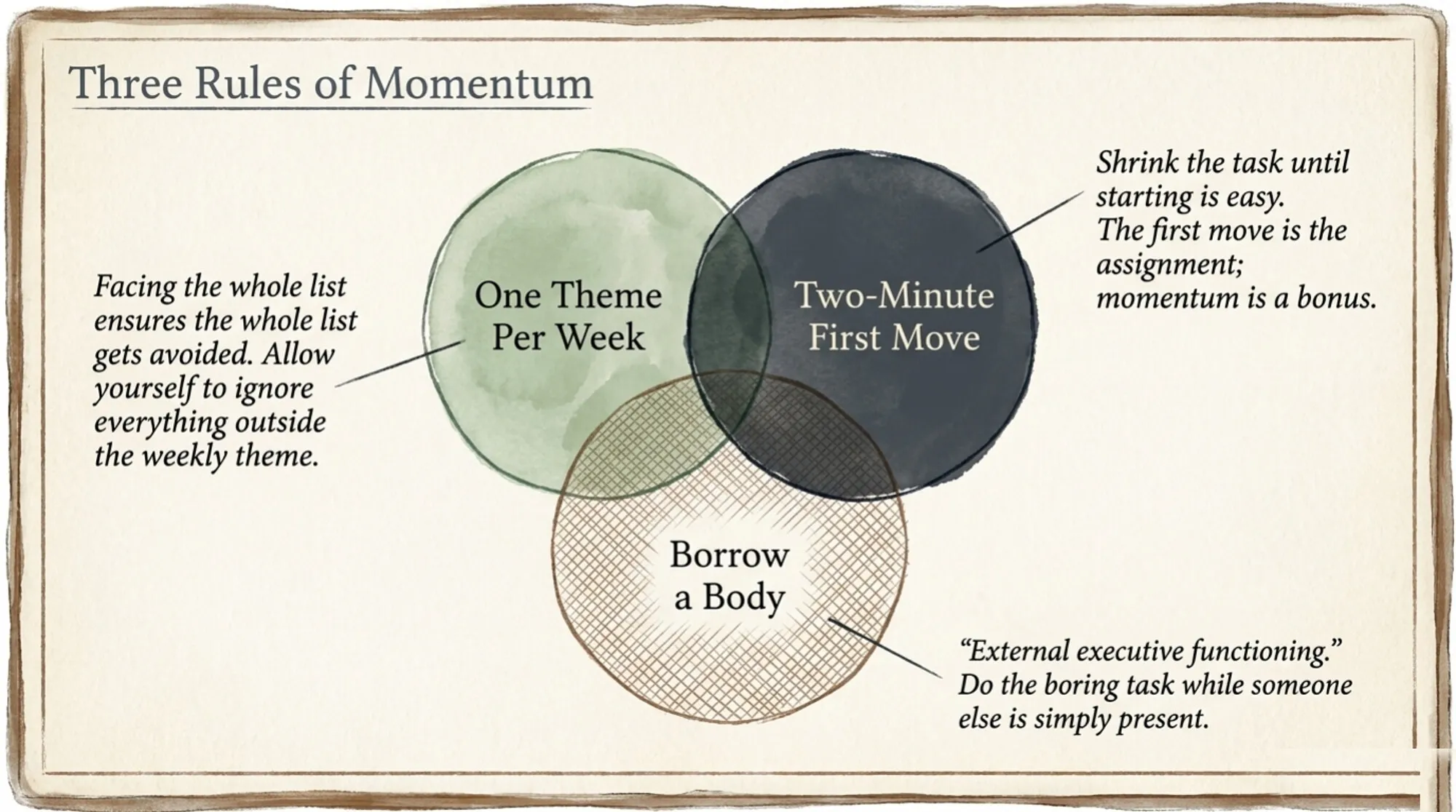
So the plan below is not a bigger list. It is a smaller one, stretched across a month, built on three rules:
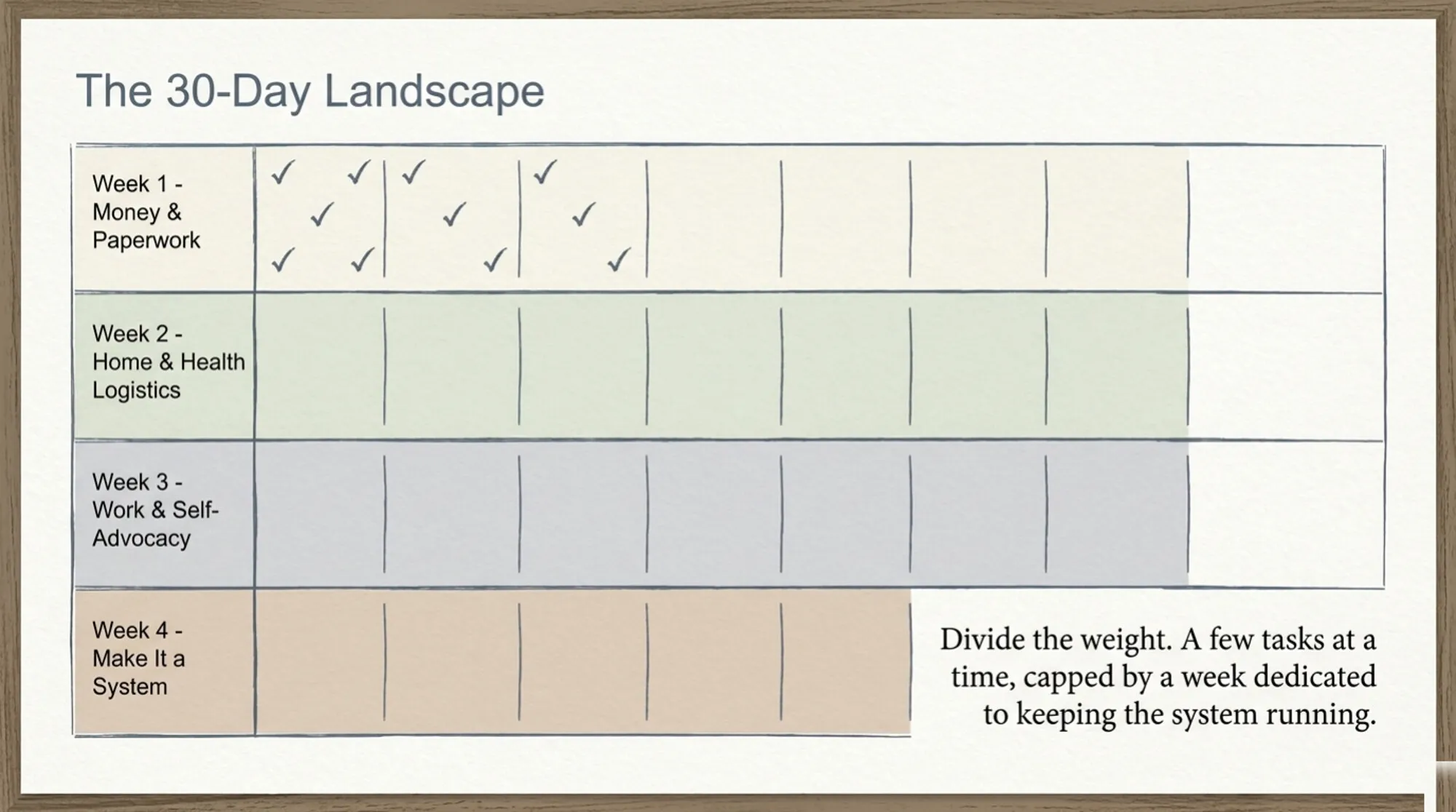
1. One theme per week. Facing the whole list at once is how the whole list gets avoided. Four themes, four weeks, and each week you are allowed to ignore the other three.
2. Every task gets a two-minute first move. Stanford’s Behavior Design Lab has spent years showing that behavior happens when motivation, ability, and a prompt come together, and that the most dependable lever is shrinking the task until starting it is easy. The first move is the assignment. If momentum carries you further, that is a bonus, not the bar.
3. Borrow a body. The admin-night trend has a name in the ADHD community: body doubling. A Cleveland Clinic behavioral health specialist describes it as external executive functioning, like having an assistant follow you around. You do the boring task while someone else is simply present, in person or on a video call. It works startlingly well, and you do not need a diagnosis to use it.
The 30-day plan
Week 1: Money and paperwork
- Pull your credit report. First move: open annualcreditreport.com, the only federally authorized free source, and log in. That is the whole assignment.
- Freeze your credit at all three bureaus. The single best guard against someone opening accounts in your name, free, and reversible any time you actually need credit. First move: read the FTC’s walkthrough and freeze one bureau.
- Set one bill to autopay. First move: pick the bill you most recently paid late.
- Find your retirement account login. Not the strategy, not the rebalancing. Just recover the password and look at the number.
- Cancel one forgotten subscription. First move: scroll last month’s statement, top to bottom, once.
- Open the paper pile. First move: sort it into three stacks (act, file, recycle). A strong admin-night candidate.
Week 2: Home and health logistics
- Book one health appointment. Dentist, physical, or eyes, whichever is most overdue. First move: open the patient portal.
- Find your water shutoff valve. Two minutes, flashlight optional, future you very grateful.
- Test the smoke detectors. The US Fire Administration recommends doing this monthly, and a dead battery is the same as no alarm. First move: press the button on one.
- Write your medication and dosage list somewhere you could find in an emergency.
- Gather your important documents in one place. Birth certificate, passport, insurance cards, titles. First move: find one of them and start a labeled folder.
- Take a freezer inventory. First move: open the door and write down five things you forgot were in there.
Week 3: Work and self-advocacy
- Update your resume header. Not the resume. The name, title, and contact block. Starting there tends to pull the rest along.
- Ask about one benefit you are not using. HSA match, education budget, that stipend nobody claims. First move: one message to HR or one search of the benefits doc.
- Add buffer time to your calendar defaults. First move: change 30-minute meetings to 25.
- Send the uncomfortable email. The invoice follow-up, the rate question. First move: write only the subject line.
- Check your Social Security earnings statement. Employers do misreport, and it quietly affects your future benefits. First move: log in or create an account at my Social Security.
- Back up your phone and laptop. First move: check when the last backup actually ran.
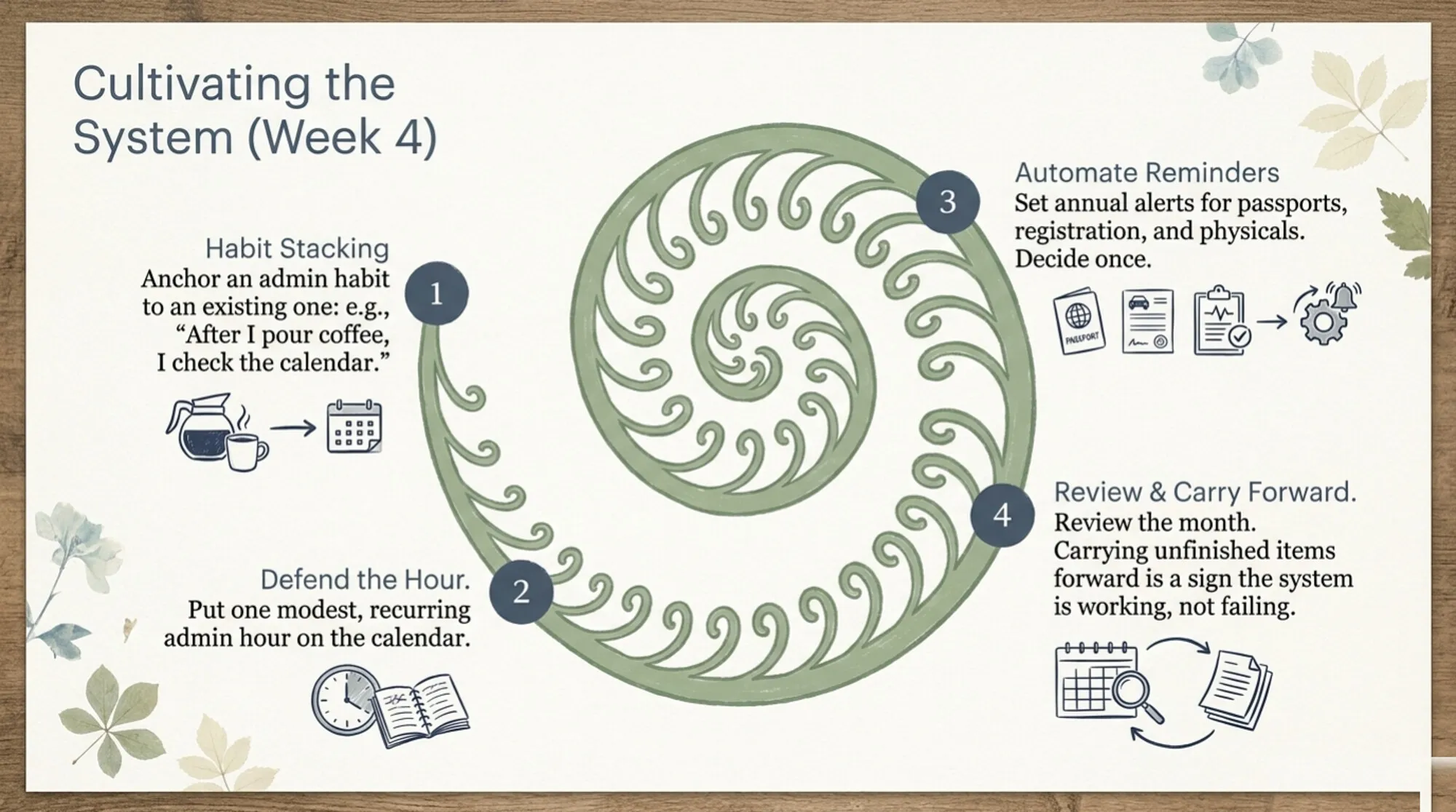
Week 4: Make it a system
- Put a weekly admin hour on the calendar. Recurring, modest, defended.
- Anchor one small habit to an existing one. After I pour coffee, I check the calendar. Habit stacking is the reliable version of “I should really do that more.”
- Set annual reminders for the yearly stuff. Passport expiry, car registration, the physical. Decide once, never re-remember.
- Check the beneficiaries on your accounts. The people named on retirement and bank accounts override your will, and they go stale after moves and marriages. First move: log in to one account and read who is listed.
- Schedule an admin night with a friend. The body-doubling rule, made recurring.
- Review the month. What stuck, what did not, and which two or three items carry forward. Carrying items forward is the system working, not failing.
If you are a coach reading this
In the coach conversations I have while building Grove, a version of this comes up constantly, wearing different clothes. A client says they are overwhelmed, and underneath is a pile of undone logistics quietly taxing everything else, sleep and food and exercise included. The instinct is to hand them a list. The list is rarely what is missing.
The structure above is the same shape we build starter playbooks around in Grove: weekly themes, small first moves, gentle tracking. If it looks useful for your clients, try it on yourself first. A coach who has felt the difference between “renew passport” and “find the passport and check the date” asks better questions about why a task is stuck.
Television is good at the list. It can put fifty tasks in front of five million people in a morning, and there is real value in that. What it cannot give anyone is the scheduled moment, the shrunken first step, the friend across the table. Those are small, and they are the entire difference between a checklist and a month that changes how your life runs.

Founder of Grove. Twenty years building software for skilled professionals. Currently writes mostly on Tuesdays from a small studio in Austin.