
For most of Grove’s life the dashboard could show a coach everything and remember nothing. Every morning started the same way. Open the tabs, reread last session, reconstruct where each client left off, then walk into the call still catching up. The record was all there. Holding it was the coach’s job, every day, for every client.
In June that changed. The dashboard learned to remember.
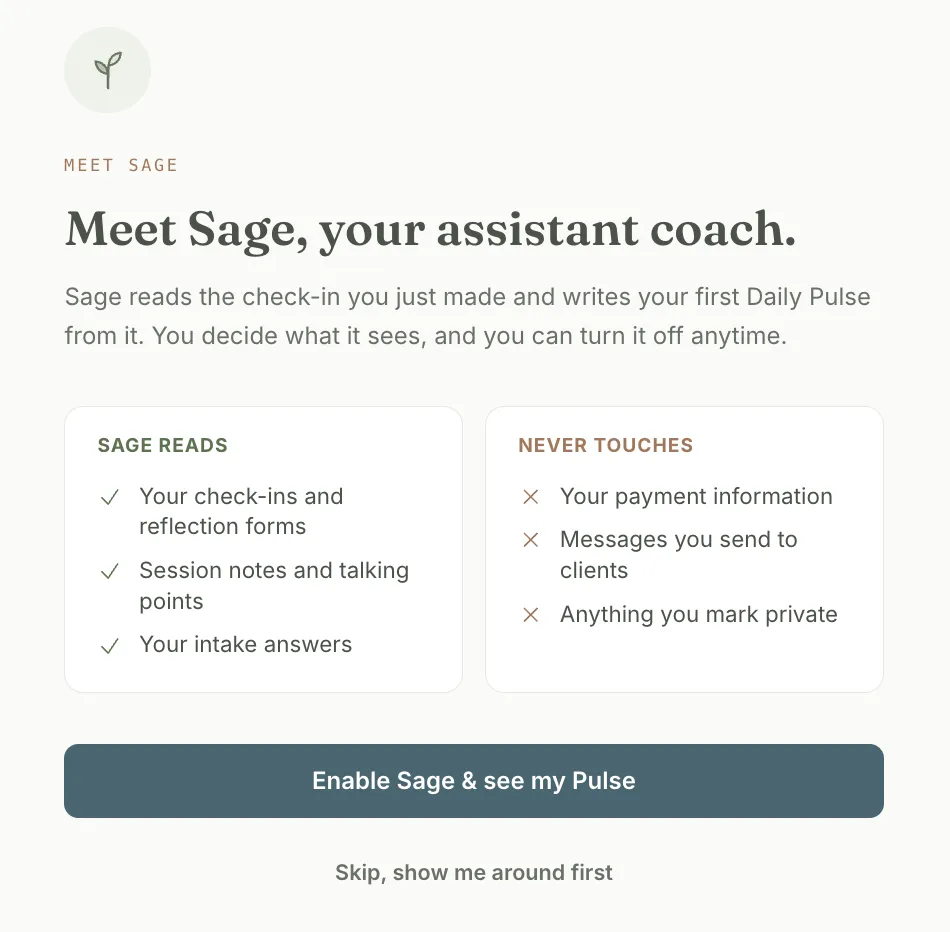
The month had one real story told in two acts, and both have the same name. Grove got an assistant coach. We named it Sage. It starts from the promise on the screen above: the coach says what Sage may see, and can turn it off at any time.
Sage, and the Daily Pulse. A head coach with an assistant has someone who knows the roster cold, watches the film, and shows up in the morning with notes. That is the job Sage does inside a practice. Each morning, for every client who has opted in, Sage reads the recent check-ins and surfaces a Daily Pulse: a few sentences on what changed and what matters today. Not a transcript, not a wall of data. The read a coach used to assemble in her own head, already pulled together and waiting on the dashboard.
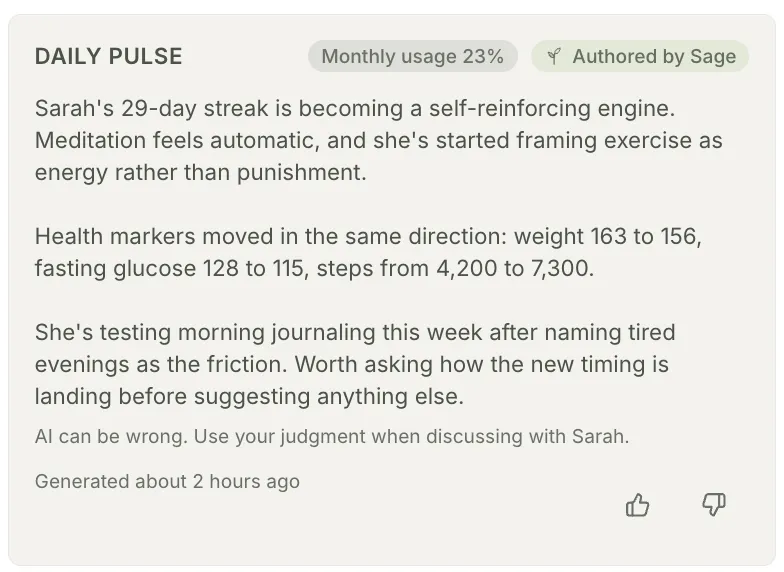
The point was never the summary. It is what the summary frees a coach to do. One coach told me that letting something else hold the record was the thing that finally let her stay present, because she could stop scrambling to capture every word and just be with the person in front of her. Pulse is consent-first by design. A client opts in before anything about them is read this way, every insight carries an Authored by Sage marker, and the card says plainly that AI can be wrong, so trust your own judgment. Sage does the remembering. It never decides what the session is about. (Build notes: Daily Pulse.)
Talking Points. If Pulse is the morning read across the whole roster, Talking Points is the prep for one specific session. Ahead of a scheduled call, Sage reads that client’s recent check-ins, habits, and actions and drafts a short set of starting points: a way to open the conversation shaped to where the client actually is, a small habit or action adjustment worth proposing when the signal suggests the plan has drifted, and a topic from the resource library when something there fits.
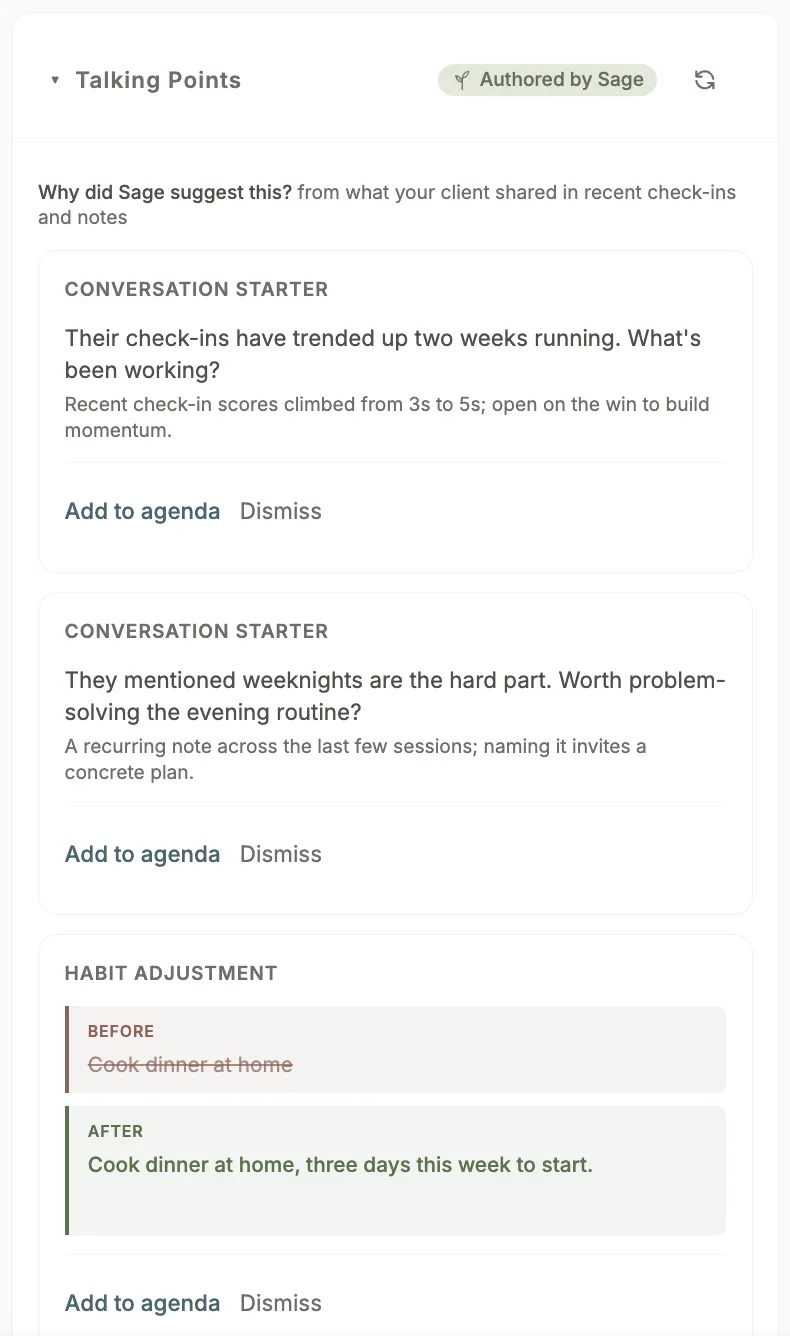
Each item arrives already written and marked as Sage’s. The coach edits it, skips it, or promotes it onto the agenda with one tap. The assembly happens out of frame. What the coach sees is the prep, done, so the five minutes before a call stop going to reconstruction and start going to the person. Nothing is locked in by the dashboard. The coach decides what the session is about. (Build notes: Talking Points.)
Sage was the headline, but it was not the only thing that shipped. June was a big month underneath it.
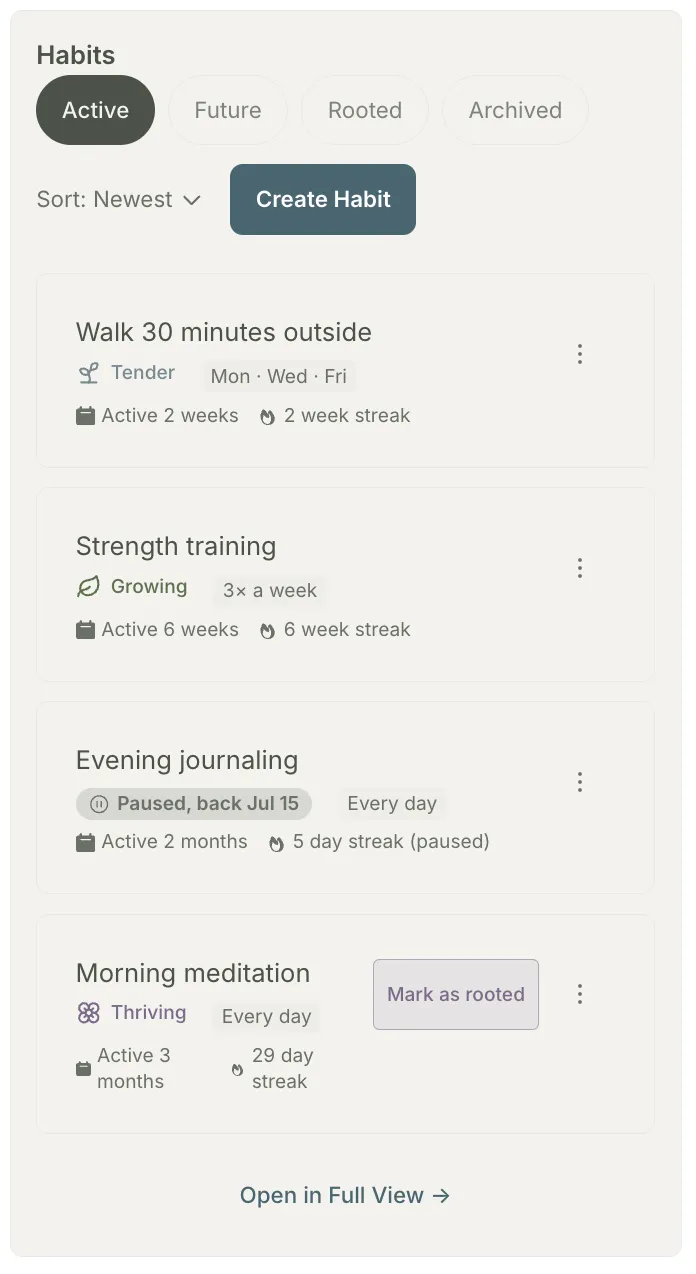
Habits learned rhythm. Until June a habit was daily or nothing. Now a habit carries a rhythm the client and coach set together, and the streak respects it, so a day that was never meant to be a check-in day no longer breaks the chain. A habit can be paused without losing its history, and the ones a client has truly internalized graduate and root. The dashboard shows all of it as a garden, where consistency turns into growth and a rooted habit is one that no longer needs tracking.
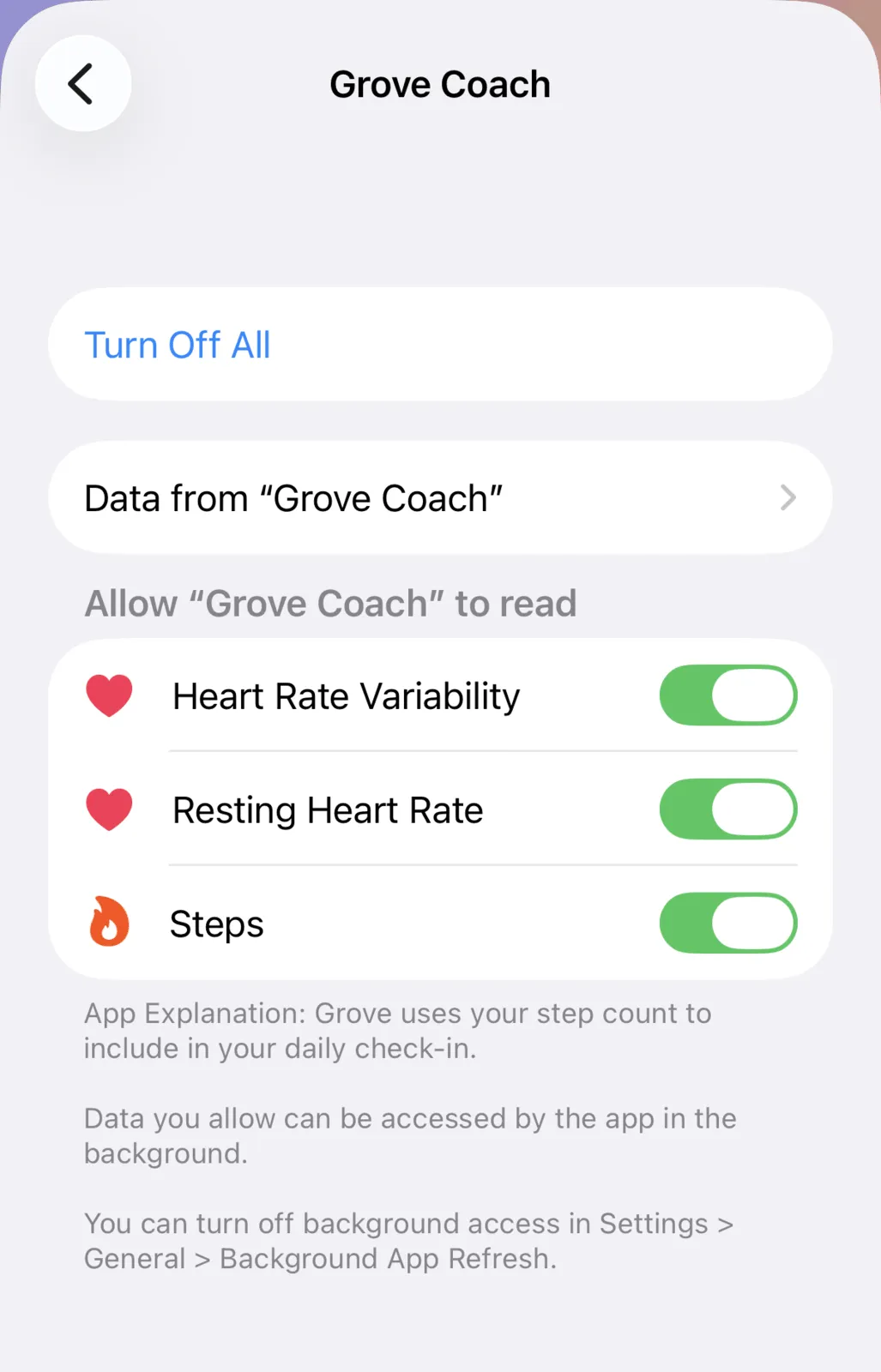
Apple Health went deeper, and the app got ready for the store. Grove now reads resting heart rate, heart rate variability, and sleep from Apple Health, normalized into one metric catalog, so a coach sees the trend without a client typing a number. Alongside it the iOS app crossed the App Store line: Sign in with Apple, in-app account deletion, an Apple Health privacy section, and an iPhone-first build.
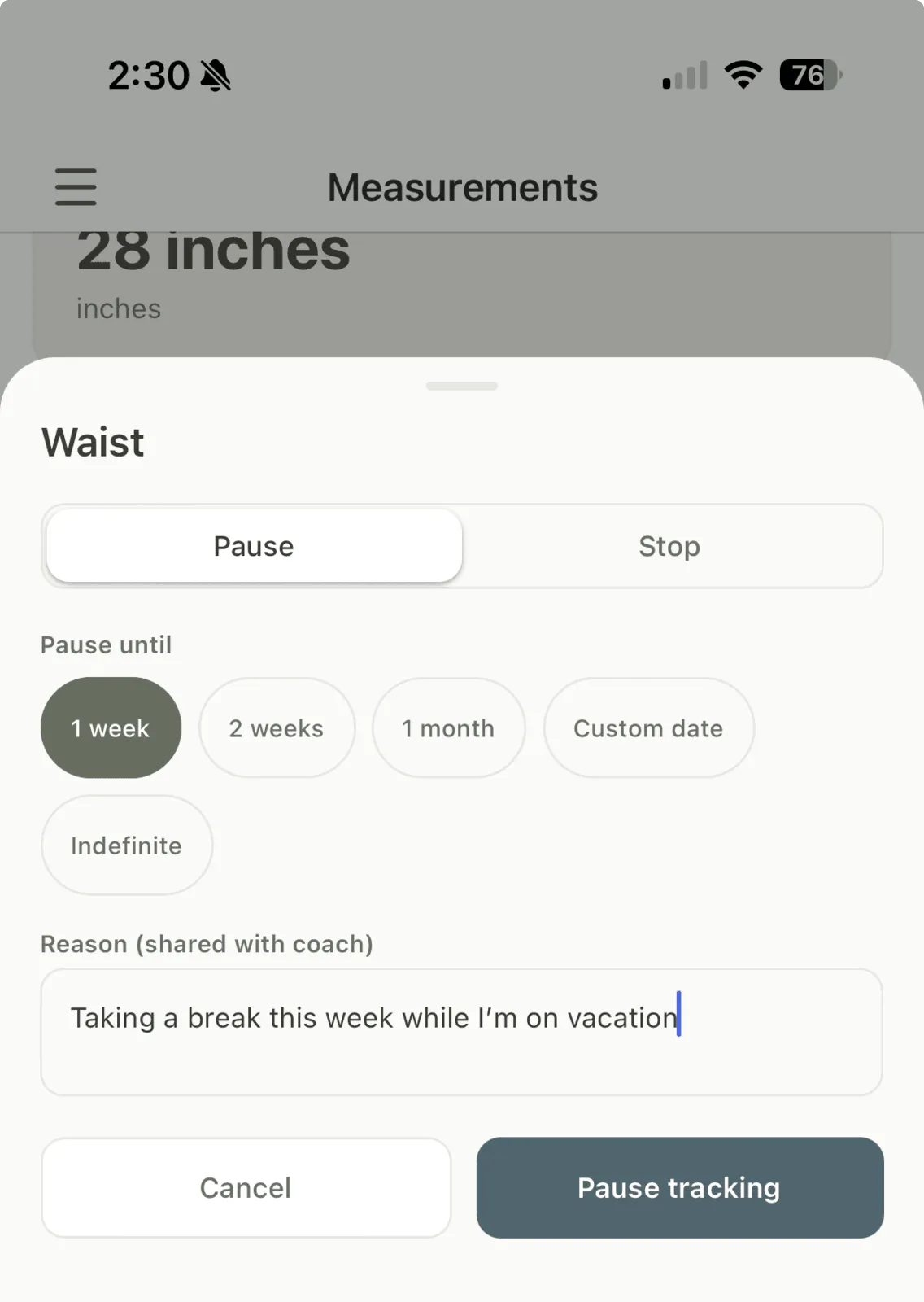
Measurements got an honest off-ramp. A client can pause or stop a measurement they no longer want to log, with the history handled gracefully, and a coach can record a photo measurement on a client’s behalf. Tracking is opt-in and reversible, the way it should be.
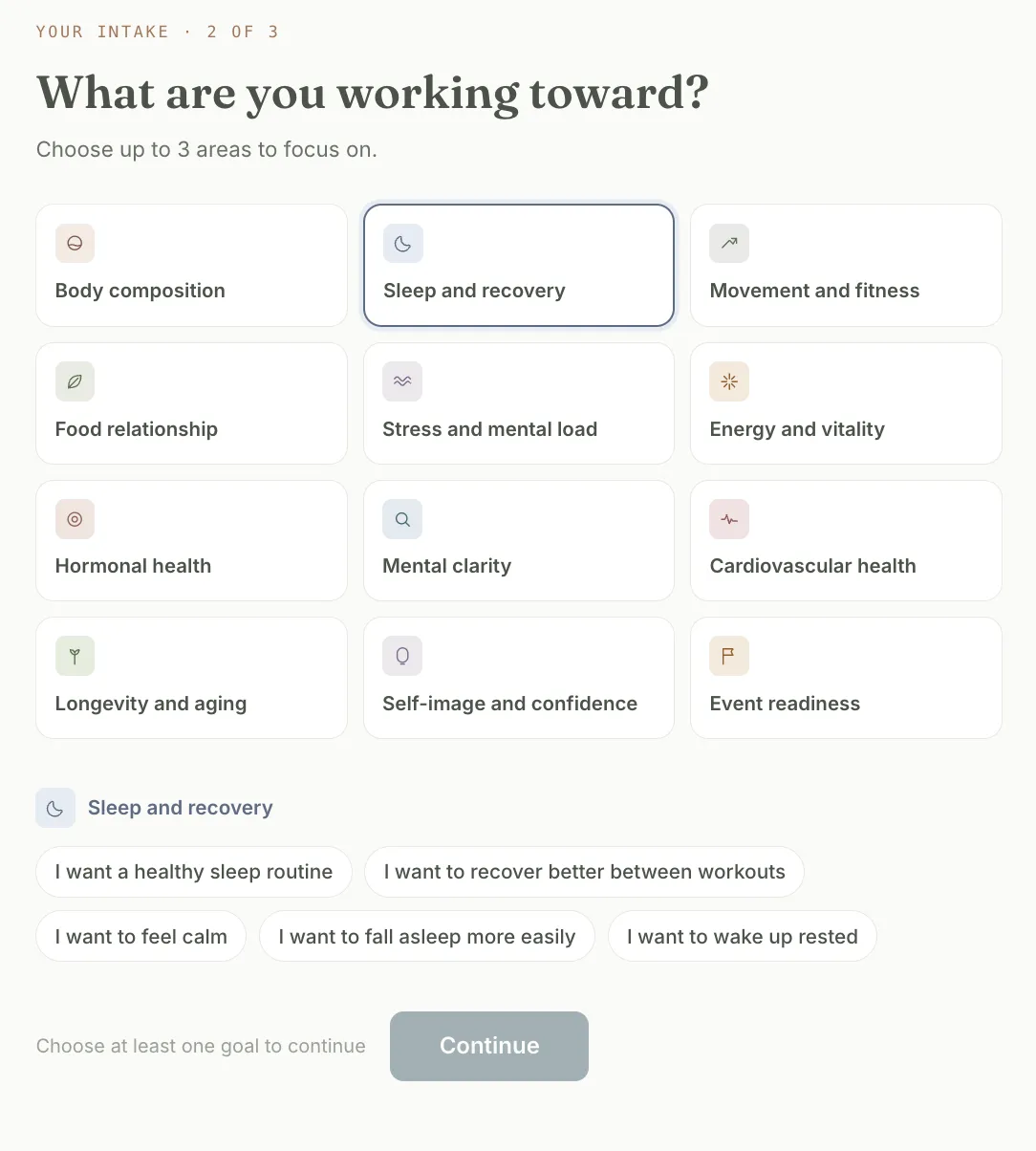
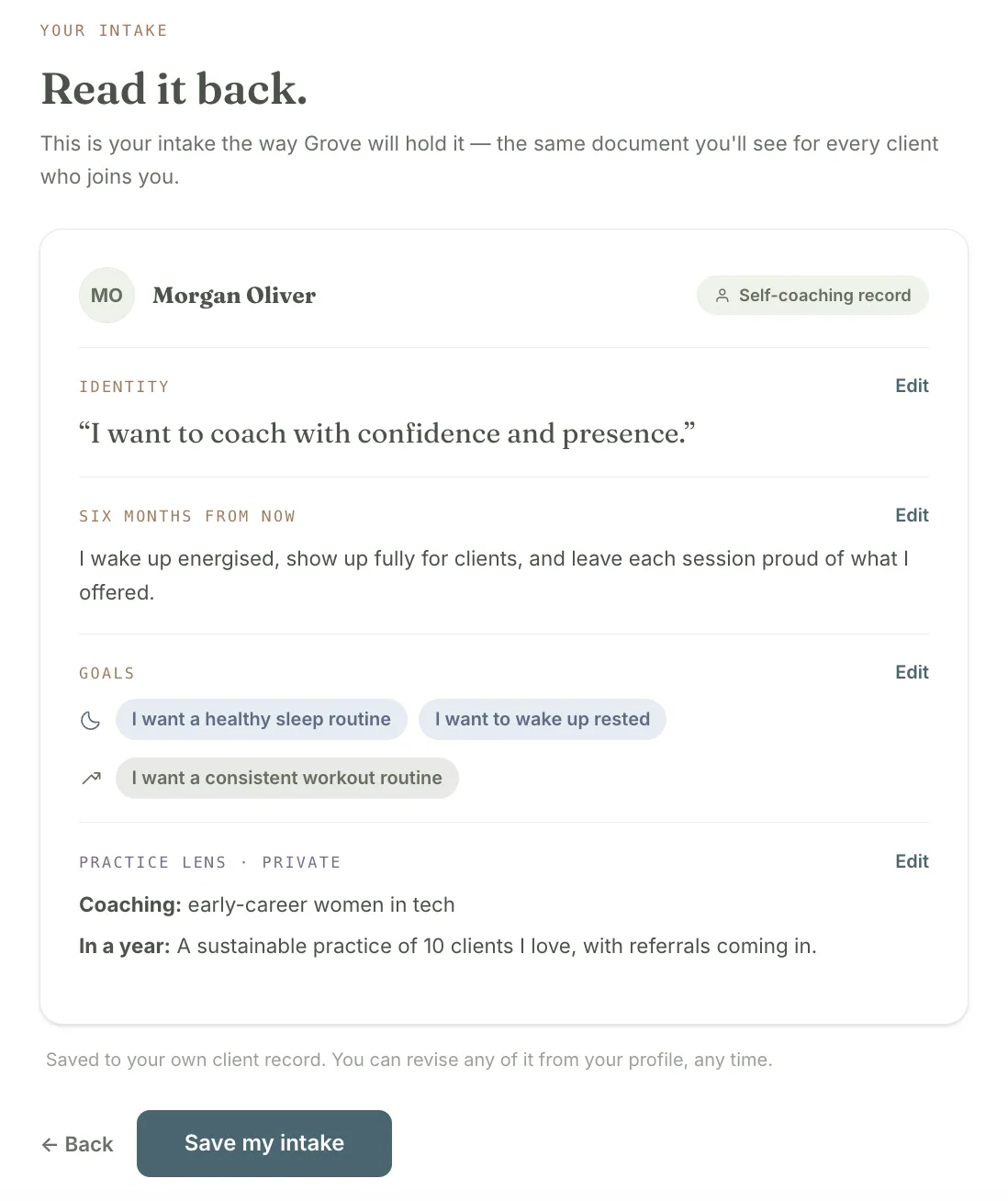
The front of the house grew up. New coaches now land in a guided onboarding takeover that walks from vision and goals to a first check-in, instead of a cold dashboard. The marketing site got a rewritten homepage, honest comparison pages against the incumbents, and a features hub so the Sage story has a home to point to. Booking links went provider-agnostic, the free tier grew from one client to two, and a fresh batch of starter playbooks landed, from Strength Foundations to Thriving on GLP-1s.
A lot of that is plumbing, and plumbing is the kind of thing you do not screenshot. It is also the kind of thing that lets the features people actually notice behave well on the first try.
The shape of the practice that emerged from June is a coach who walks in already holding the thread, with habits that keep their own rhythm and an app a client can carry in a pocket. The remembering, and the quiet anxiety of forgetting a detail or missing a pattern, now sits with the dashboard. What is left for the coach is the part almost no one got into coaching to skip: the person, and the change they came for.

Founder of Grove. Twenty years building software for skilled professionals. Currently writes mostly on Tuesdays from a small studio in Austin.