
Recently on a call with a coach, she mentioned Adam Grant’s idea that everyone needs both a support group and a challenge group. It resonated with me, so this weekend I went looking for his Re:Thinking podcast.
I picked an episode that felt close to where I am right now: I’ve just started doing social media outreach as a founder for Grove, and it’s been uncomfortable. The episode was on turning imposter syndrome into confidence, a conversation with Reese Witherspoon, who I adore. Listen here.
In it, Reese mentions a bit from Adam’s book Think Again about standing on the edge of a diving board and deciding whether to jump or turn around. There are leaps in my life that have felt consequential at the time, and looking back, I’m so glad I had the courage and fortitude to push through the hard stuff to get to the next stage. If I had backed down, I never would have gotten in the pool.
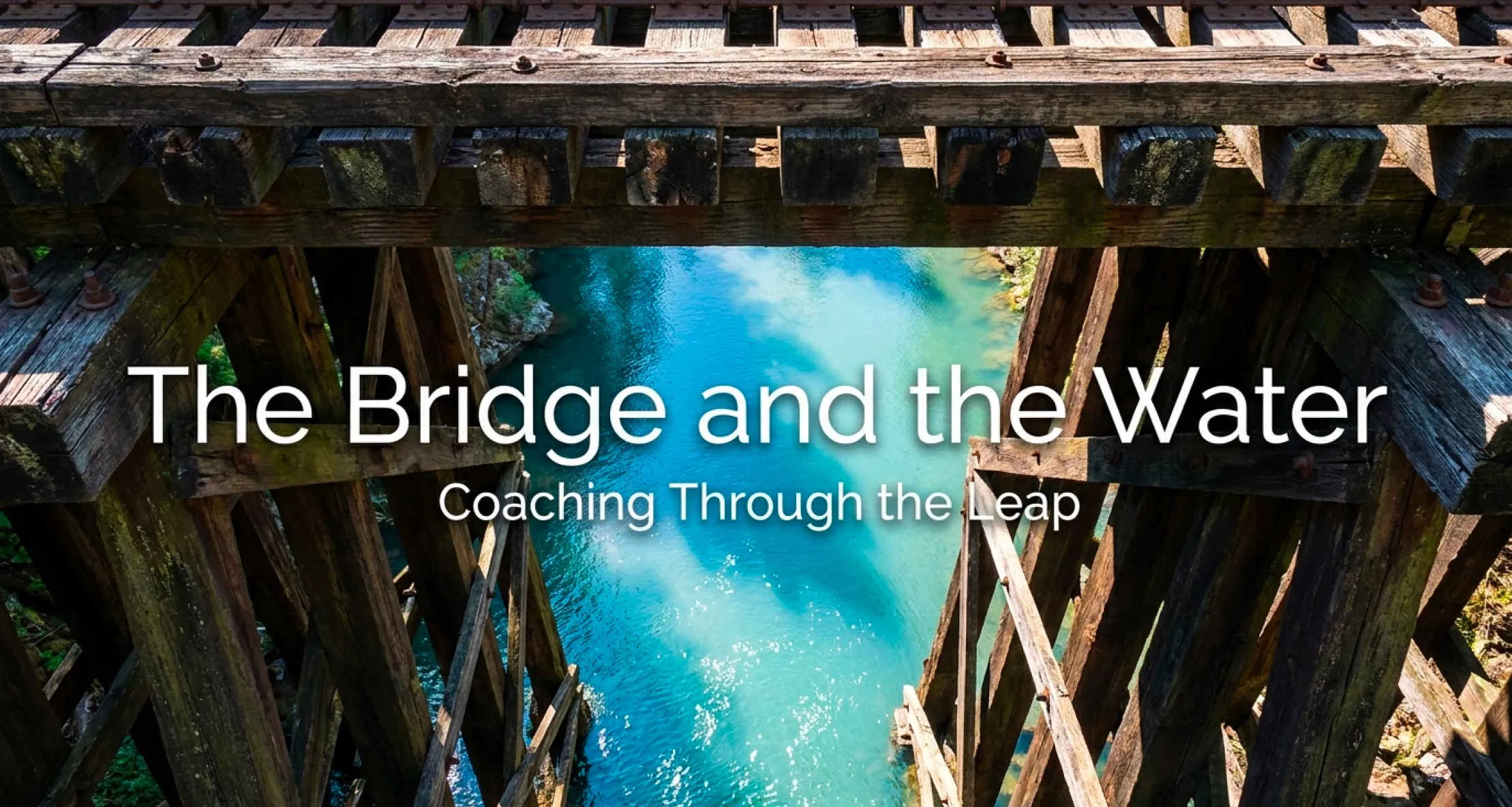
One memory that came to mind: when I was a kid, I went with my father and brother to a railroad bridge above the creek by our house, and I had to decide whether to jump in or turn around and walk down into the creek the safe way. I knew the water was safe. I knew my brother had already done it. I knew exactly what the next step was. And I was terrified.
What my father and brother did next is what I think about now.
They didn’t try to talk me out of being scared. They didn’t push me. They didn’t climb back up to lecture me on why my fear was irrational, or explain the physics of jumping into water. They let me be afraid. They let the fear take as long as it needed to take. That was the support group: people who could sit with my feelings without trying to manage them away.
And then, from the water, they cheered. They told me I could do it. They told me they were right there, that I was safe, that nothing bad was going to happen. That was the challenge group: people who were so convinced I could do the hard thing that I started to believe it too.
I think that’s the part of coaching that’s easy to underestimate.
When a client comes to your practice looking to make a change, they often already know what they need to do. They know they should exercise. They know they should have the hard conversation. They know they should set the boundary, or ask for help, or make the appointment. The challenge isn’t information. The challenge is standing at the edge of the bridge.
The instinct, especially for new coaches, is to add more. More frameworks, more questions, more accountability structures. But the move that usually unlocks the jump is the opposite: less explaining, more presence.

Be the support group first. Allow the client their fear. Don’t rush it, don’t reframe it, don’t try to manage their feelings away. Let the fear be as real as it is for them.
And then, from the water, be the challenge group. Cheer them on. Remind them they’re safe. Stay so convinced of what they’re capable of that they start to borrow your conviction until they have enough of their own.
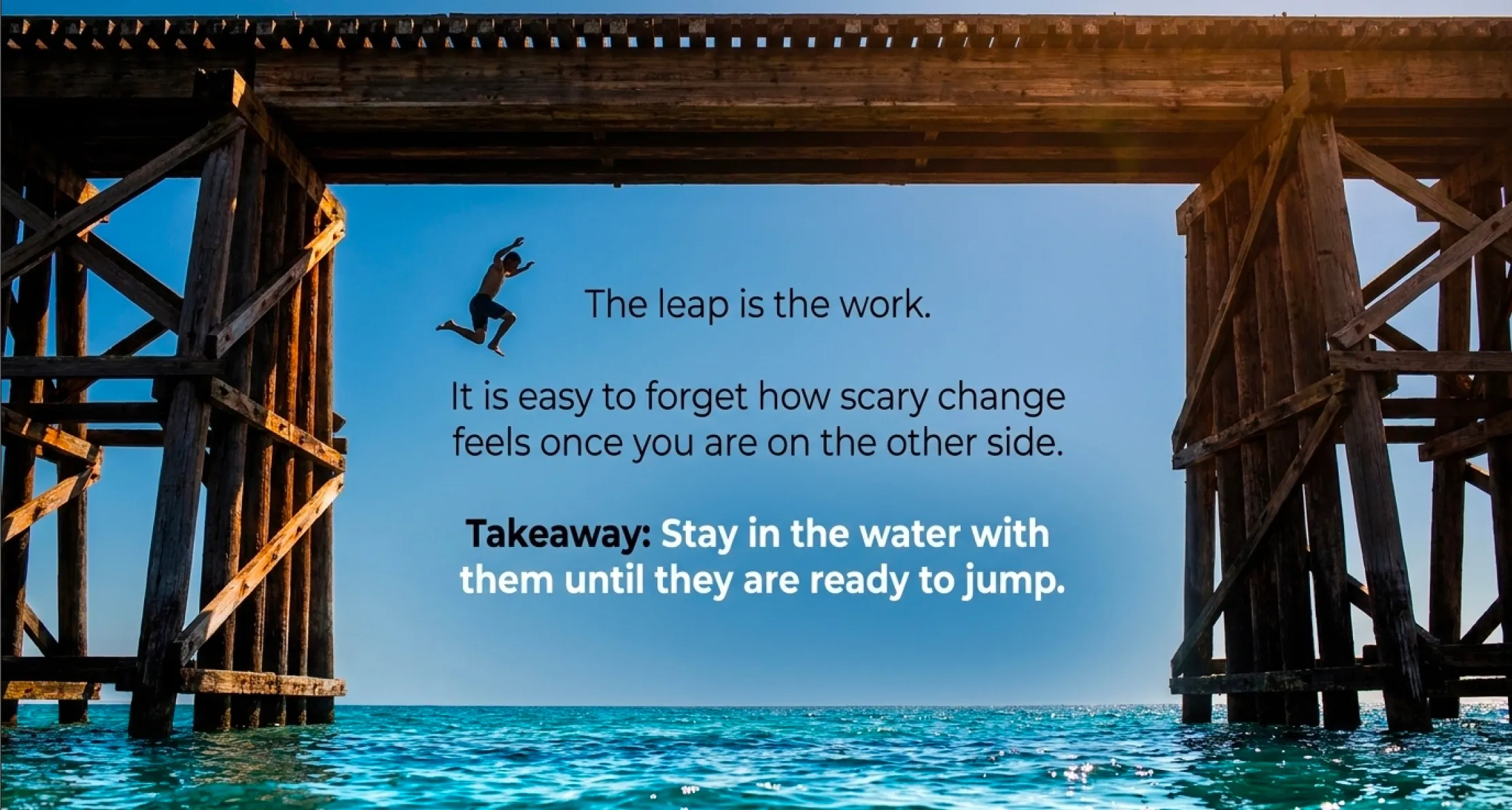
It can be easy to forget how scary change feels once you’re already on the other side. But change is scary, and the most important thing we can offer is to stay in the water with our clients until they’re ready to jump.
That’s the kind of coach I’m building Grove for. Coaches who know that the leap is the work, who can hold both halves of it at once: allowing the fear without trying to fix it, and staying so convinced of what their client can do that the client starts to believe it too.

Founder of Grove. Twenty years building software for skilled professionals. Currently writes mostly on Tuesdays from a small studio in Austin.