
One habit I’ve fallen into while building Grove is reading the people health coaches actually pay attention to. Every month I work through posts from board-certified coaches, PhD physiologists, registered dietitians, and coaching organizations: not influencer wellness, but people whose work is grounded in evidence.
I’ve realized I’m rarely looking for the hottest take. I’m looking for convergence: the moments when people with different backgrounds quietly start saying the same thing. That is usually where the interesting signal is.
Most of what I read in any month is forgettable. This June, four themes kept showing up. (Last month’s read was the first of these.)
The diet tribes cooled off
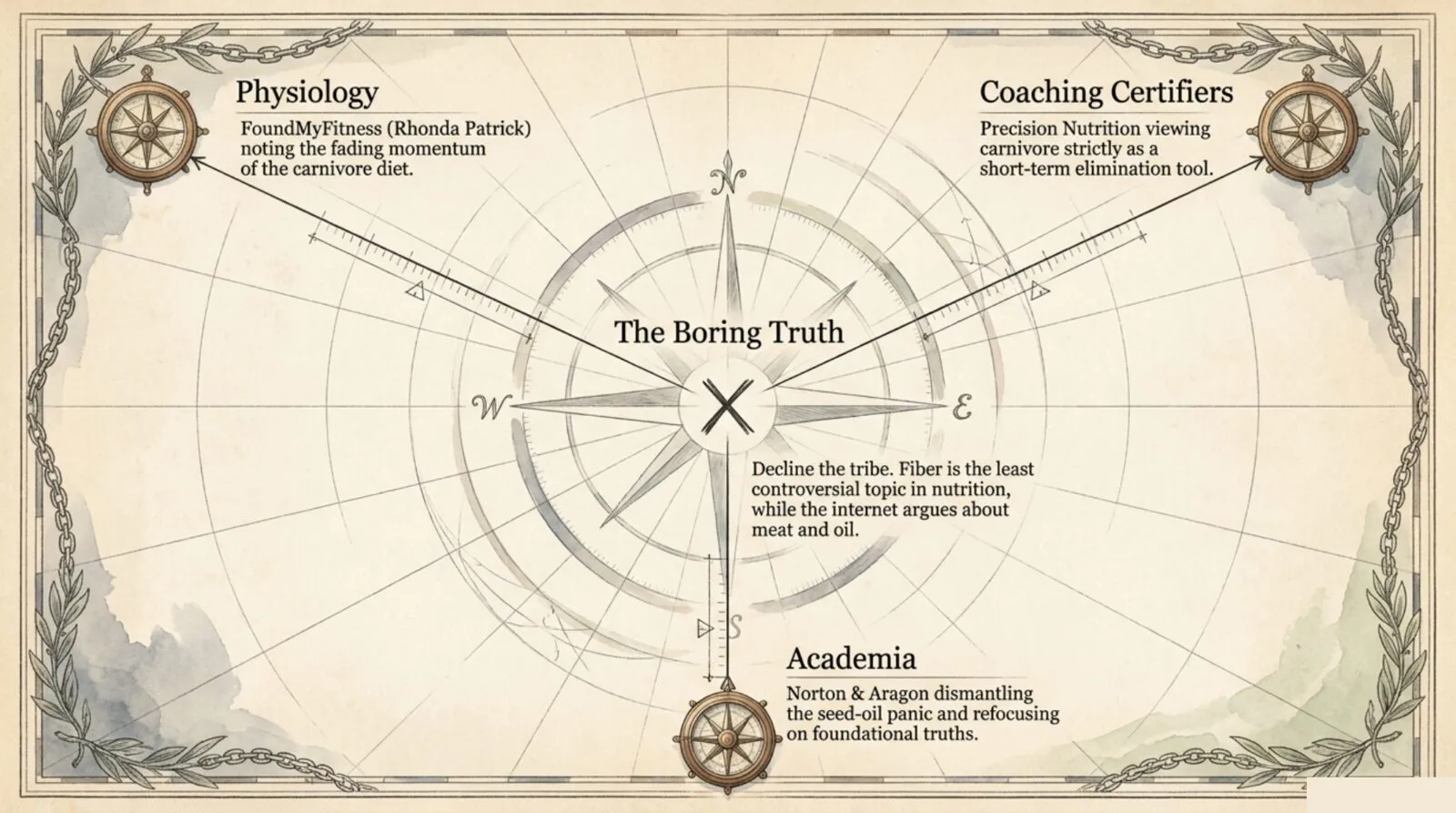
Most loud food content online is tribal: pick a side, defend it, dunk on the others. In June a few credentialed voices spent the month declining to play. One of the loudest tribes, the carnivore diet, finally seemed to lose a little momentum. Rhonda Patrick, the PhD behind FoundMyFitness, wrote that she was “not surprised” it was fading, and Precision Nutrition, the largest nutrition-coaching certifier, landed in the same place: it works as a short-term elimination diet for some people, which is not the same as a long-term answer.
The seed-oil war ran the opposite direction, loud as ever. Layne Norton posted that the fastest way to start a nutrition fight is to say seed oils are not inflammatory, so he brought popcorn, and Alan Aragon pointed at a new paper taking apart the seed-oil panic. What the credentialed voices keep doing, across every one of these fights, is decline the tribe and point at the unglamorous evidence. Norton said it cleanest: fiber should be the least controversial topic in nutrition, and it mostly is, while everyone argues about meat and oil. Independent experts arriving at the same boring conclusion is usually more interesting than one person making a louder claim.
Women lifting after 40, with the evidence finally caught up
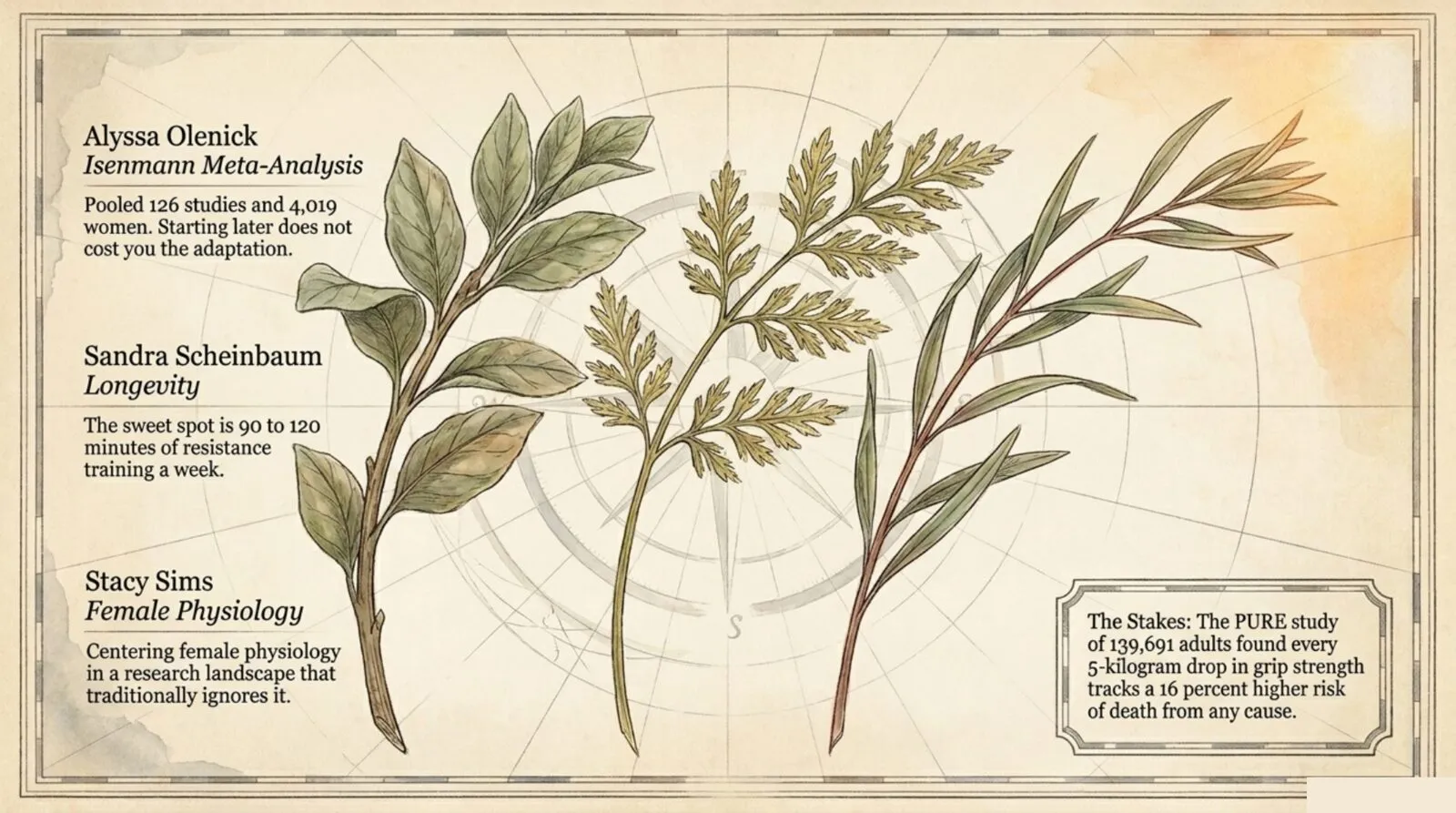
This was the most useful post in my feed. Alyssa Olenick, a PhD exercise physiologist, walked through a new meta-analysis on whether it is too late to start lifting in your 40s through 70s. The answer is no. The paper is real and worth knowing by name: Isenmann and colleagues, “It’s never too late,” published in March 2026, pooled 126 studies and 4,019 women, two-thirds of them postmenopausal, and found resistance training improved strength about equally before and after menopause. Starting later does not cost you the adaptation.
She wasn’t the only one making the case. Sandra Scheinbaum, who founded the Functional Medicine Coaching Academy, made the longevity case plainly: 90 to 120 minutes of resistance training a week is the sweet spot, and she posts it while modeling it in her seventies. And Stacy Sims, who studies female physiology, keeps pointing out how little of the strength and bone research has actually centered on women, which is exactly what makes a meta-analysis built on four thousand of them matter.
The stakes here are not aesthetic. In the PURE study of 139,691 adults, every 5-kilogram drop in grip strength tracked a 16 percent higher risk of death from any cause. If you coach women over 40, this was probably the most important thread in June.
Supercommunicators, or the coaching conversation by another name
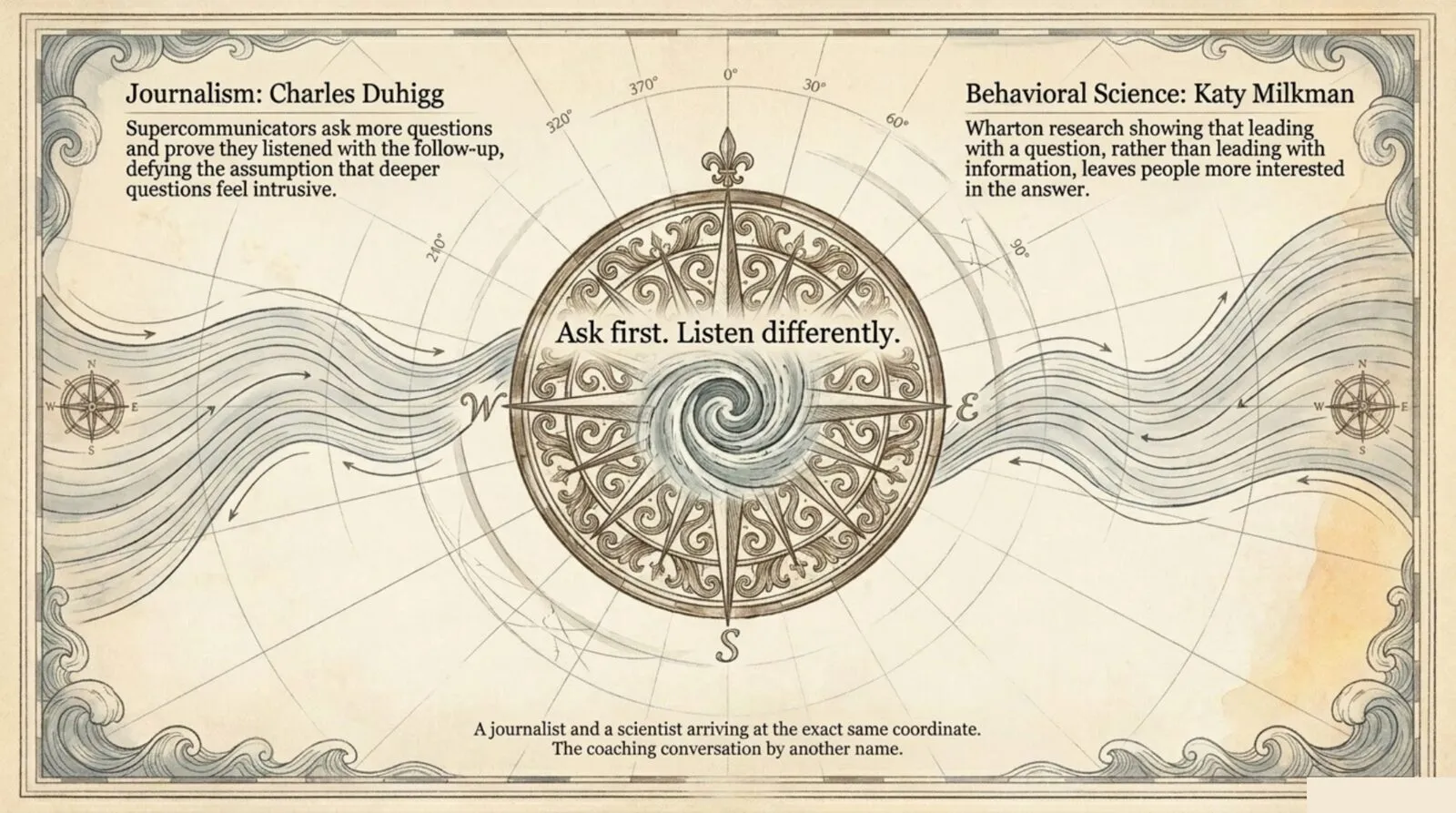
Charles Duhigg spent June on how people actually connect, and I kept finding myself nodding, because almost every post sounded like something I’ve heard great coaches do. Supercommunicators, he wrote, “don’t just talk better, they listen differently,” asking more questions and proving they listened with the follow-up. People skip the deeper question because they assume it will feel intrusive; it rarely does.
He was not the only one circling it. Katy Milkman, the Wharton behavioral scientist, shared research the same month showing that leading with a question, rather than leading with the information, leaves people more interested in the answer. A journalist and a behavioral scientist landed on the same unglamorous move: ask first. That is also what separates checking in from checking up. Reading all of it, I kept thinking: this isn’t a communication trick. It’s coaching.
The room off the feed
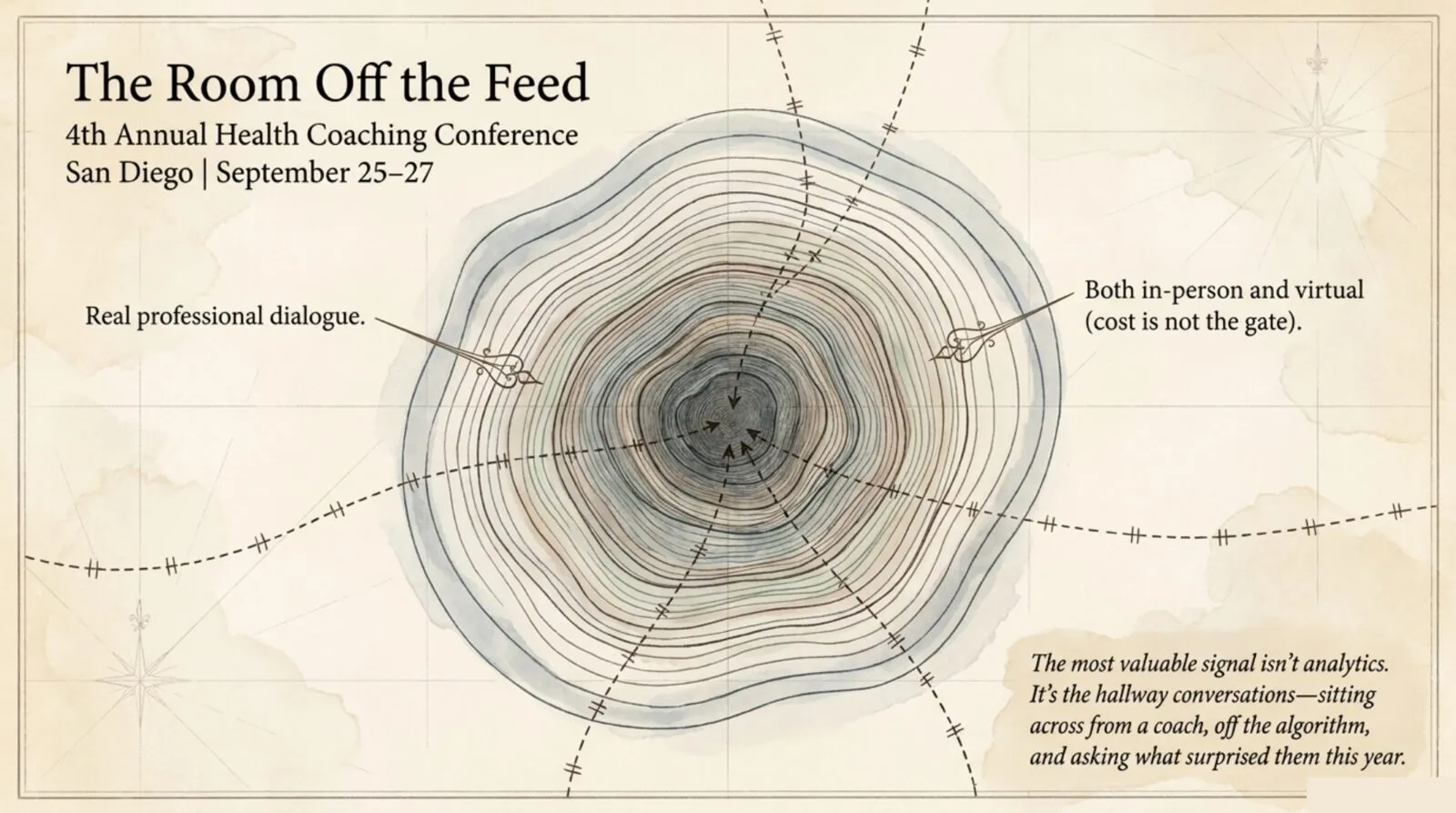
The 4th annual Health Coaching Conference runs in San Diego, September 25 to 27, built around the thing the algorithm cannot stage: real professional dialogue between coaches, not performances aimed at strangers. They kept it reachable on purpose, with both in-person and virtual options so cost is not the gate.
Building Grove has convinced me of something I didn’t expect: the most valuable product research I ever do isn’t analytics. It’s sitting across from a coach and listening while they describe the moment their work feels hard. That’s why I’m excited for it. I’ll probably spend more time in hallway conversations and coffee lines than in the vendor hall, asking people what they’re struggling with, what surprised them this year, and what they wish existed. If you’re going to be there, I’d genuinely love to hear your story.

Founder of Grove. Twenty years building software for skilled professionals. Currently writes mostly on Tuesdays from a small studio in Austin.